You may not find this terribly rewarding unless you're included here, so this is a good time for casual and random browsers to turn back before they get too caught up in the sweep and majesty of the proceedings and can't let go.

It's just time for dinner at the Lake House Restaurant and Lounge . . .

. . . nearby on Cheat Lake, with its . . .

. . . marina.

We like to come early, before the local musical entertainment begins tuning up their instruments.

A busy parade in the parking lot

The next day, 29 May 2026, we're back to The Leo Collection (also Ascend!), a 6-hour jaunt past Toledo and off the I-75 in Lincoln Park near Detroit.
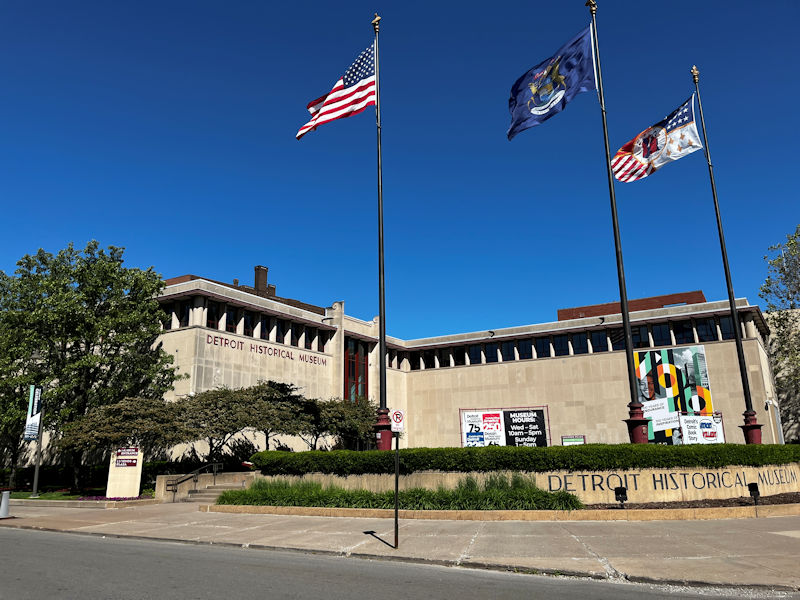
Here's what we've paused our trip for, the next day. Not exactly the Detroit Historical Museum, we're just borrowing its carpark round the back.
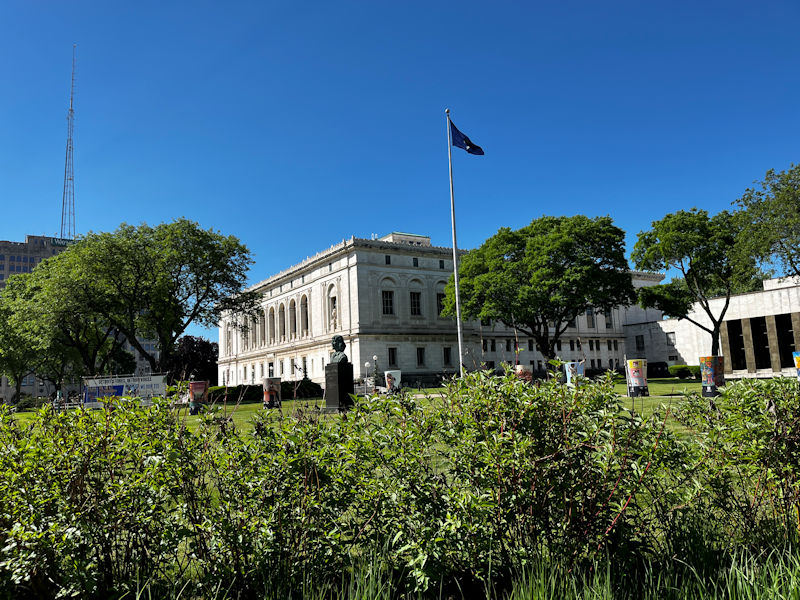
And that's the main branch of the Detroit Public Library, with a nice little park alongside it.
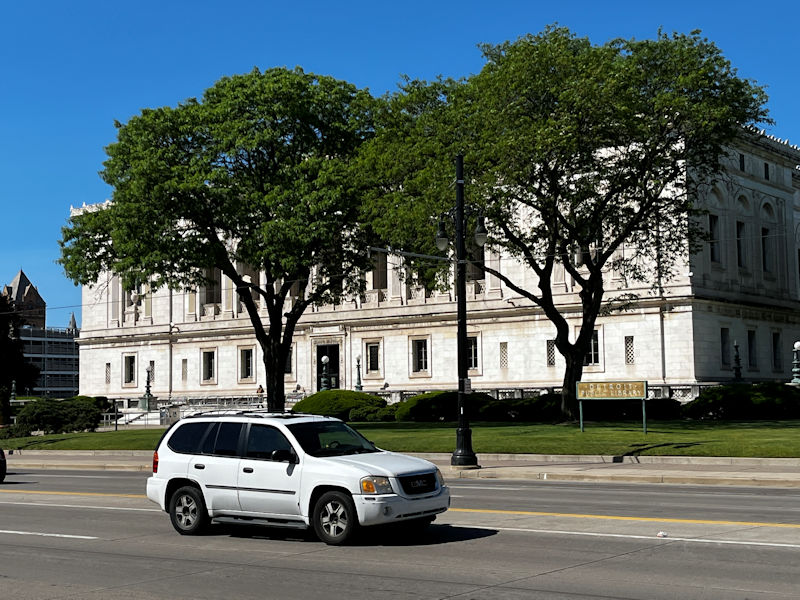
The Public Library on Woodward Ave, which . . .
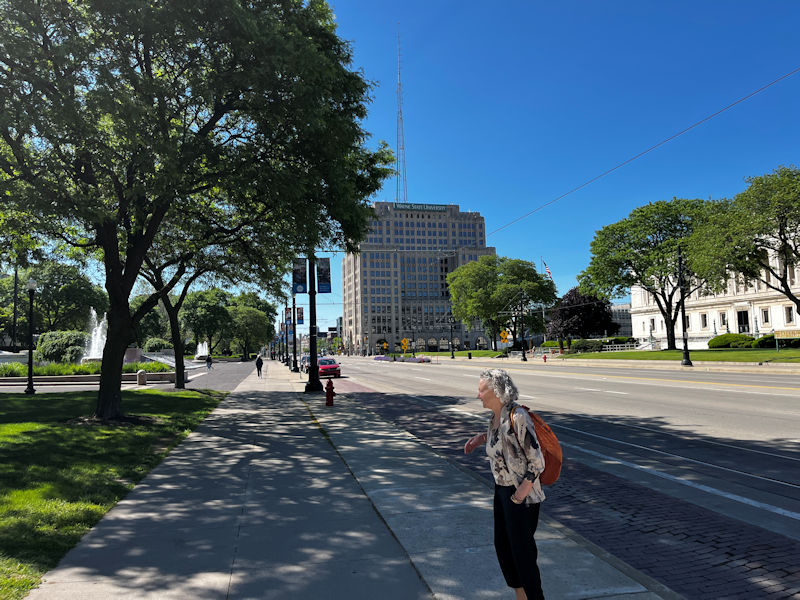
. . . requires to be crossed before we can reach . . .
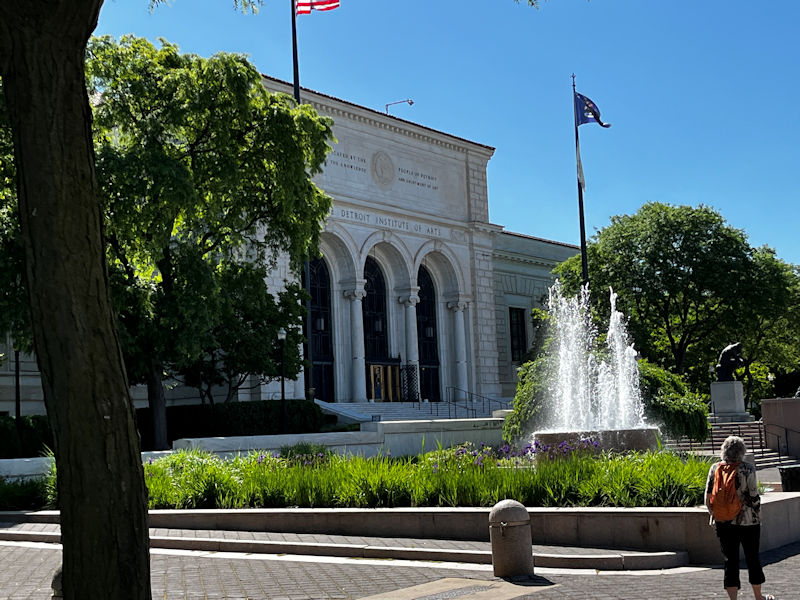
. . . The Detroit Institute of Arts
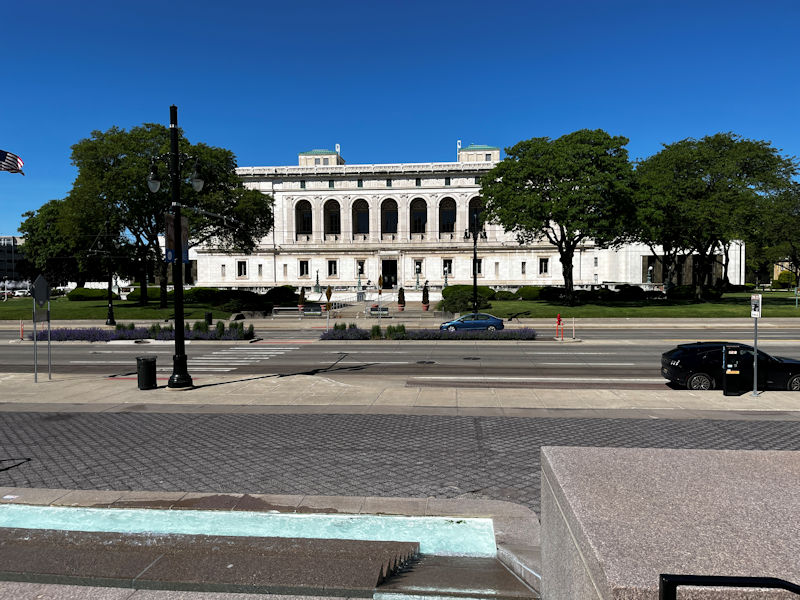
Another glance at the formidable public library across the thoroughfare.
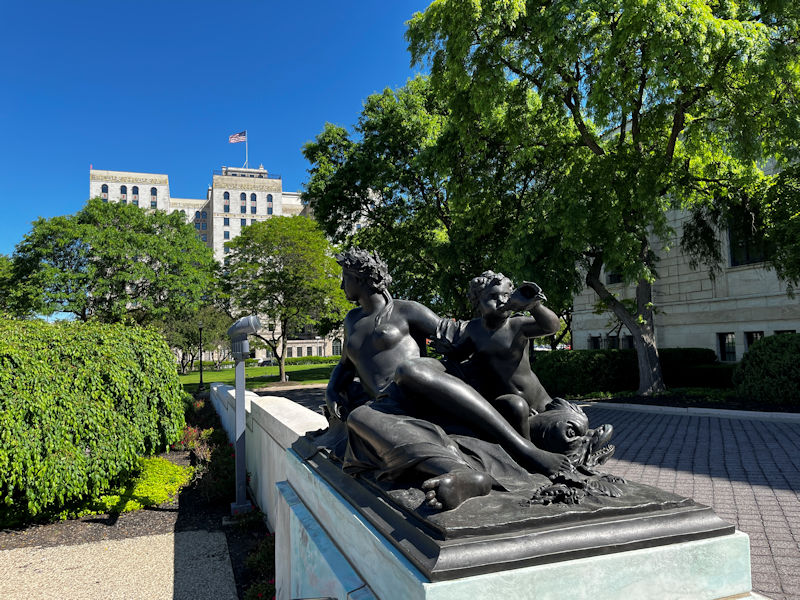
First, we'll just take a quick closer look at these things out front.
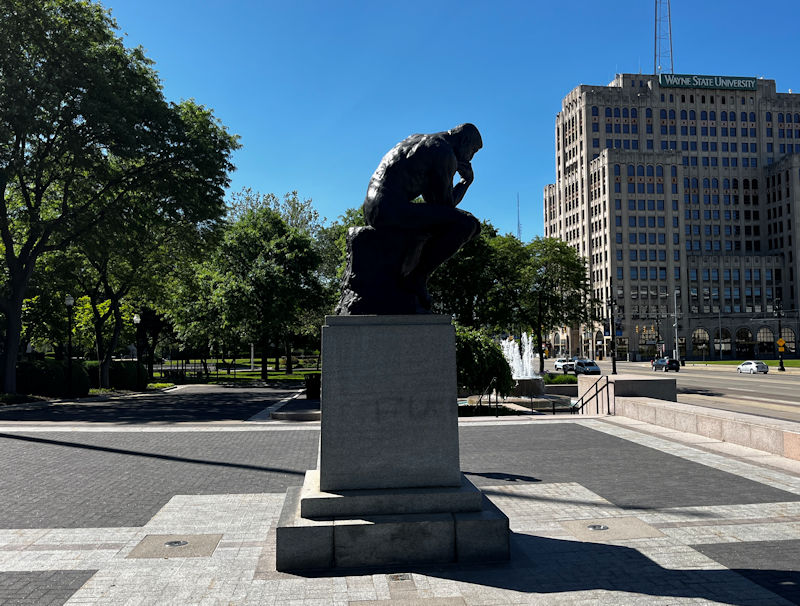
Appropriately enough, pride of place goes to one of the 27 known recastings of Rodin's ca. 1904 statue of 'The Thinker'.
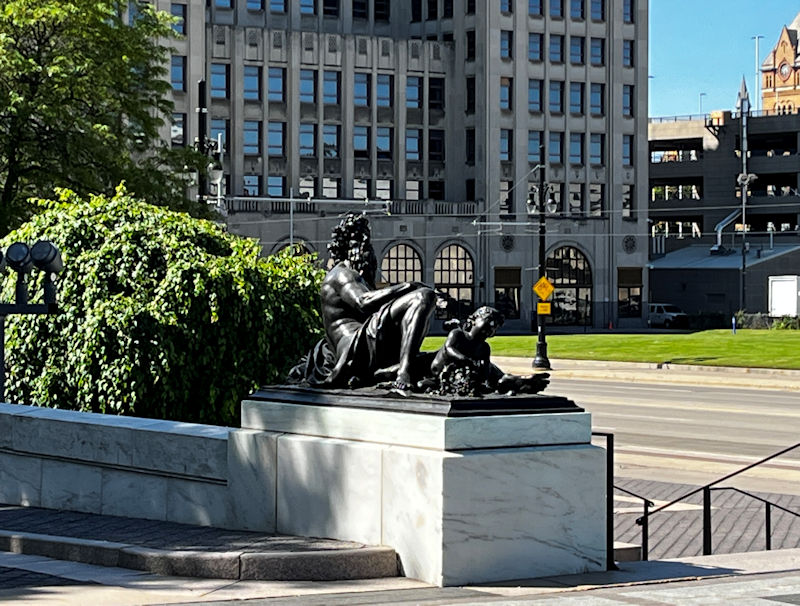
That one certainly looks familiar, but we haven't any time for it at the moment.
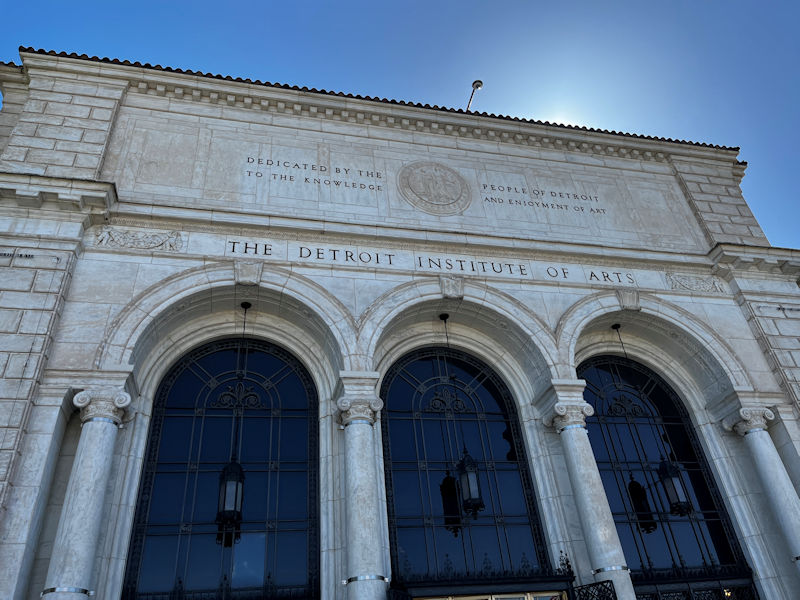
The museum was founded in 1885, downtown near the Detroit River, but as its collections grew, in 1927 it was moved to a new 'Beaux-Arts' building here ca. 2½ miles uptown.
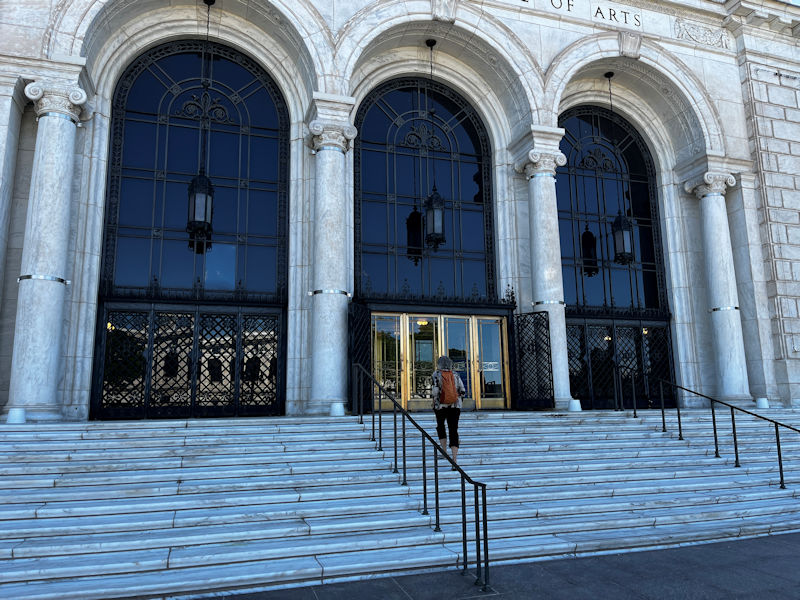
Eventually, two wings had to be added in the 1960s and '70s, and a major renovation was carried out between 1999 and 2007. It presently has more than 140 galleries, a sizable auditorium and a lecture and recital hall, with a necessary conservation department. The layouts of the interiors are, to be honest, somewhat perplexing -- one is given a map, which is in some ways even more perplexing, and the helpful staff offer various helpful suggestions some of which were . . . even more perplexing.
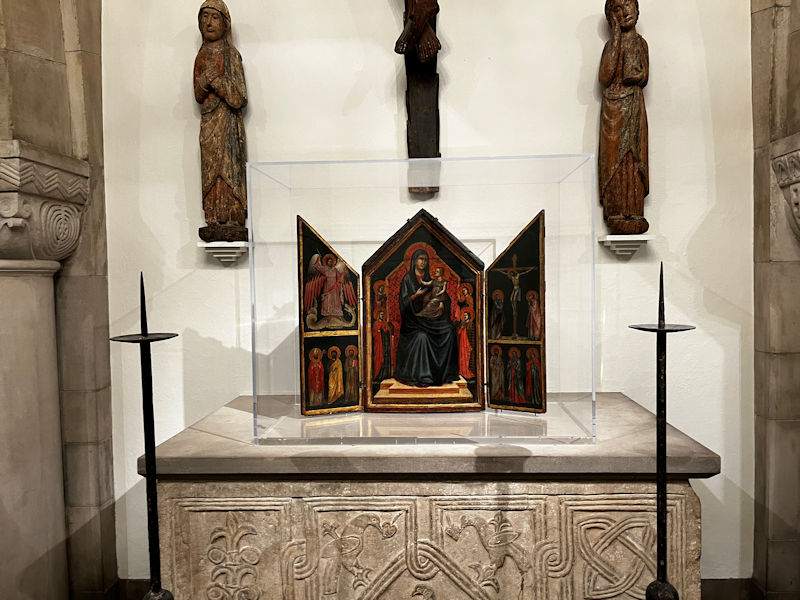
But with our $20 seniors entry fee (for two) down on the barrelhead, and a perplexing map in hand, we started where we always start, with the European medieval Christian art.
(That 'we' applies to only one of us, but the other part of the 'we' can be patient for a limited amount of time.)
That triptych in the centre has a Madonna and Child Enthroned, surrounded by four female saints and all kinds of other groups in the side wings, dated to 1290-1320.
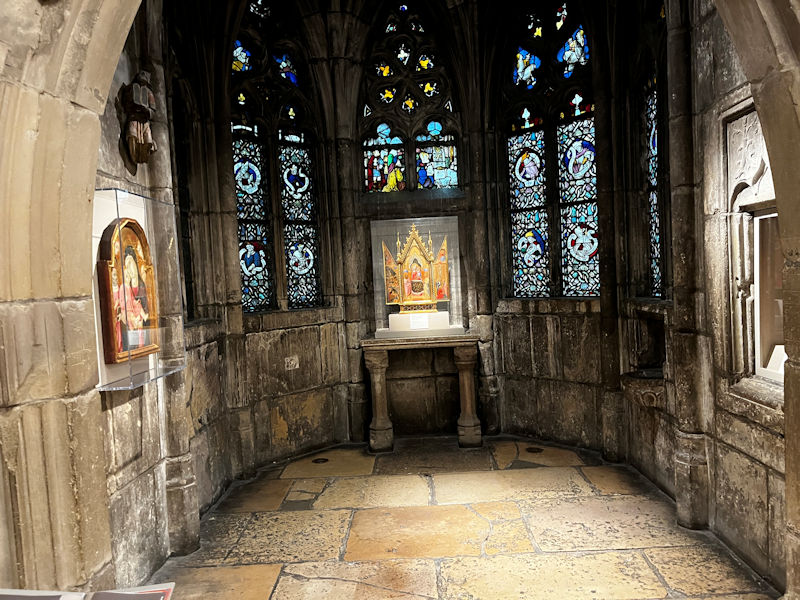
This is a Chapel from the Château de Lannoy, ca. 1522-24, with . . .
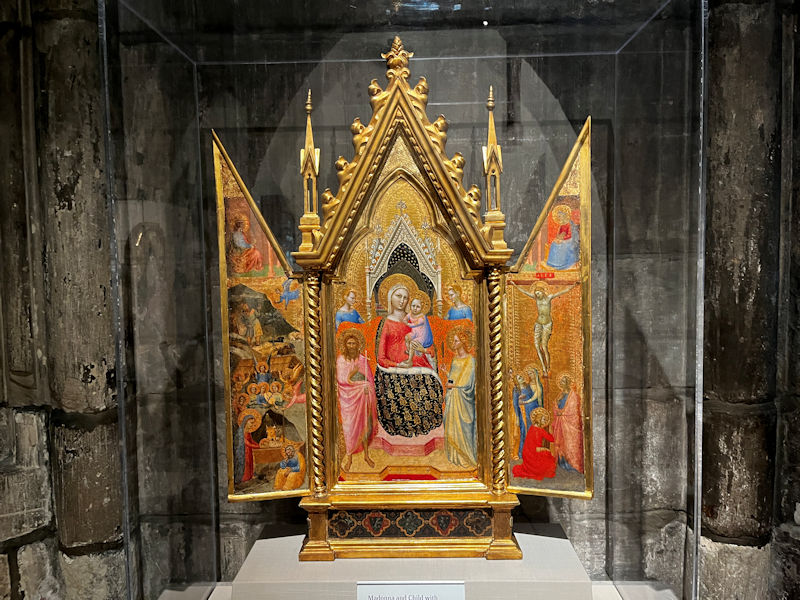
. . . a triptych on the altar showing another Madonna and Child Enthroned, with lots of various biblical scenes.
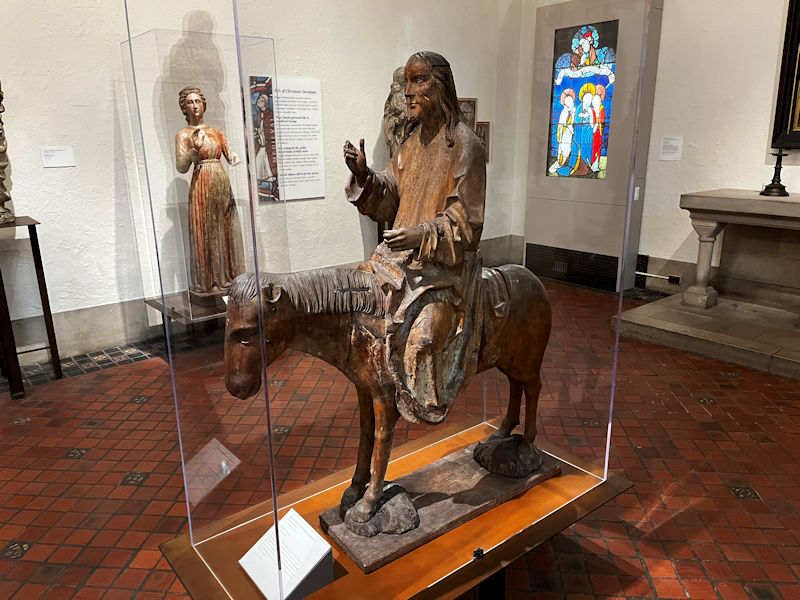
Christ entering Jerusalem on a donkey seems to be a common feature -- the best one of these that we've seen is in the Musée d'Unterlinden in Colmar, which is even on wheels.
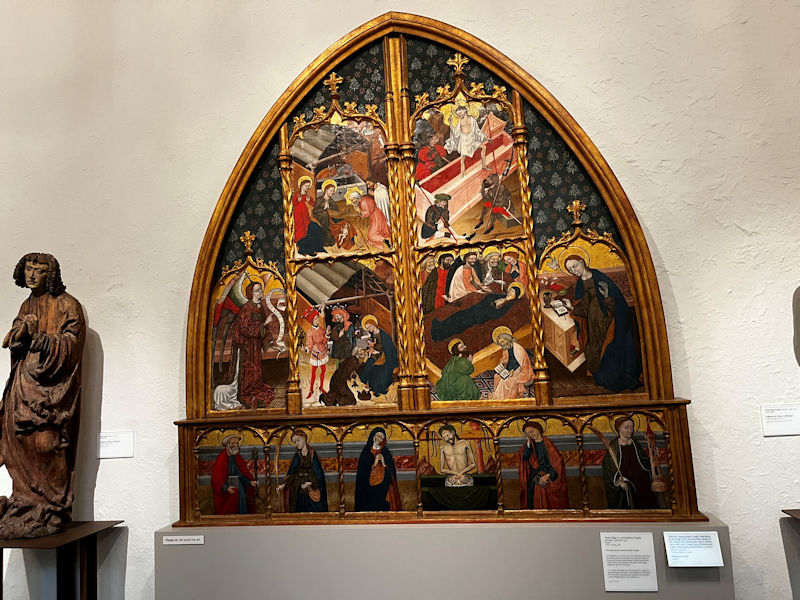
A great mass of Nativity, Resurrection, Death of the Virgin, and resurrected saints and other worthies, by an unknown artist in Spain, ca. 1450-80
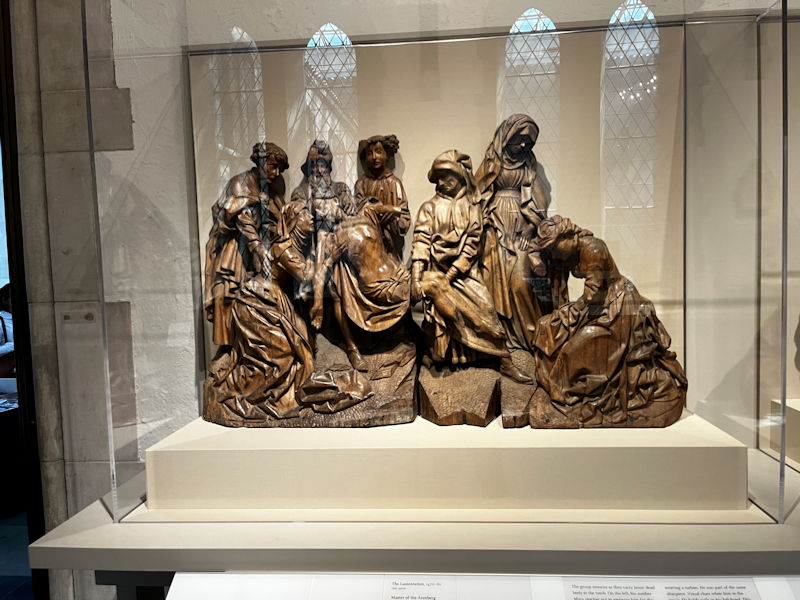
The Lamentation, 1470-1480, by the 'Master of the Arenberg Lamentation', a southern Netherlander 'active mid to late 1400s'
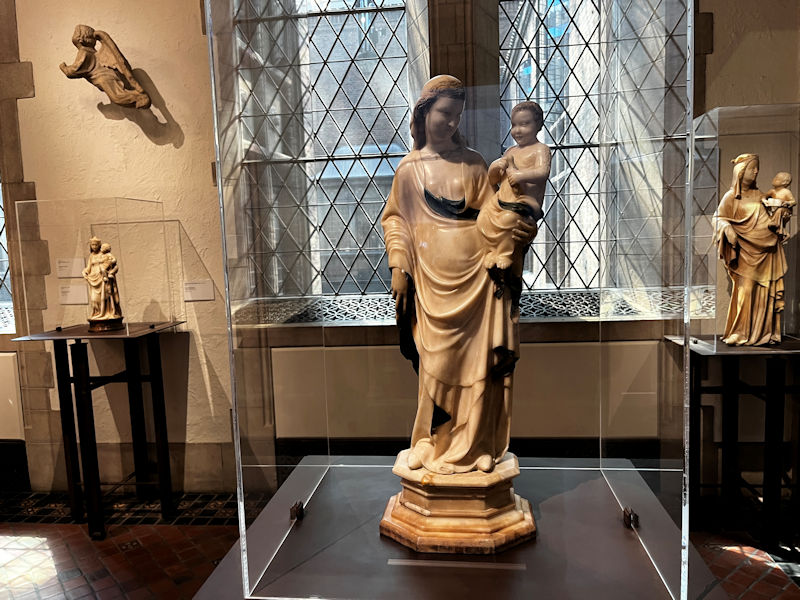
This is a marble Madonna and Child, ca. 1350-60, by the Italian Nino Pisano. The description rightly points out that this 'elegant and courtly Mary looks lovingly at her son' as part of a new trend in art during the 1300s.
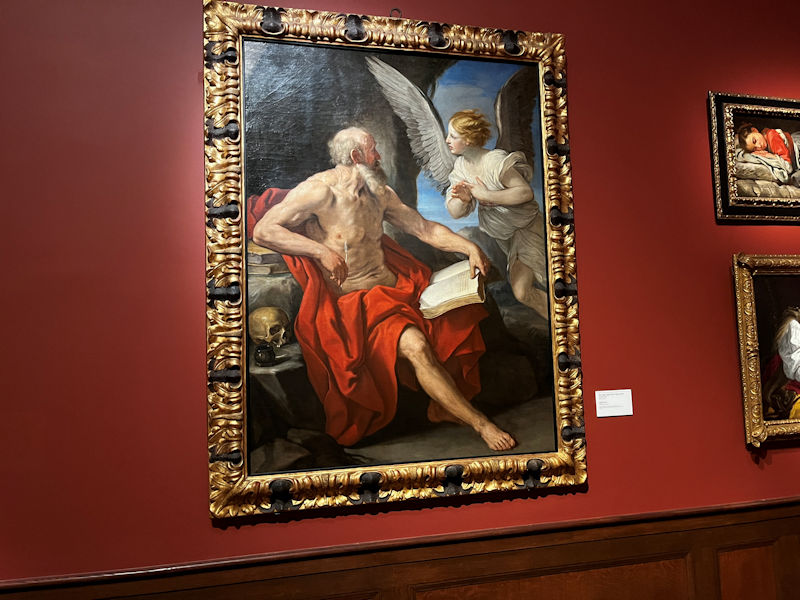
Moving right along, we've wandered into a European 17th century room, and this is 'The Angel Appearing to Saint Jerome', ca. 1638, by one of our favorites, Guido Reni (1575-1641).
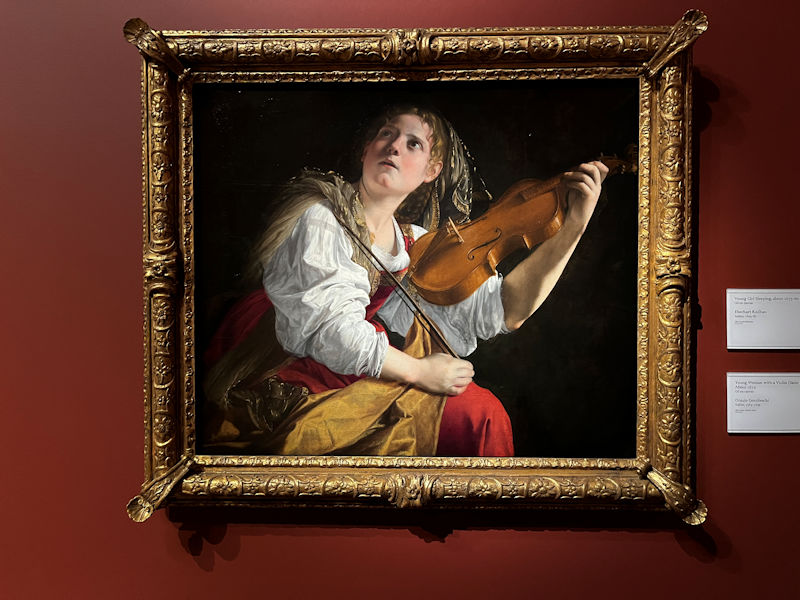
And this one is by another favorite, Orazio Gentileschi (1563-1639), 'Young Woman [St Cecilia] with a Violin'.
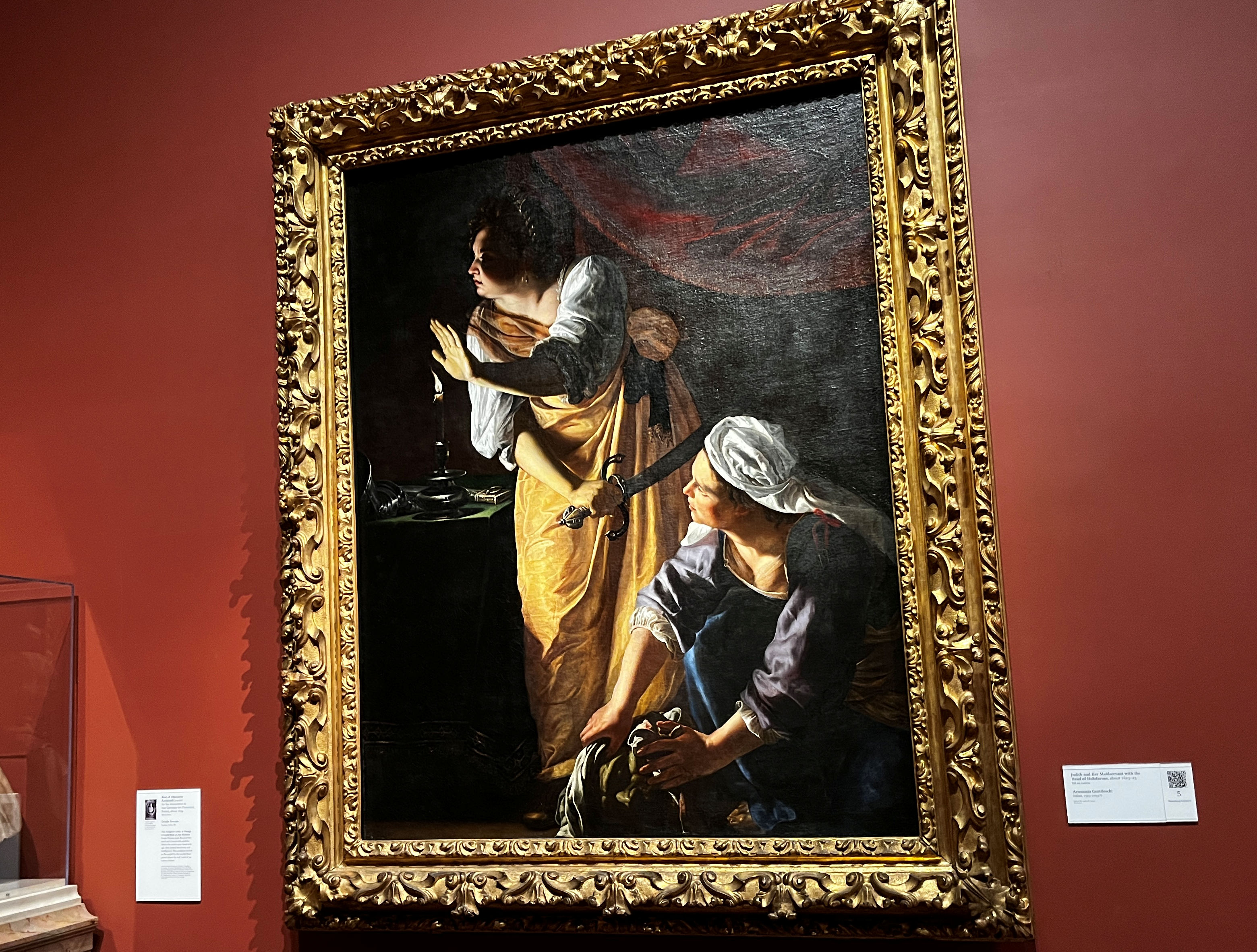
And this is by Orazio's famous daughter, Artemisia Gentileschi (1593-1654), one of several she made of Judith and her helpful maid hacking off the head of Holofernes (ca. 1623-25); it's not her best one on that theme, but it's got the Caravaggio chiaroscuro and Artemsia's recurring interest in beheadings of brutal males.
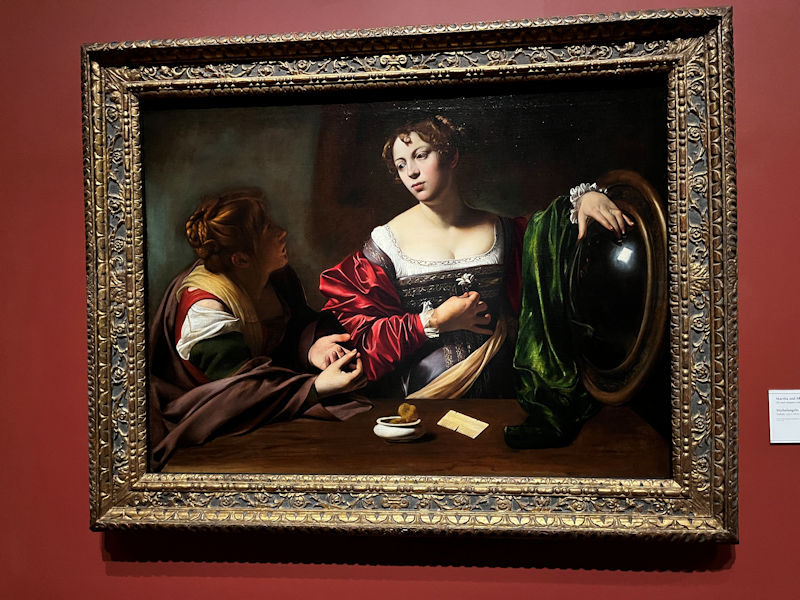
Speaking of Caravaggio, this is his 'Martha and Mary Magdalene', ca. 1598.
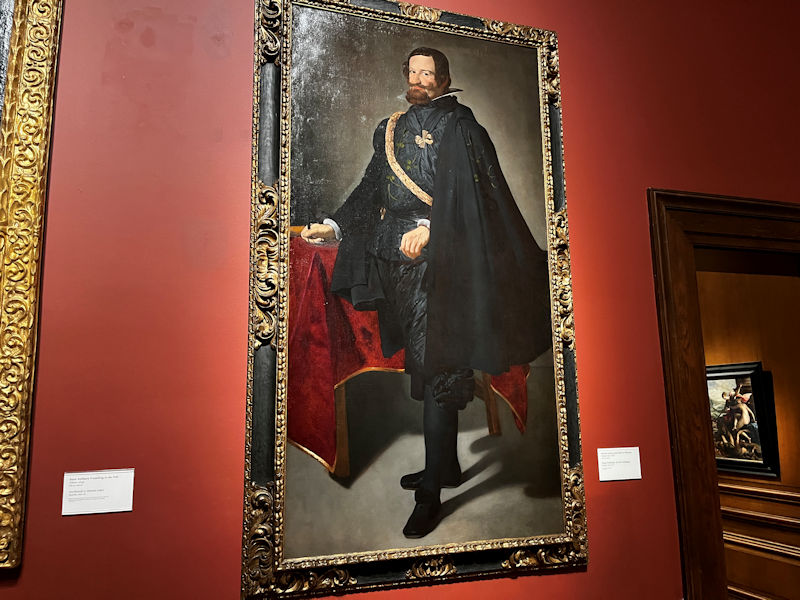
This is Veláquez's 'Portrait of the Count-Duke of Olivares', ca. 1625-26. Olivares, Gaspar de Guzmân (1587-1645), was a favorite of King Philip IV of Spain and his leading minister in both foreign and domestic affairs, not terribly successfully. Veláquez made several portraits of the man, the most famous of which is a classic equestrian treatment that is, to be honest, pretty silly.
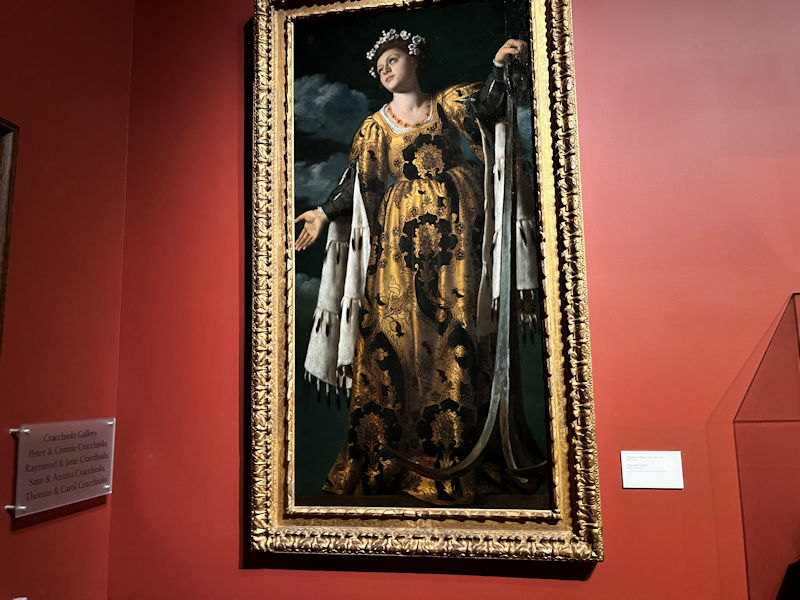
The 'Allegory of Hope', ca. 1617-18, by Alessandro Turchi (1578-1649)
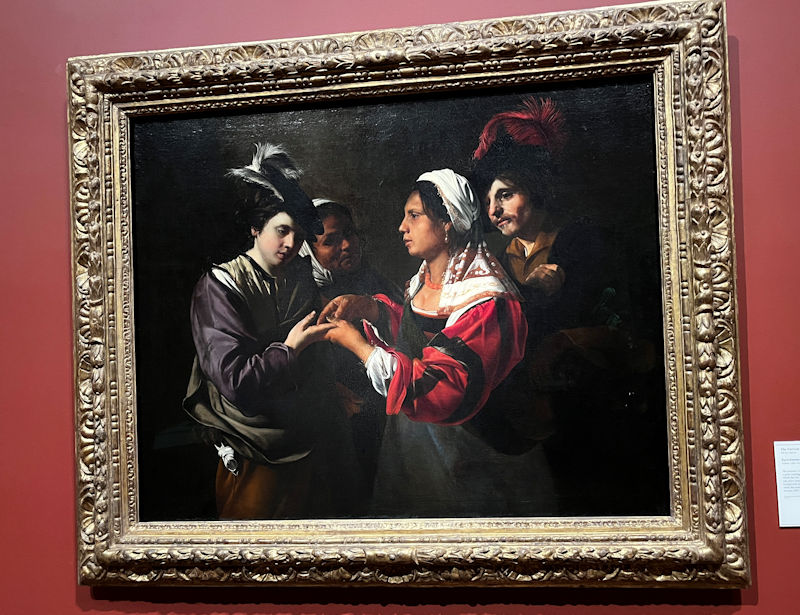
By Bartolomeo Manfredi, 'The Fortune Teller', ca. 1616-17, a classic theme of the fortune teller occupying the naive young man's attention whilst the others pick his pockets.
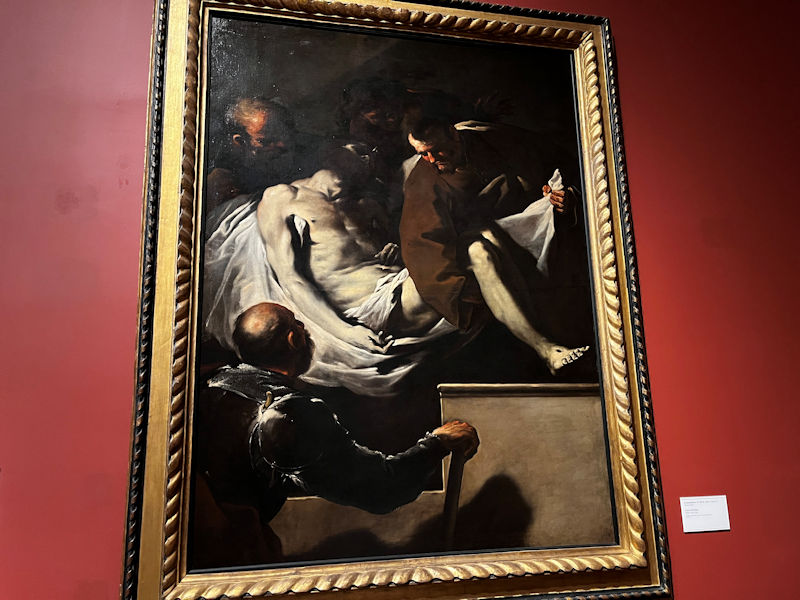
An 'Entombment of Christ', ca. 1659-60, by Luca Giordano of Naples (1634-1705)
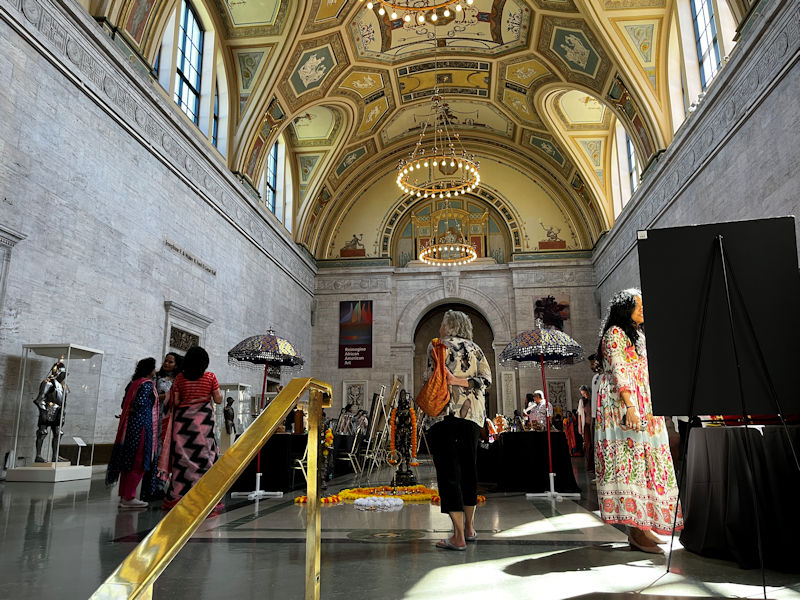
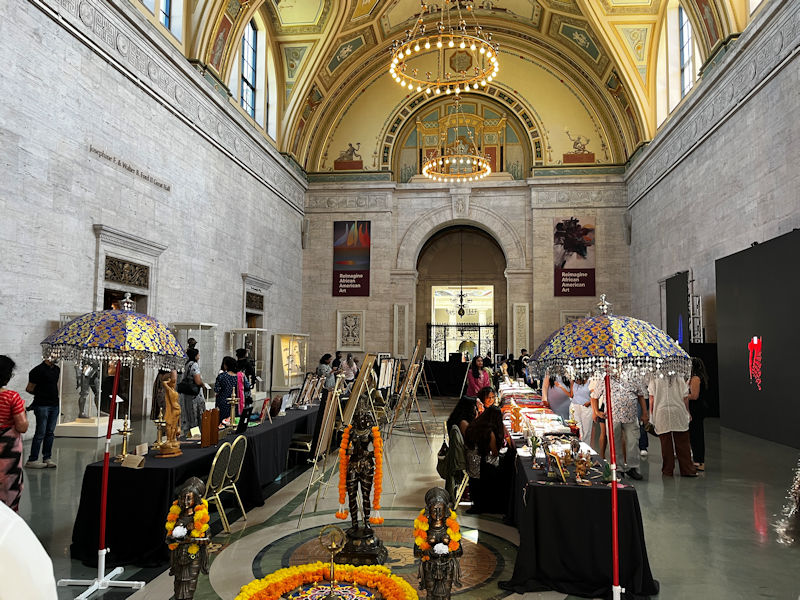
We've somehow circled round back to the central Great Hall, where there's a festival of some kind taking place for the members of Indian cultures.
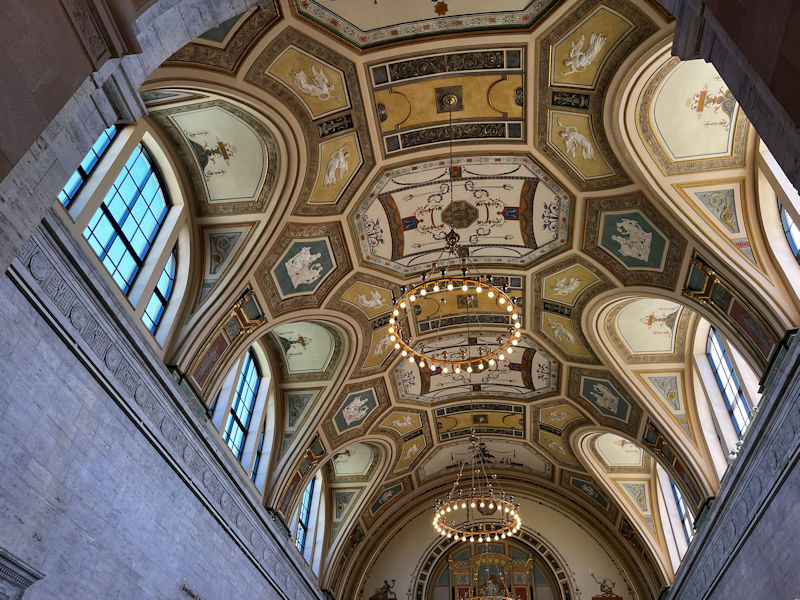
The beautiful ceiling in the Great Hall
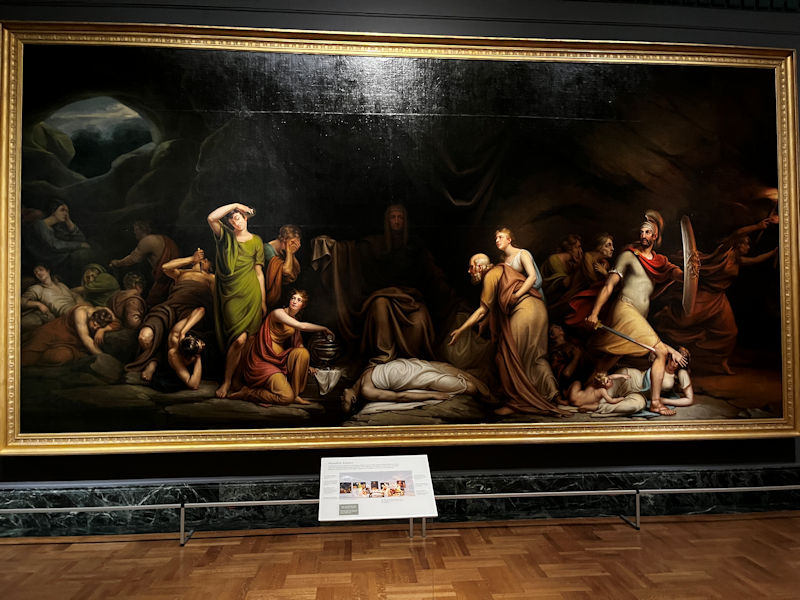
This is called the 'Morality Lesson', by Rembrandt Peale (1778-1860), and is used here to describe in the plaque below it how the artist illustrated various moral lessons. Wow.
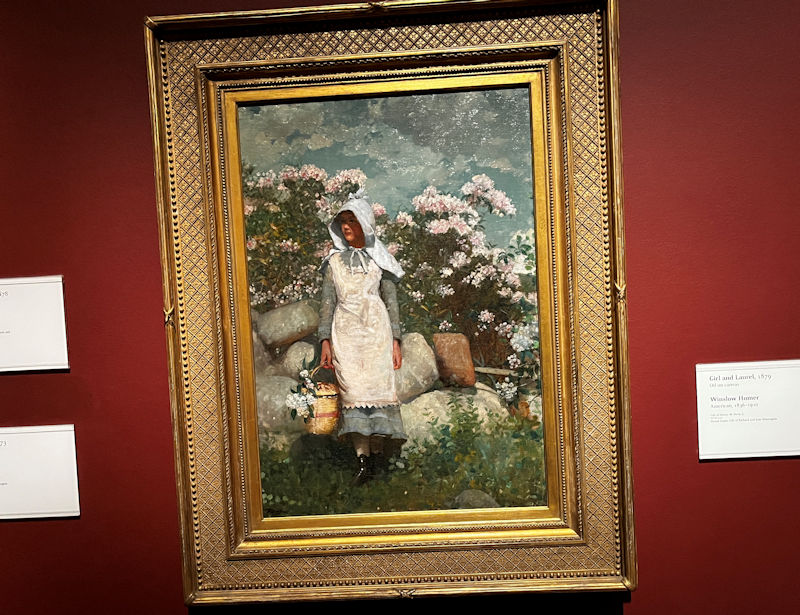
We've wandered into an American art area, oh why not? This is by Winslow Homer, 'Girl and Laurel', 1879.
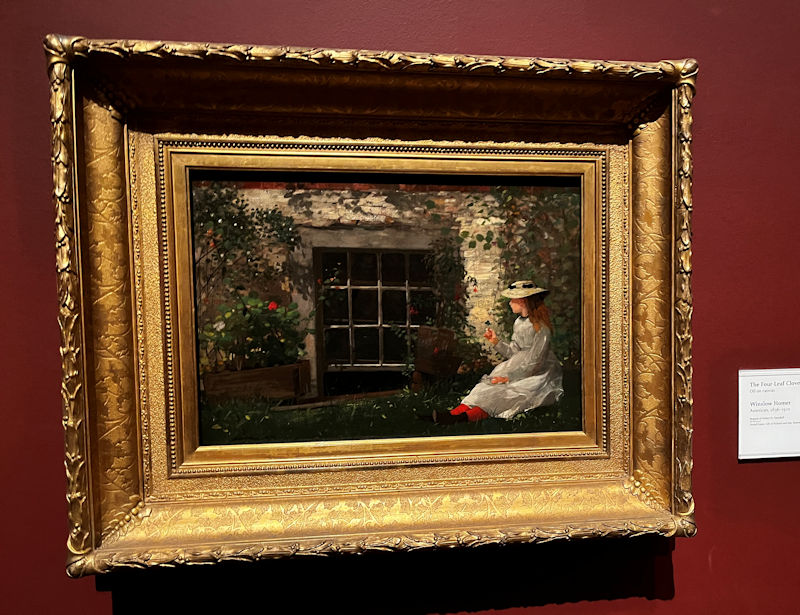
And this by Winslow Homer as well, called 'The Four Leaf Clover', 1873
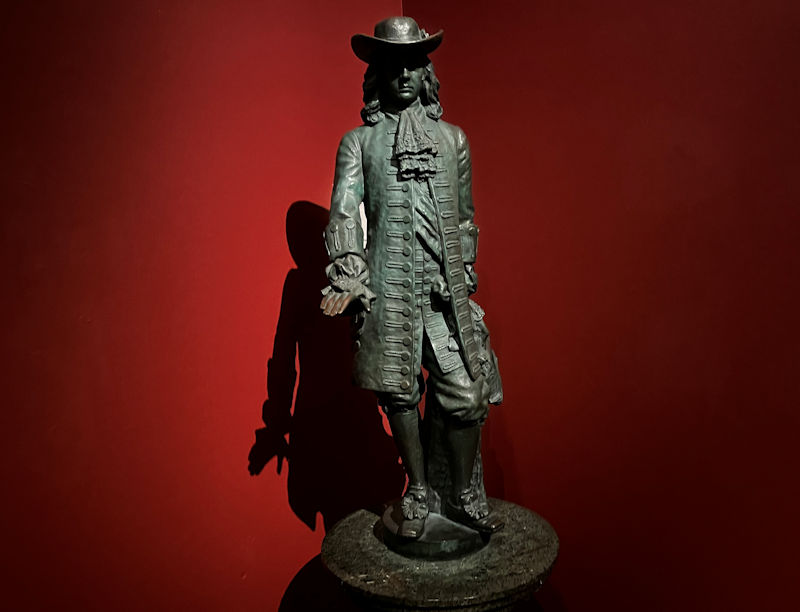
Here's a bronze figure of William Penn, 1886, looking his best apparently, but not happy. By Alexander Milne Calder, 1846-1923.
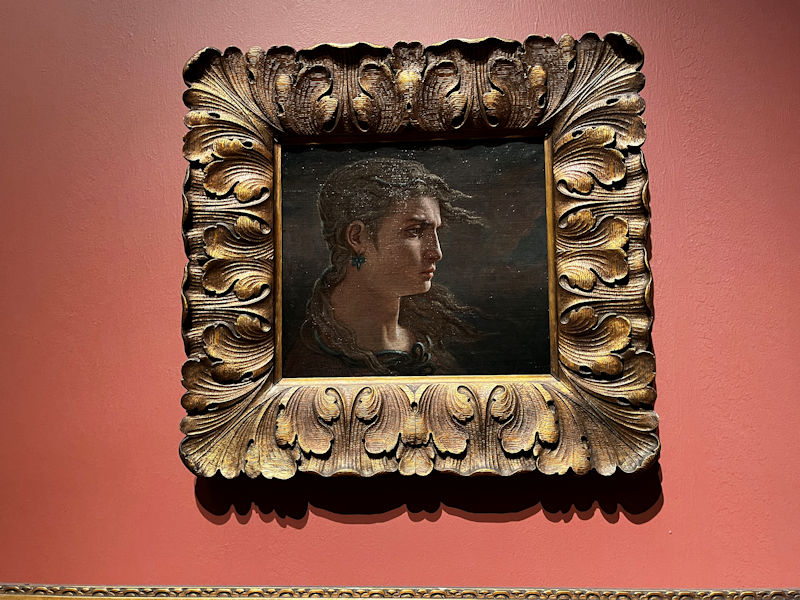
Now our Americans are becoming a little more to our own tastes. This is a head of Medusa (1878) by Elihu Vedder (1836-1923). Vedder worked from some years in the US but after the Civil War he spent most of his time in Europe, especially in Rome and, after the success of his 55 illustrations for Fitzgerald's translation of The Rubaiyat of Omar Khayyam (1884), some time as well amongst the American artists on the Isle of Capri.
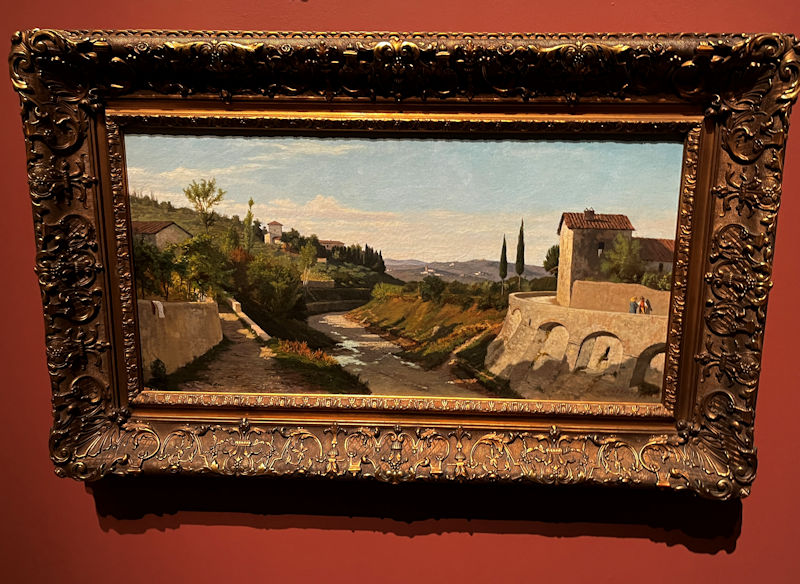
Elihu Vedder's 'Fiesole', 1859 (a suburb 5km northeast up the hill from Florence)
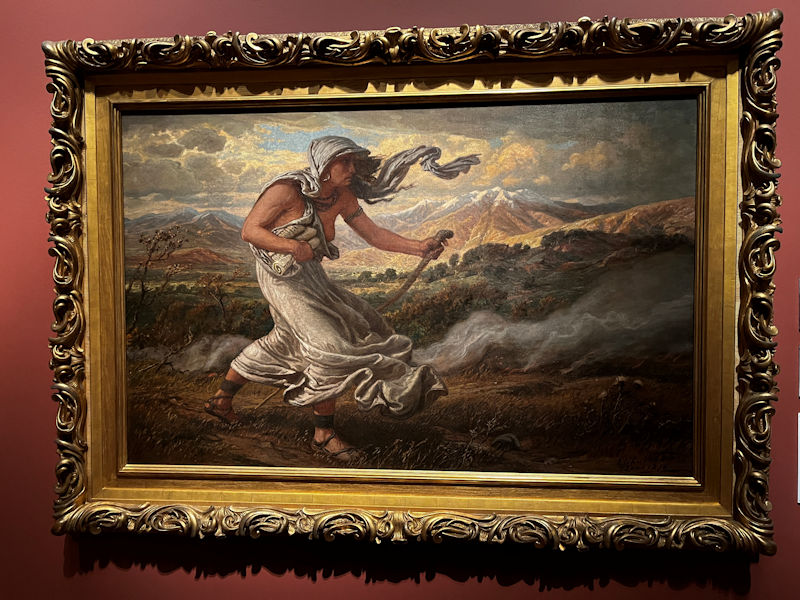
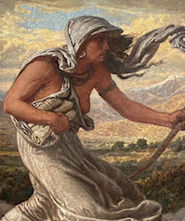
A superclassic by Vedder, 'The Cumaean Sibyl', 1876. In Italian myth, the Sibyl of Cumae has offered her books of prophecy to Rome's King Tarquin but he refused to pay for them. They were allowed to burn in the grass.
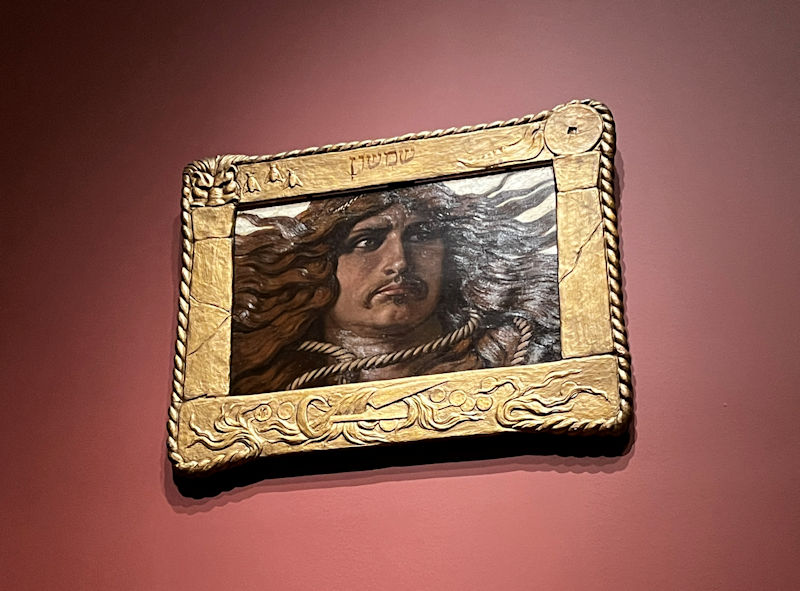
That's Samson, 1886, by Vedder, and . . .
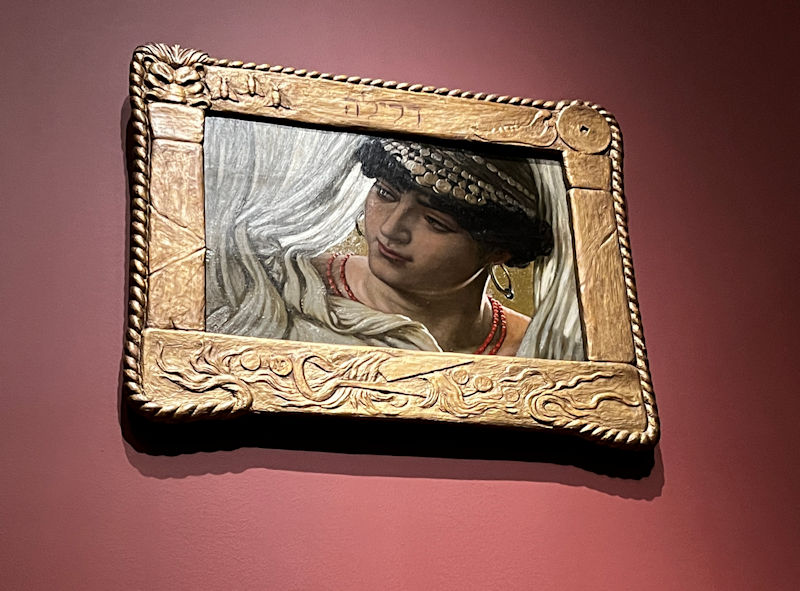
. . . Delilah (1886), also by Vedder, of course.
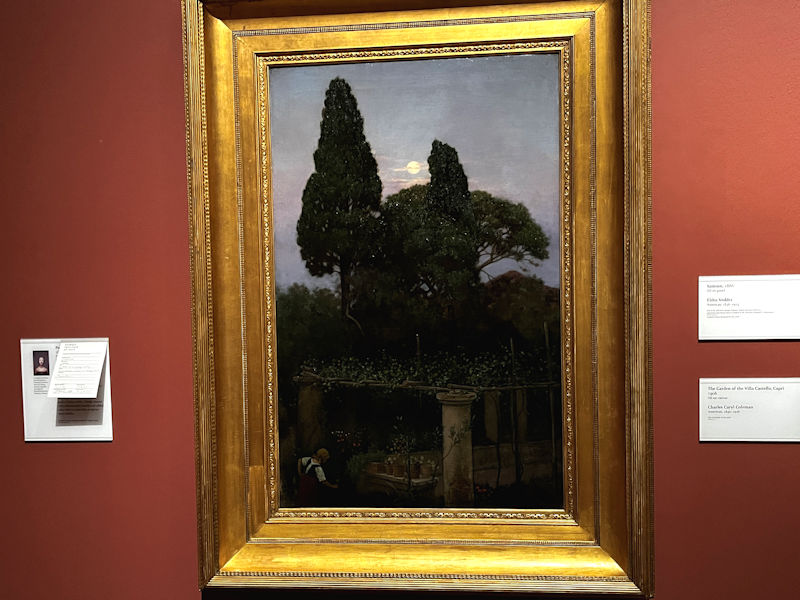
'The Garden of the Villa Castello, Capri' (1906), by Charles Caryl Coleman (1840-1928)
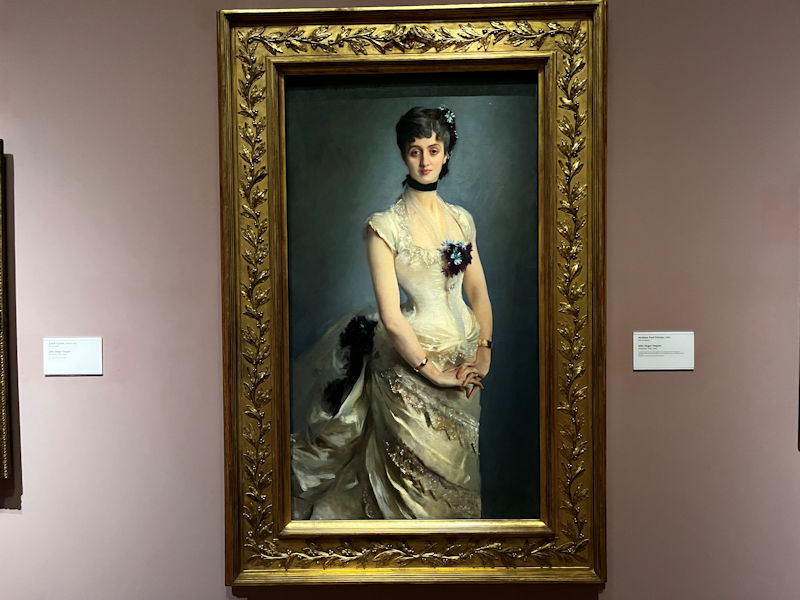
'Madame Paul Poirson', 1885, John Singer Sargent (another American in Europe)
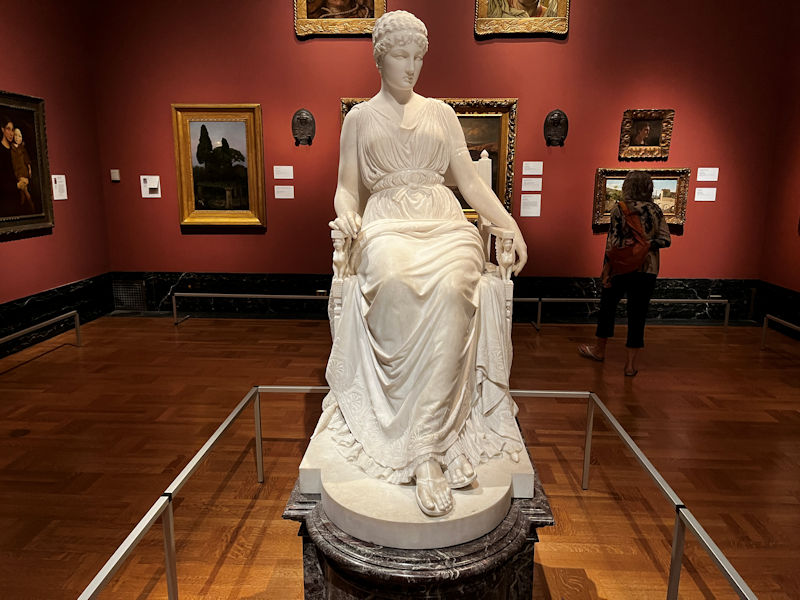
'Penelope', 1903, by Franklin Simmons (1839-1913), who also lived in Rome for many years. His first Penelope in marble was made in 1896, but there are four copies in the US, including this one. His Penelope is probably intended to show the clever patience with which she evaded her suitors until Odysseus came home from the wars.
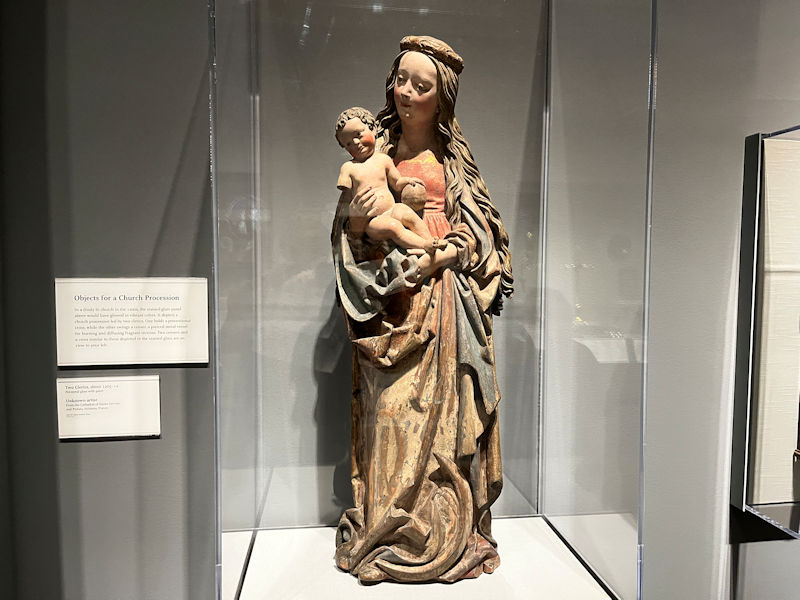
Now we've wandered back to Europe, and here's a nice little one-armed Baby Jesus with his loving mom -- entitled 'Virgin and Child on the Crescent Moon' (1510-20), by Niklaus Weckmann (ca. 1450-post 1526) from Ulm in southern Germany.
We're not entirely sure about that 'Crescent Moon' thing.
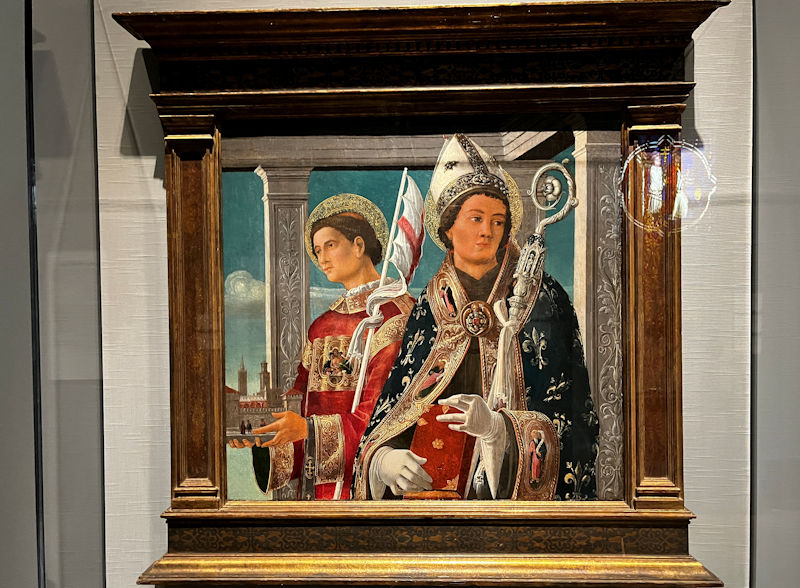
The 'Saints Daniel of Padua and Louis of Toulouse', 1495-99, by Jacopo da Montagnana (1440s-1499).
One doesn't recall ever having heard of either of these young chaps, and we've left our Golden Legend back in Virginia. It's an odd combo, though. St Daniel was an evangelizer of northeastern Italy who was martyred by Marcus Aurelius in AD 168 and is presently the Patron Saint of Prisoners, whereas Louis of Toulouse (1274-1297) was a 13th century son of the Angevin King Charles of Naples -- he became Bishop of Toulouse at the age of 22 and was reputed for having served the poor and fed the hungry until he got tired of that and quit the post and died at 23. He was canonized in 1317, presumably with a certain amount of political pressure.
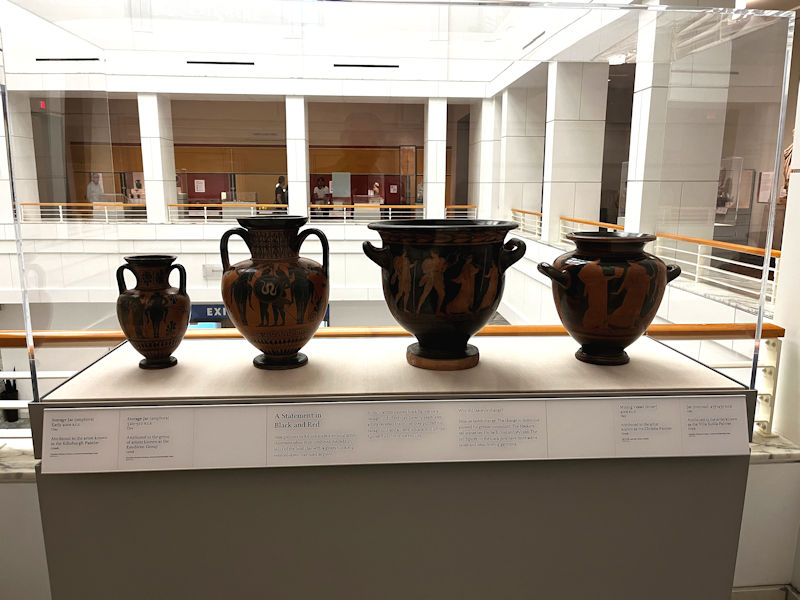
Greek vases in a huge central hall
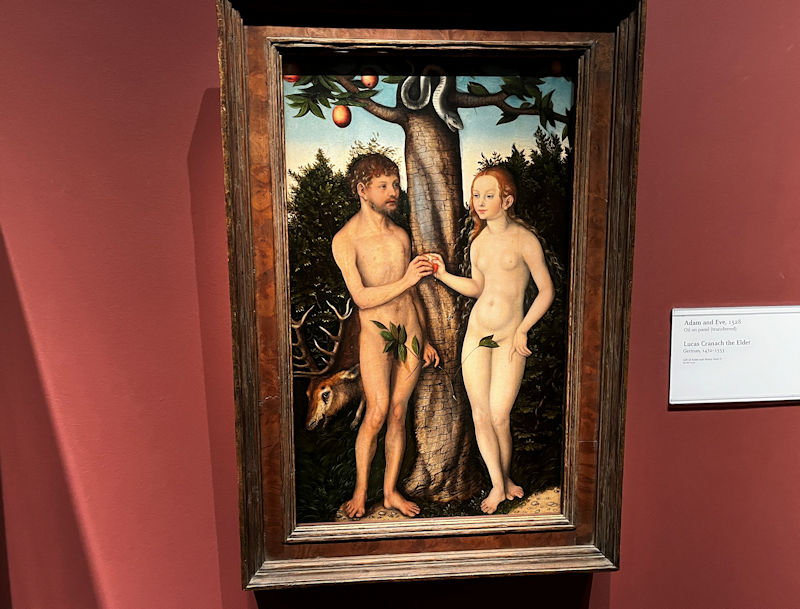
No museum 'worth its salt' should be missing a Lucas Cranach the Elder. This is another 'Adam and Eve', obviously, from 1528.
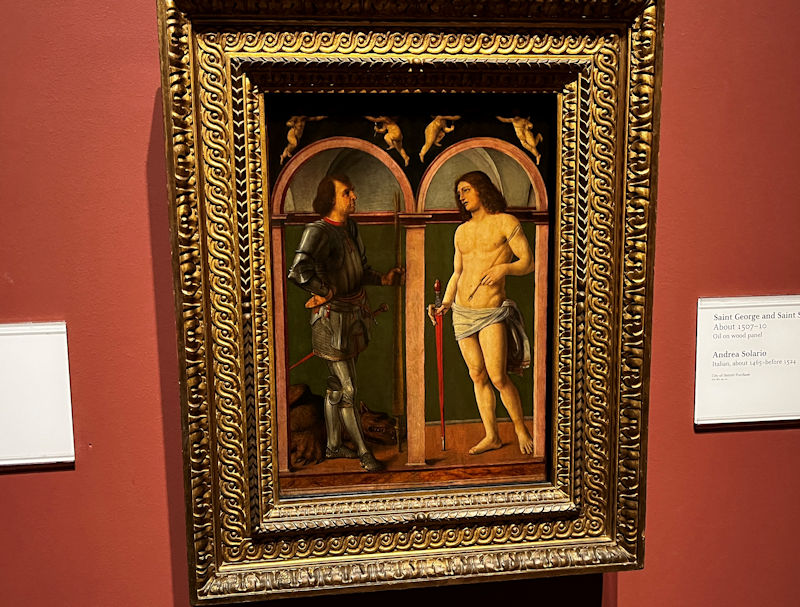
And this is Saint George and Saint Sebastian (1507-10), by Andrea Solario
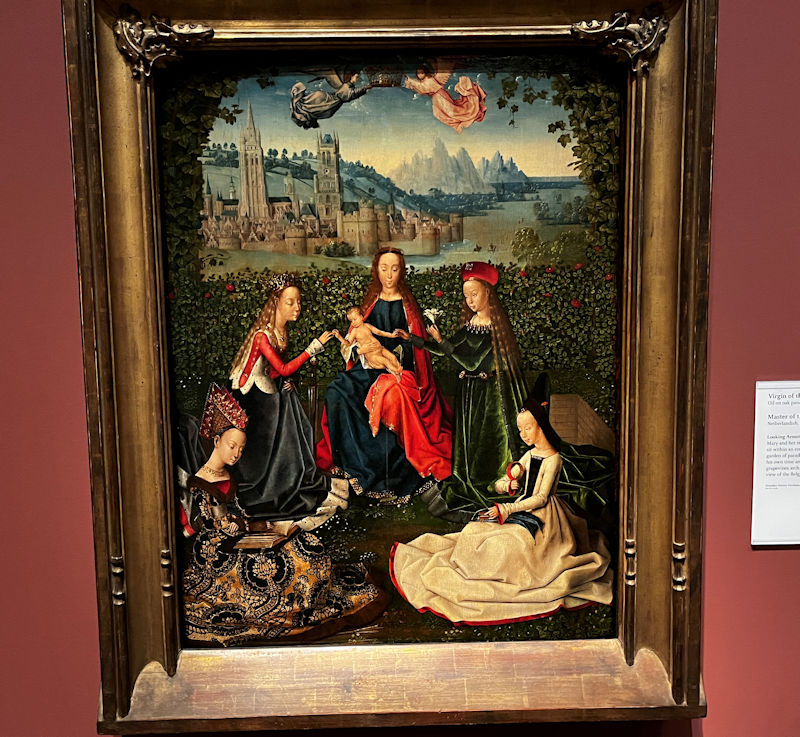
The 'Virgin of the Rose Garden' (1475-80), a frequent theme, this one by the 'Master of the Saint Lucy Legend' from the Netherlands. The town seen in the background is said to be 'an accurate view' of Bruges in Belgium.
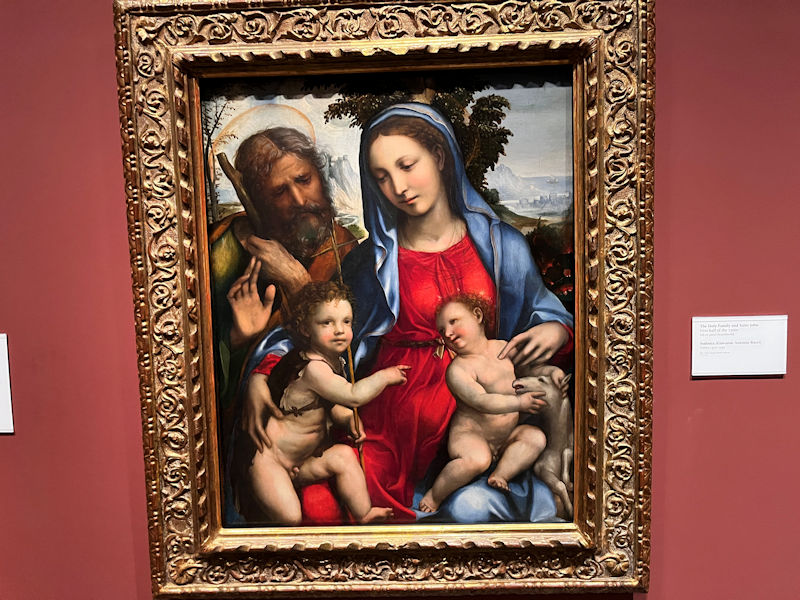
A conventional portrait of the Holy Family, with baby John the Baptist pointing at baby Jesus (early 1500s), by Sodoma. Giovanni Antonio Bazzi (1477-1549) was a well-known painter in Rome and Siena who was a homosexual taunted by the sodomist nickname and, according to Vasari, wasn't bothered by that at all.
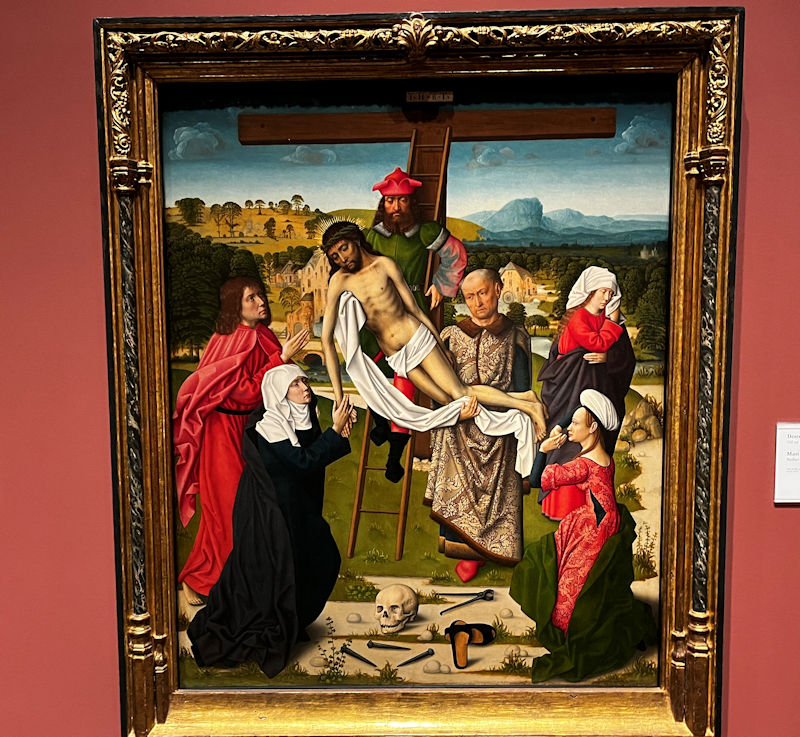
A slightly interesting 'Descent from the Cross', 1500-20, by the Netherlandish 'Master of the Embroidered Foliage' (no kidding), who worked out of Bruges and Brussels.
Next up: A visit to the Detroit Institute of Arts (part 2)





 Dwight Peck's personal website





 Feedback
and suggestions are welcome if positive, resented if negative,
Feedback
and suggestions are welcome if positive, resented if negative,  .
All rights reserved, all wrongs avenged. Posted 15 June 2026.
.
All rights reserved, all wrongs avenged. Posted 15 June 2026.