You may not find this terribly rewarding unless you're included here, so this is a good time for casual and random browsers to turn back before they get too caught up in the sweep and majesty of the proceedings and can't let go.
A visit to the Detroit Institute of Arts (part 2)
30 May 2026
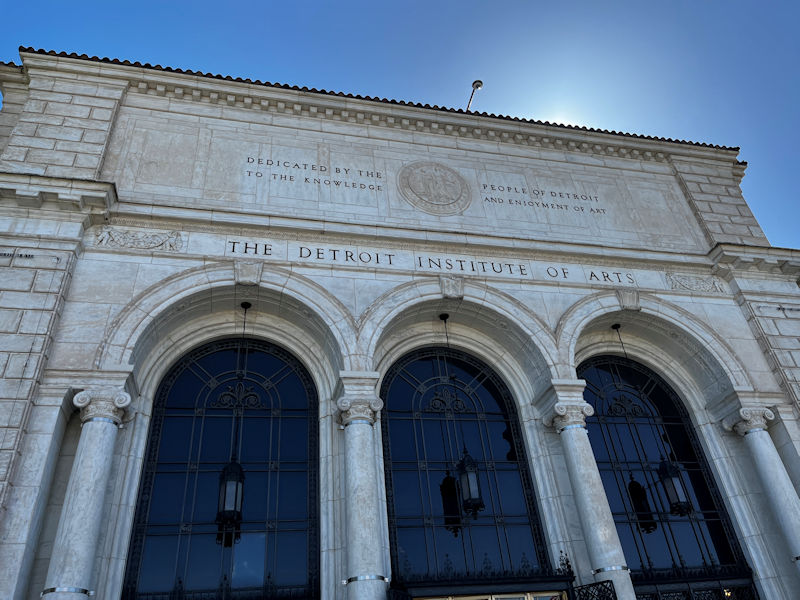
We're visiting Detroit's Institute of Arts and have already seen far more worthy works than we can fit on one webpage. So we continue.
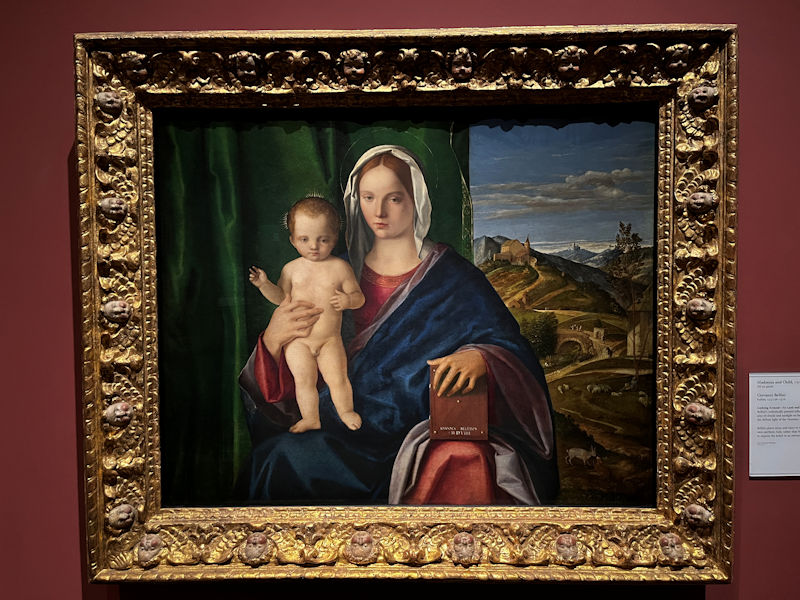
Having spent a fair amount of time in one European late-medieval area, we've wandered into another one. This is another 'Madonna and Child' (1509), by Giovanni Bellini (ca. 1430-1516). Giovanni was a leading Venetian Renaissance painter, along with his relatives Jacopo and Gentile, and his brother-in-law Andrea Mantegna. He was 'considered to have revolutionised Venetian painting, moving it towards a more sensuous and colouristic style' (Wikipedia), which he passed on to his students, amongst whom were Titian and Giorgione. The museum notes that in this picture, he 'places Jesus and Mary in the landscape of his own northern Italy, rather than historic Jerusalem'.
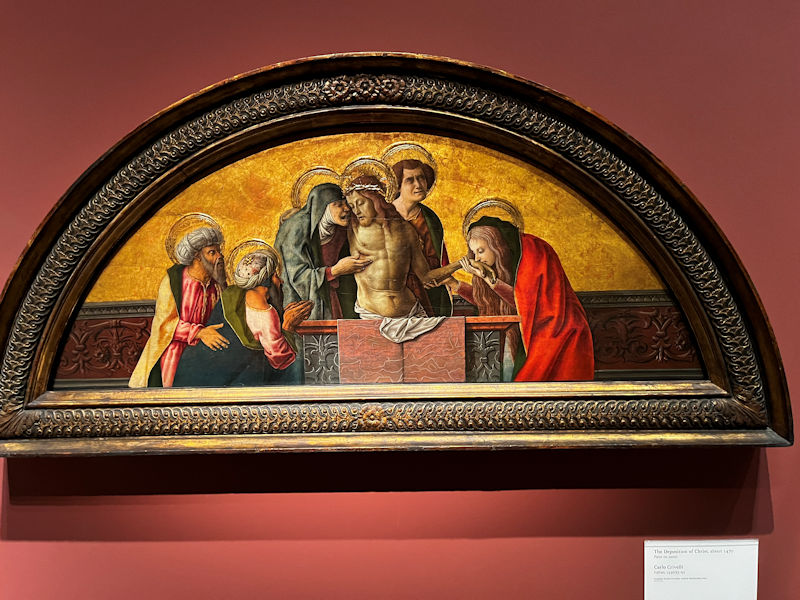
'The Deposition of Christ', ca. 1470, by Carlo Crivelli (ca. 1435-1495), a Venetian artist whose works we ran into only a few years ago in Ascoli Piceno, the Brera in Milan, and the Art Institute of Chicago.
We've also seen a few of a next-generation Crivelli's works, Protasio Crivelli of Milan (active 1497-1506), in the Museo di Capodimonte and the Monastery of San Martino in Naples.
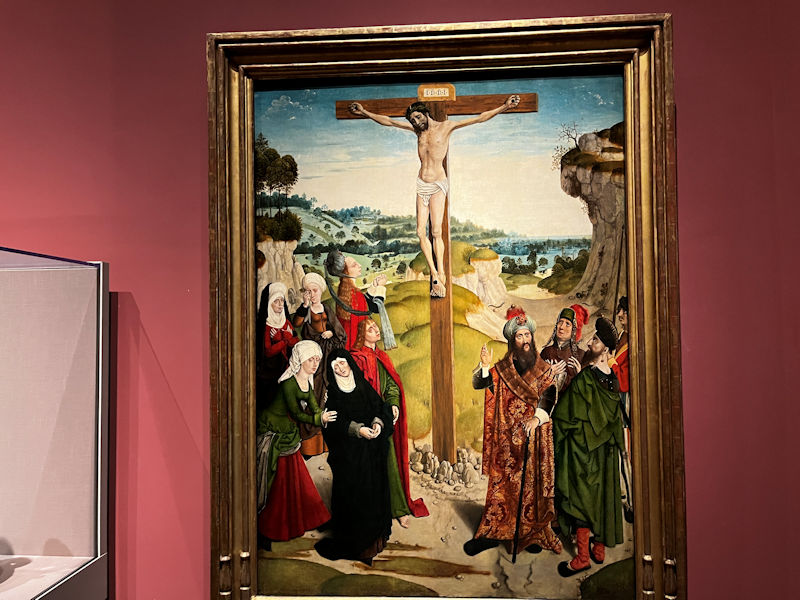
That's labeled 'The Crucifixion', duh (about 1485), by a Netherlander called 'The Master of the Tiburtine Sibyl' (active 1470-90). Jesus's mourners are all on the left, and the chaps with turbans and funny robes are meant to represent the nasties who'd ordered his crucifixion.
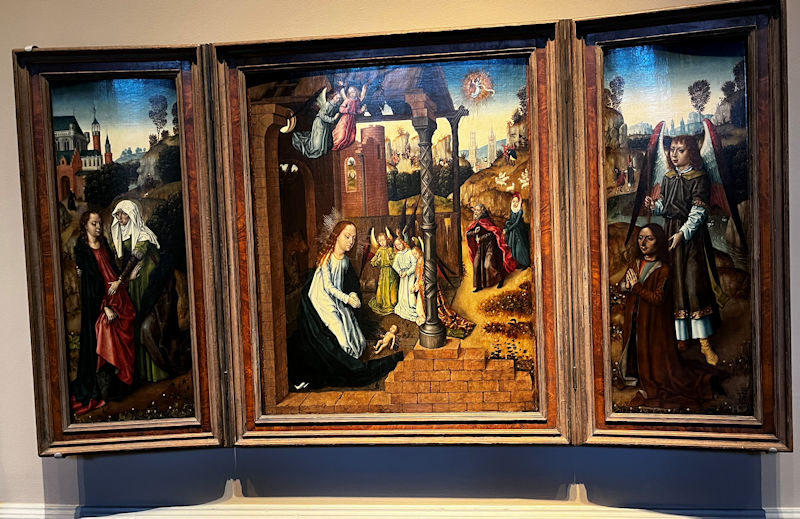
A Nativity from the late 1400s, a triptych with the pregnant Mary on the left wing, the nativity with angels etc. in the central panel, and on the right the donor looking as pious as he can with the angel Raphael helping him along. Attributed to the 'Master of the Saint Ursula Legend' in the Netherlands.
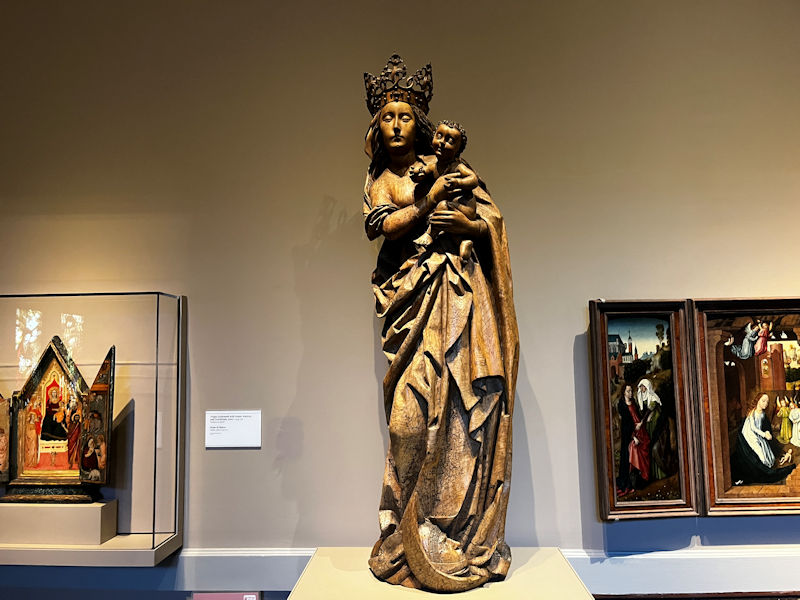
This brilliant limewood piece is called the 'Virgin and Child on the Crescent Moon' (ca. 1480), by the 'Circle of Michel Erhart' of Ulm in southern Germany. It was part of a larger altarpiece and at one time was painted in lifelike colors. No idea what the crescent moon refers or referred to.
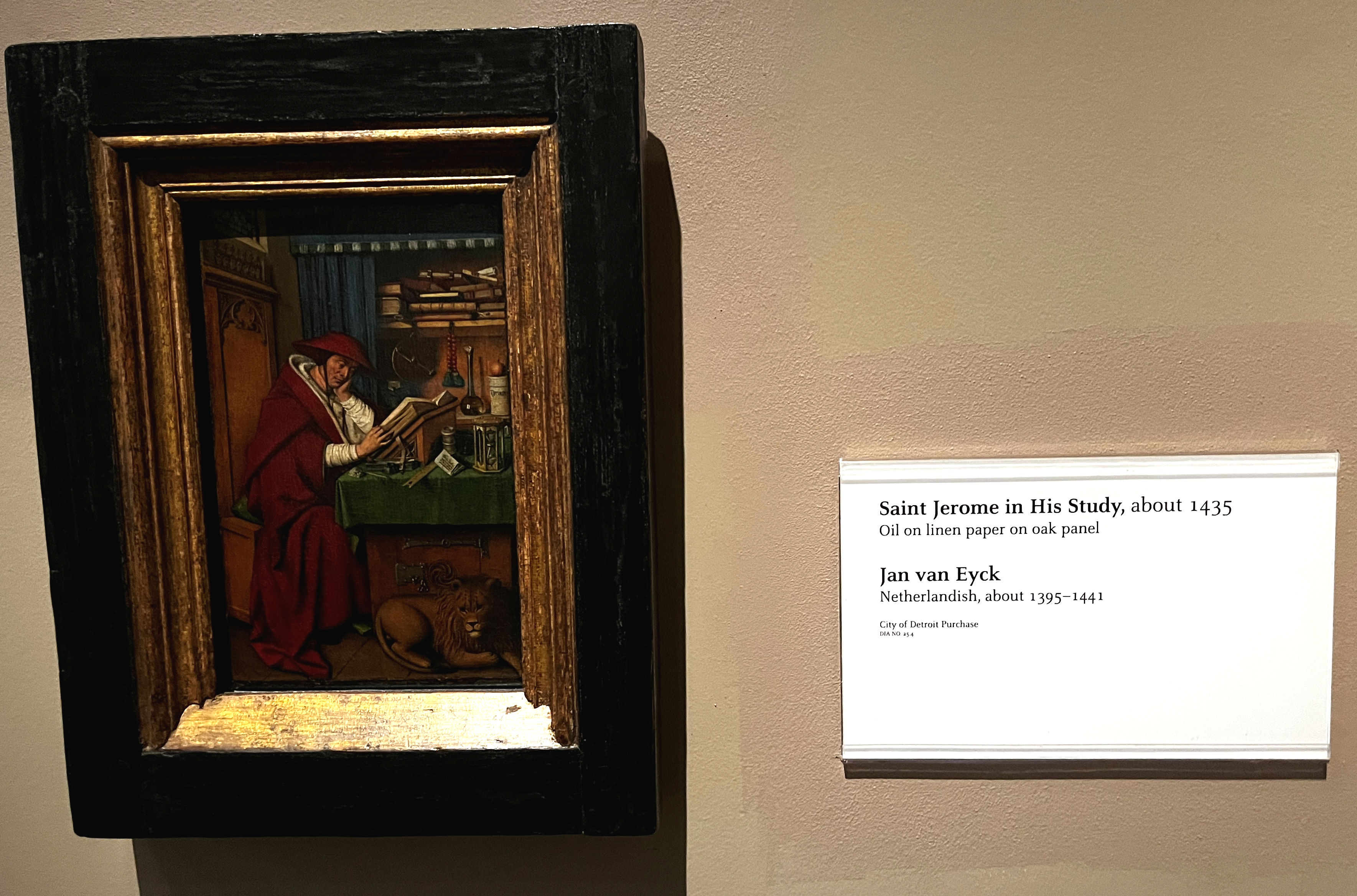
'Saint Jerome in his Study' (ca. 1435), by Jan van Eyck (ca. 1390-1441), an important painter active in Bruges and said to be an 'early innovator' and 'one of the supreme figures of the Early Northern Renaissance', working in both religious and secular spheres. The 'Arnolfini Portrait' (1434) now in London is probably his most famous work.
Notice his pet lion under his table. See below.
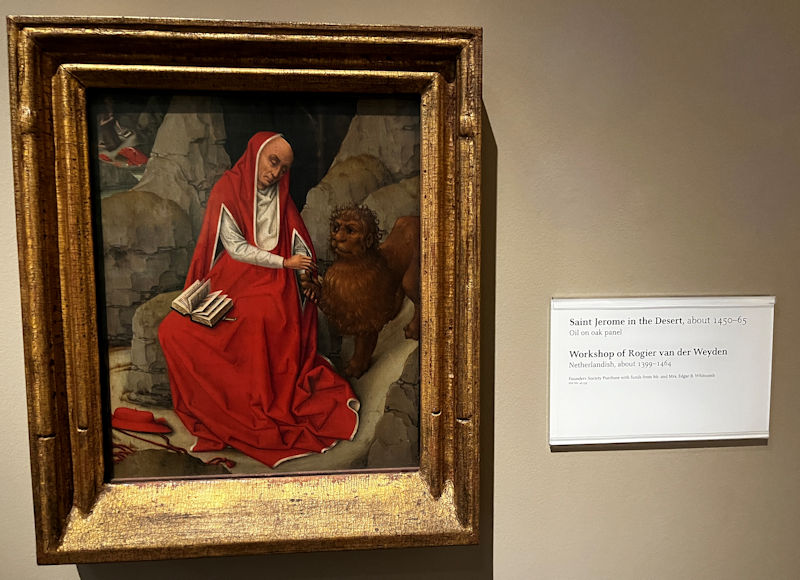
More from the Netherlands: 'Saint Jerome in the Desert' (ca. 1450-65), removing the thorn from the lion's paw thus befriending it, by the workshop of Rogier van der Weyden (ca. 1400-1464), a master of religious triptychs and altarpieces, chiefly working in Belgium.
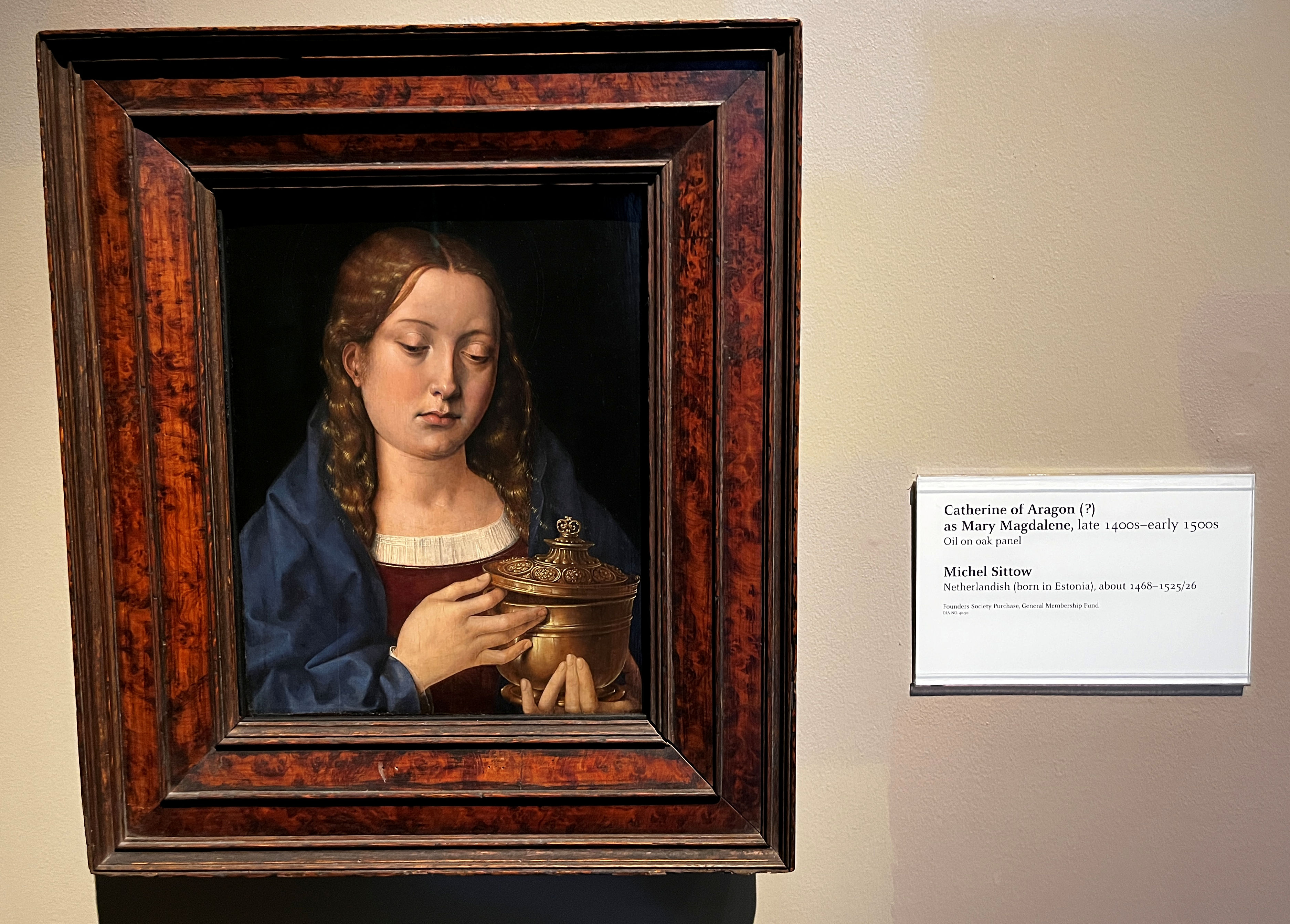
An interesting picture of somebody as Mary Magdalene (ca. 1500), identified here as 'Catherine of Aragon(?)' for some reason, by an Estonian named Michel Sittow working in the Netherlands. The ointment jar was normally the required prop for her representations.
Sittow (ca. 1469-1525) learned his trade in Bruges as an apprentice of Hans Memling, but over his long career he did spend a lot of time in Spain, especially as a favorite of Queen Isabella, and later in the Spanish Netherlands, and he did make at least one portrait thought to be of Catherine of Aragon (not this one) which is now considered actually to have been of Mary Tudor, daughter of King Henry VII. He returned to Estonia in about 1516.
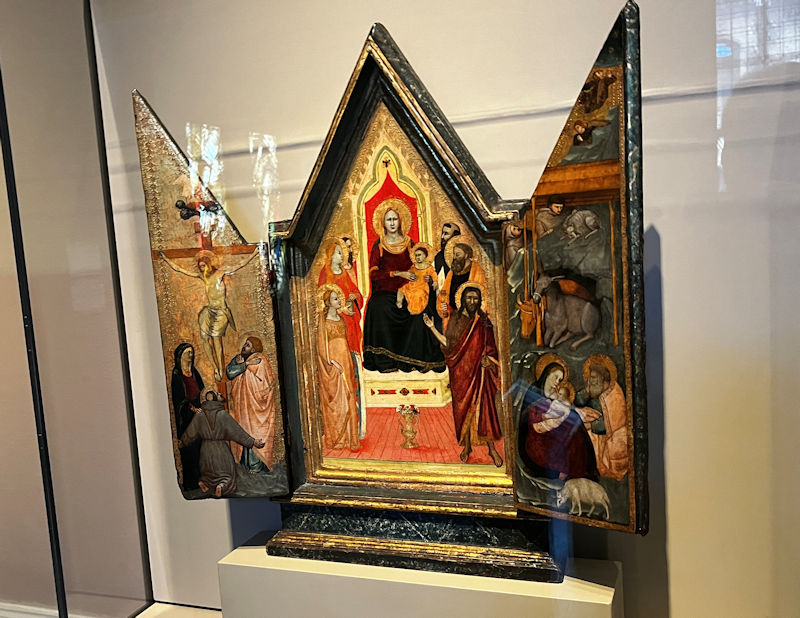
This is an odd triptych called 'Virgin Enthroned with Saints, Nativity, and Crucifixion' (ca. 1335-50), by Maso di Banco. Some of the detail is interesting, for its time, but the lighting in the room precludes a head-on photo of it. Maso di Banco was active in Florence, also ca. 1335-1350, and considered to be one of Giotto's most prominent students. This triptych here is listed by Wikipedia as one of his three most notable works.
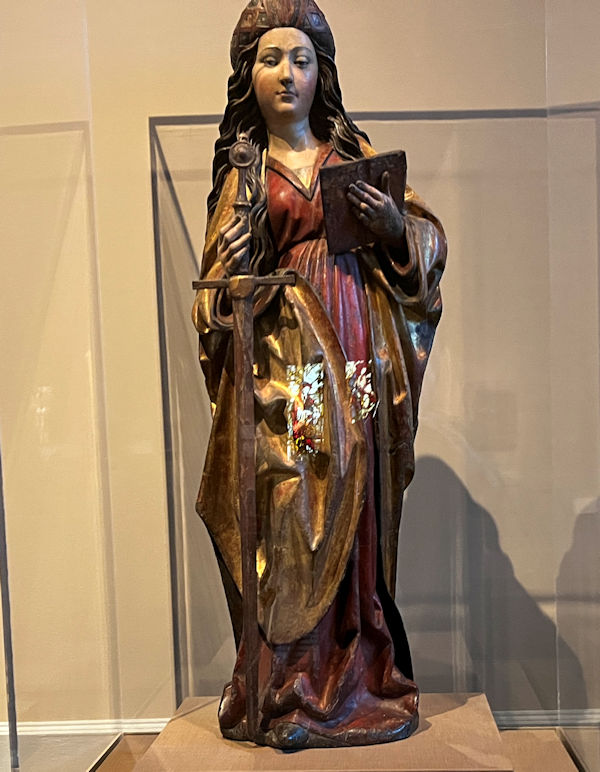
Here in the 'Christian Saints were the Heroes of the Middle Ages' room, this limewood sculpture is entitled 'Saint Catherine' (late 1400s), by an unnamed Swabian German, though why she's carrying a sword instead of her usual torture-wheel isn't clear (assuming that she's meant to be Catherine of Alexandria).
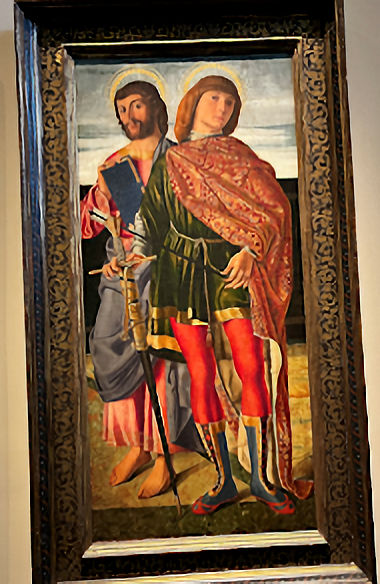
Here's a proper parade of Hero Saints, Saint Paul and Saint James the Elder (aka James the Great) on the left and Saint Matthew and Saint Sebastian on the right, both by Cristoforo Caselli of Parma, known as Il Temperello (1460-1521). St Paul's got his legendary bald head on, and St James, the first martyr and patron saint of Spain, is clutching his traditional book and staff. St Matthew's got his accustomed gospel book, but Sebastian's only been caught with one arrow this time.
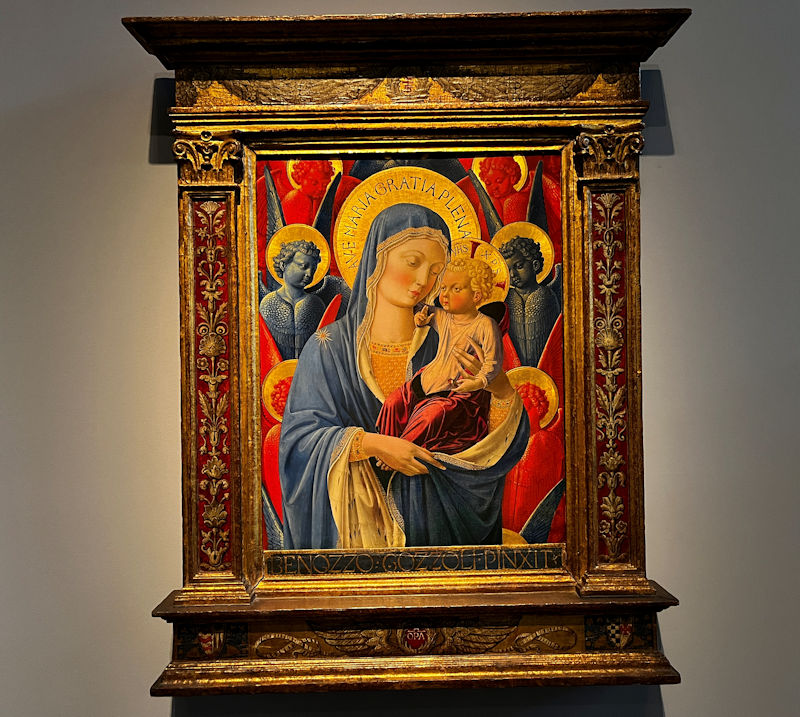
This is a 'Virgin and Child with Angels' (ca. 1460), by Benozzo Gozzoli from Florence (ca. 1421-1497), a student of Fra Angelico. The slightly scowling Christ child seems a little distracted from practicing his little two-finger benedictions.
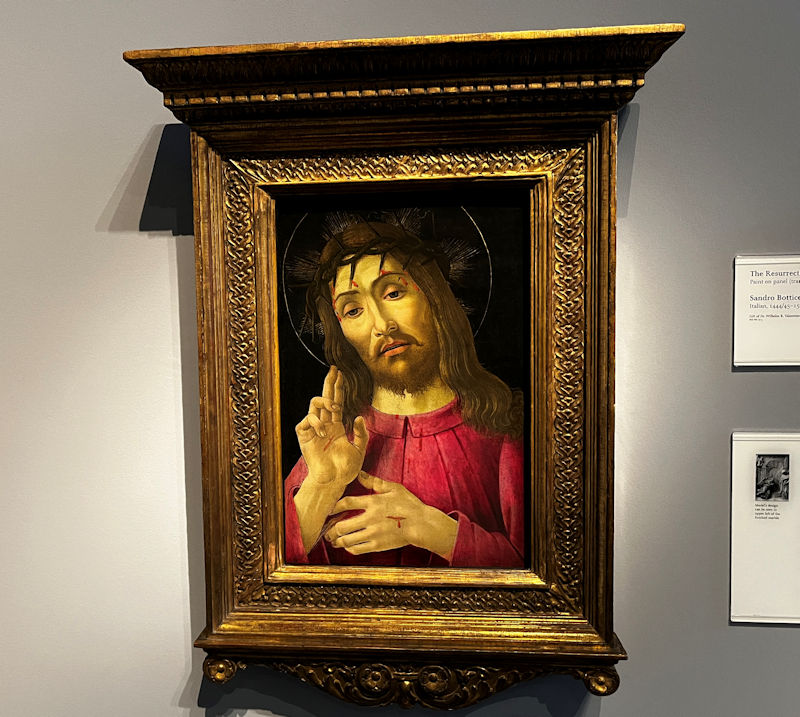
The two-fingered benediction can apparently still come in handy after the Resurrection (ca. 1480), this by the great Botticelli.
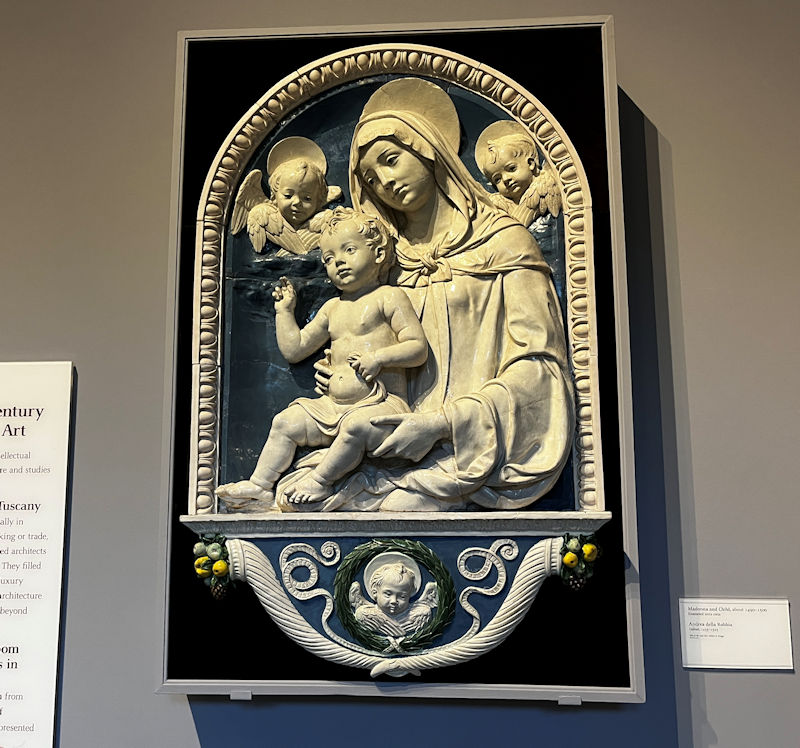
This is one of Andrea della Robbia's glazed terra cotta works, a Madonna and Child (ca. 1490-1500). The 15th & 16th century Della Robbia family of Florence worked mostly in this medium: dad Luca, nephew Andrea, and great-nephews Giovanni and Girolamo produced individual pieces for patrons along with a workshop that produced inexpensive works from molds.
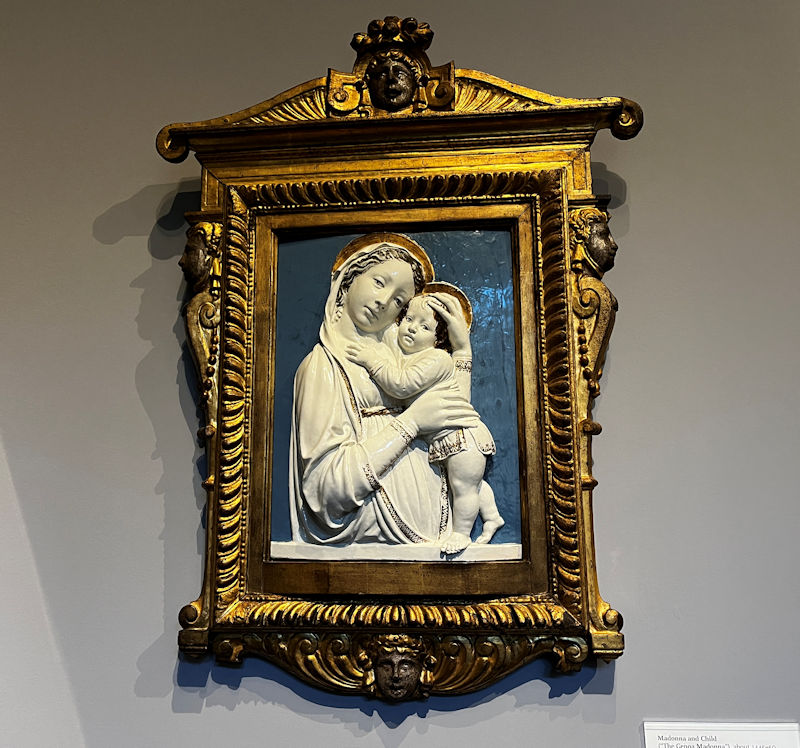
This one is by Andrea's dad Luca (1399-1482), known as the 'Genoa Madonna' (ca. 1445-50). It was Luca who invented the technique of modeling in wet clay to make terra cotta, then adding enamel in white or blue and firing the piece a second time. The family's works are virtually everywhere.
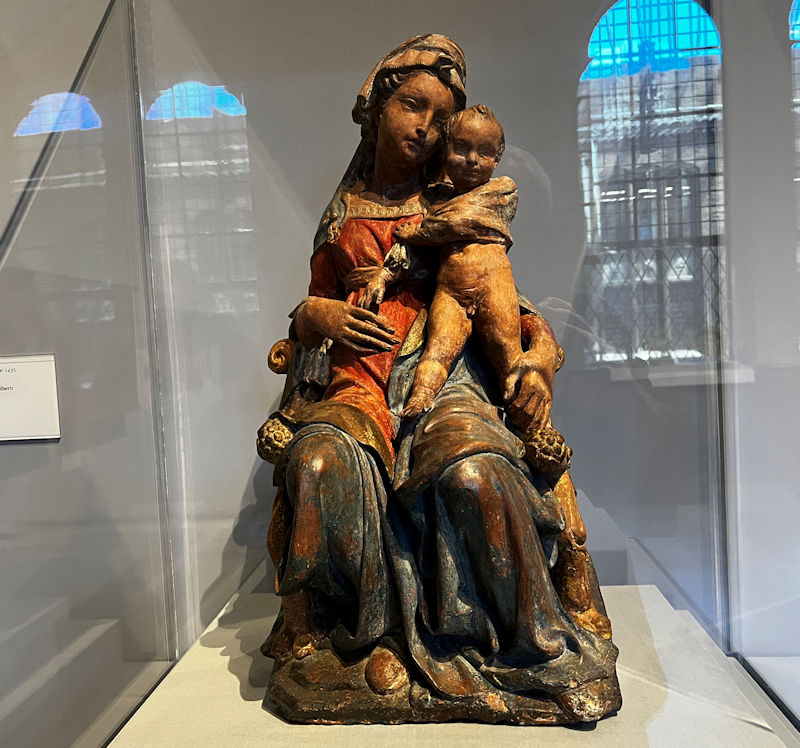
This painted, gilded terra cotta 'Madonna and Child' (ca. 1414) is by the amazing Donatello. Here the baby Jesus is tugging at mommy's robes, showing his energy and strength, whilst mommy looks on tenderly.
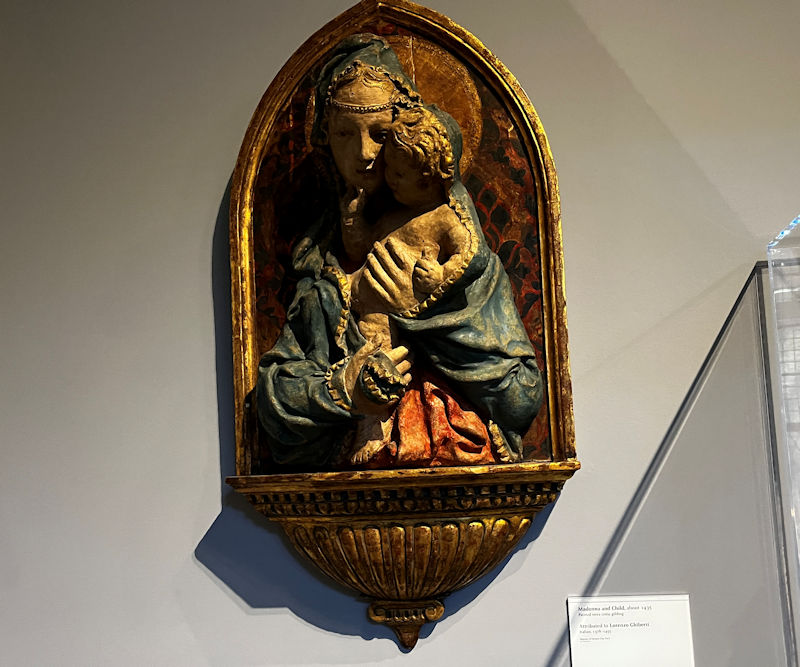
And this painted terra cotta gilded piece, also of the Madonna and Child (ca. 1435), is attributed to Lorenzo Ghiberti (1378-1455).
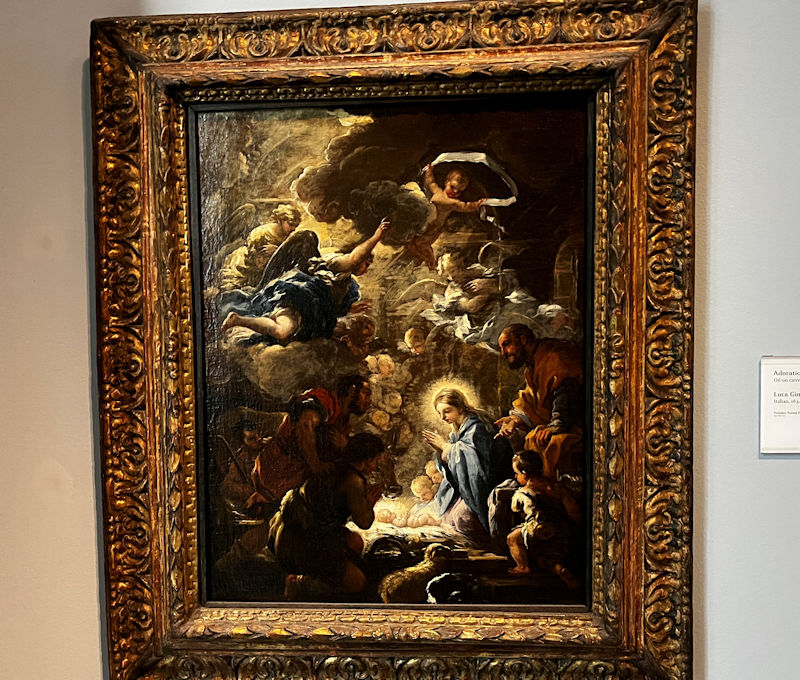
This intense 'Adoration of the Shepherds' (1690-91), with lots of little angels crowding all round, is by Luca Giordano of Naples (1634-1705), who indeed worked mostly in Naples but also in Florence for a few years, and in Spain for ten years at the invitation of King Charles II, from 1692 to 1702.
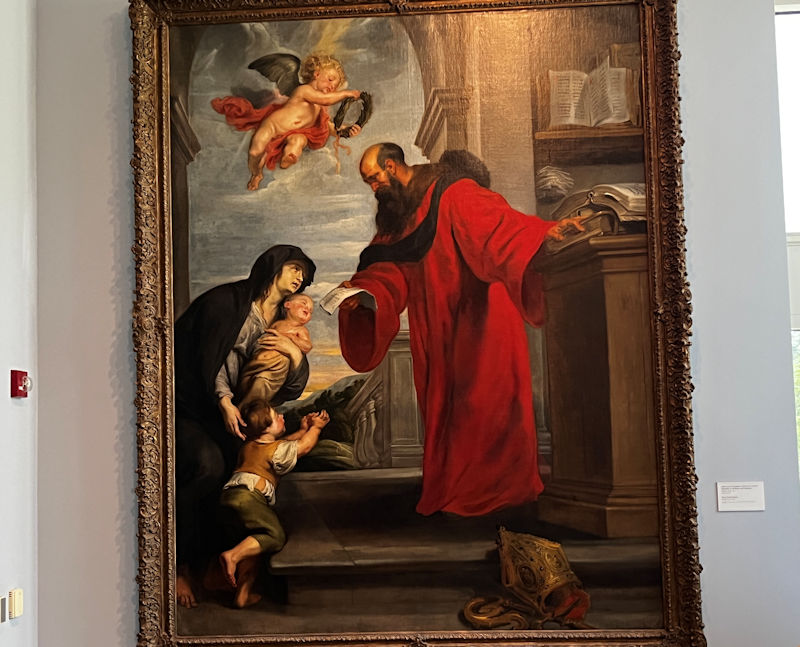
That's 'Saint Ives of Treguier, Patron of Lawyers, Defender of Widows and Orphans' (ca. 1615), by Rubens. Rubens is often described as 'the leading Flemish Baroque painter of the 17th century', as well as a gifted diplomat who helped negotiate agreements to bring about peace between the Catholic Spanish Netherlands and Protestant Dutch Republic (ennobled by Philip IV of Spain in 1624 and knighted by Charles I of England in 1630).
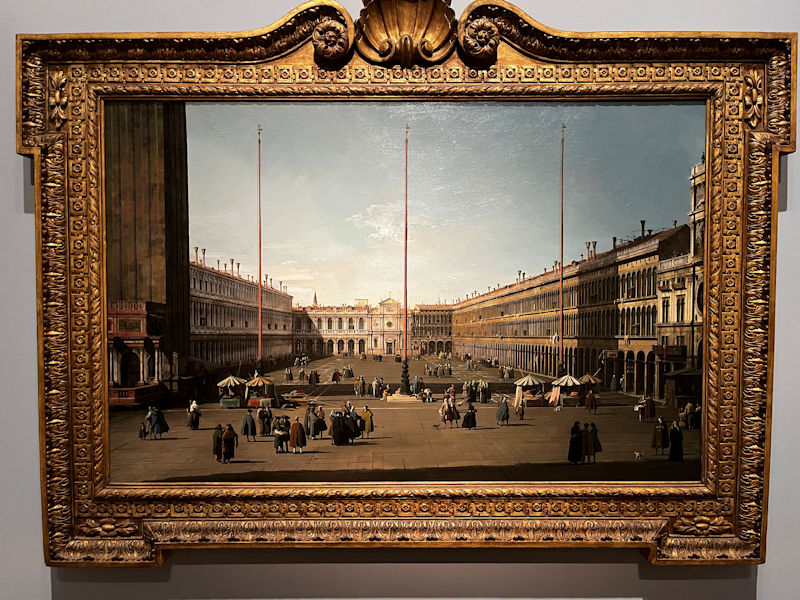
'The Piazza of San Marco' in Venice (ca. 1739) by the inimitable Canaletto
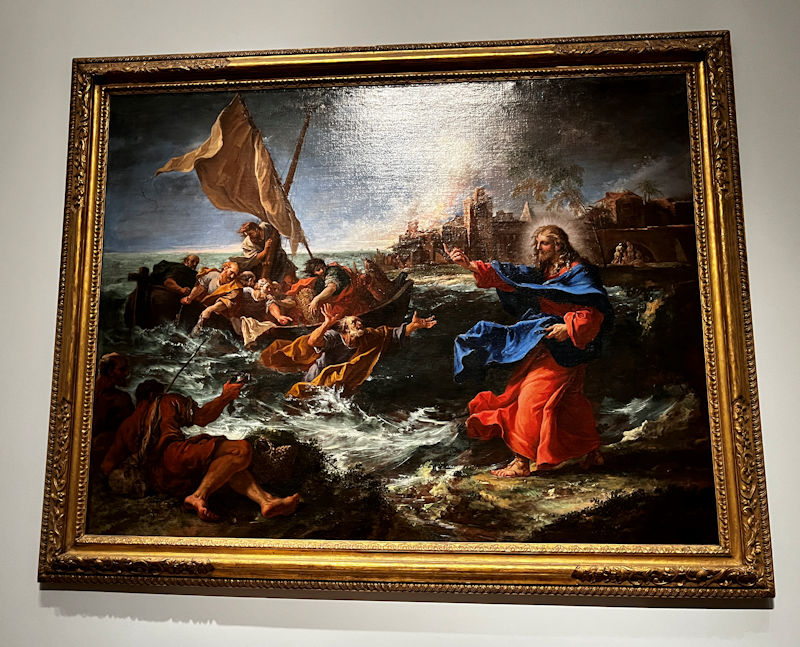
'The Miraculous Draught of Fishes' (ca. 1695-97), by Sebastiano Ricci (1659-1734), who was born and died in the Veneto but throughout his productive career worked all over Italy as well as London and Paris, not infrequently avoiding legal troubles.
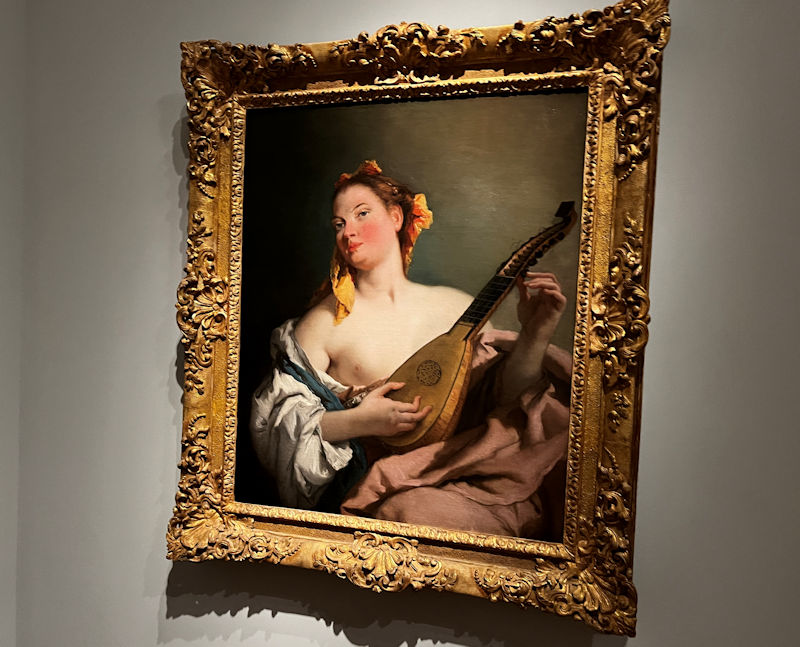
'Woman with a Mandolin' (ca. 1755-60), by Tiepolo (1696-1770), the prolific rococo Venetian painter.
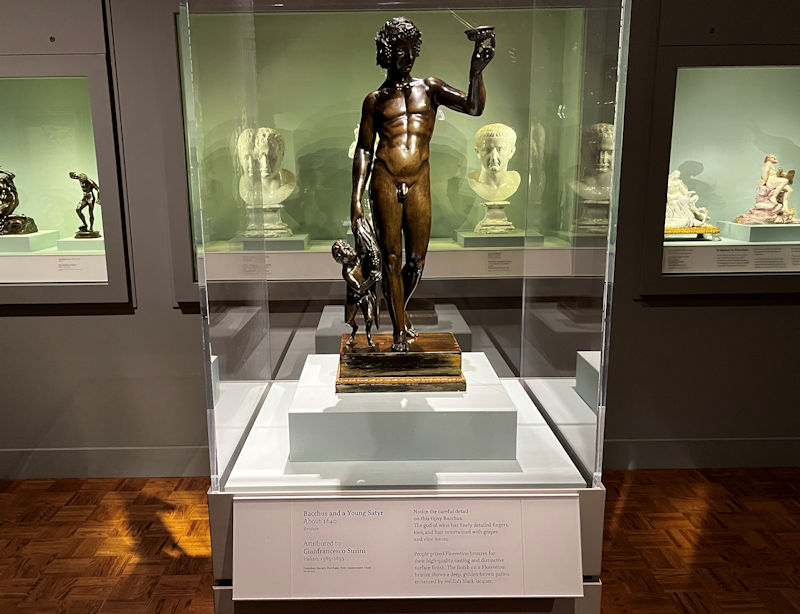
Another classic 'Bacchus and a Young Satyr' bronze (ca. 1640), attributed to Gianfrancesco Susini (1585-1653).
Arguably, there may be too many of these around.
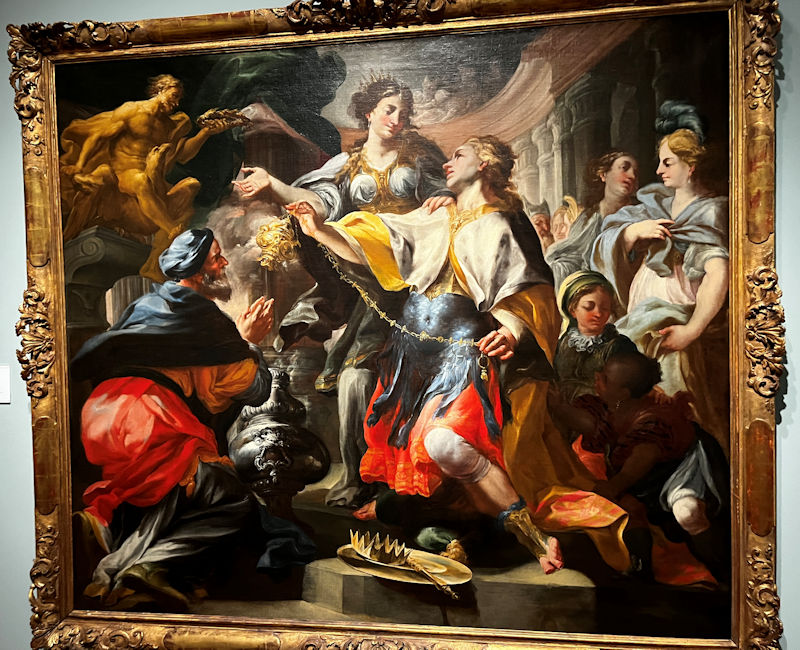
This overloaded scene is meant to represent 'Solomon Worshiping a Pagan God' (ca. 1695-1700), by Domenico Antonio Vaccaro (1678-1745). Perhaps it's communicating a hidden message of some kind.
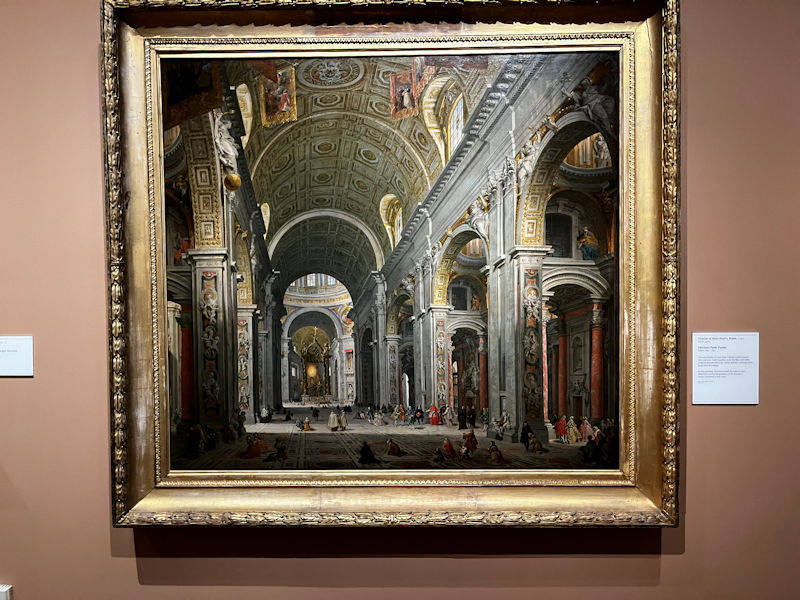
'Interior of Saint Peter's, Rome' (1750), by Giovanni Paolo Panini (1691-1765), included here because of the amazing attention to detail and because we feel that among the most impressive things about Italy are the panini.
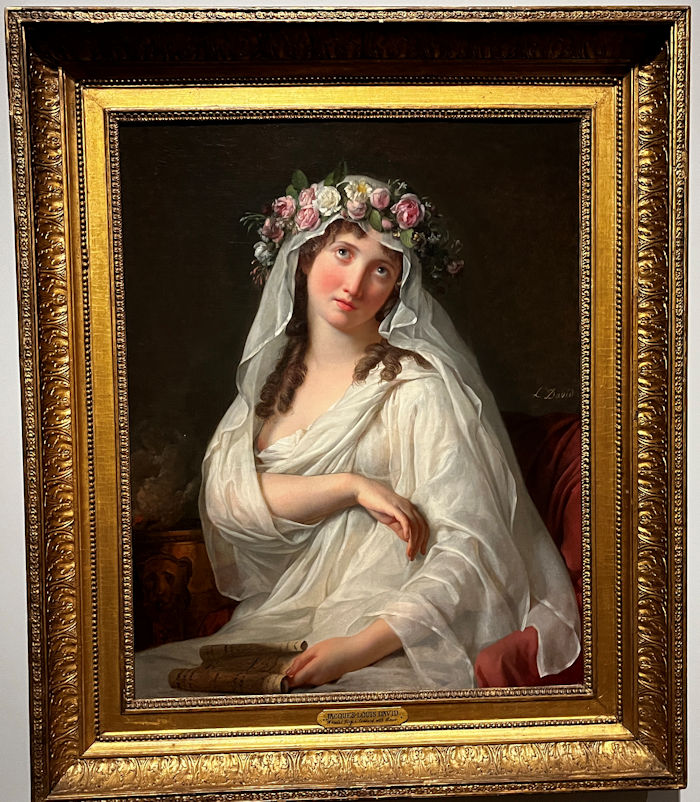
Called a 'Vestal Tending the Sacred Fire' (i.e., a little of smoke on the left) (ca. 1787), by Jacques-Louis David; the model is said to be the famous actress Mlle Raucourt known for a sometimes awkward private life.
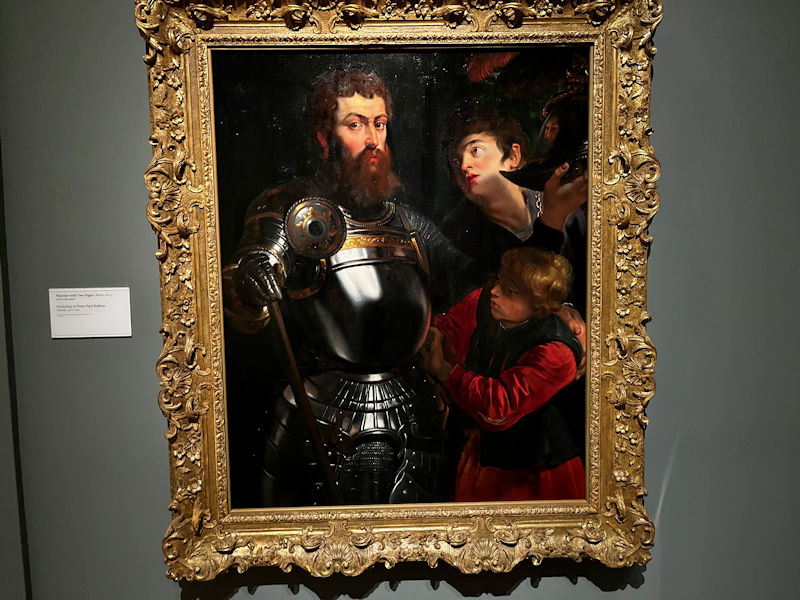
A classic by Rubens, or at least by his workshop, the 'Warrior with Two Pages' (ca. 1615) -- the distinctly manly Servant of Society when he's needed.
-- Don't insult him!
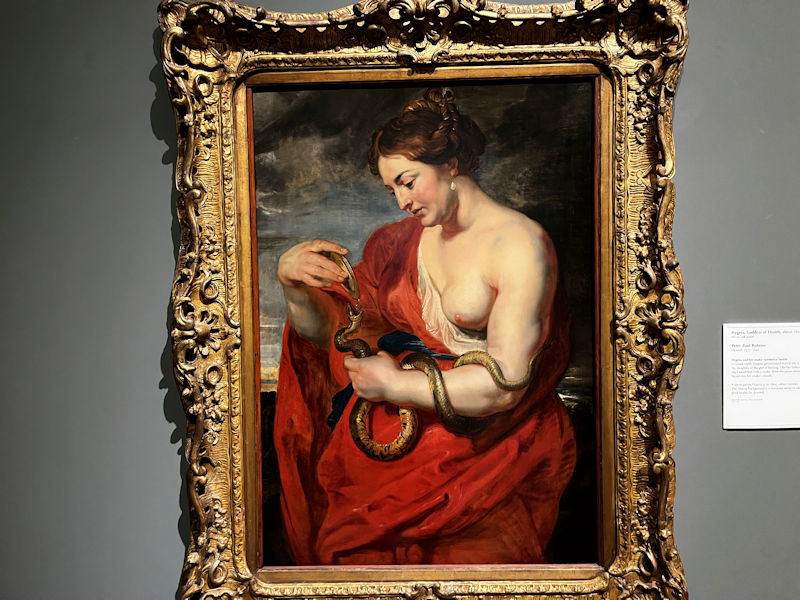
That is not Cleopatra with her asp! It's 'Hygeia, Goddess of Health' (ca. 1615), by Rubens. According to the label, 'Like her father, she's identified with a snake. Here she pours restoring liquid into her snake's mouth'.
-- What?!?!
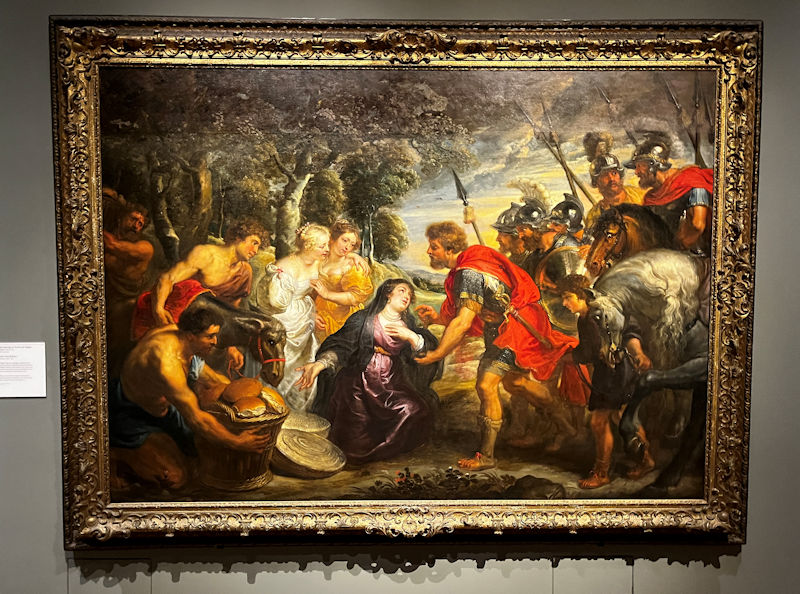
Still more Rubens: 'The Meeting of David and Abigail' (ca. 1625-28). Apparently, Abigail's husband had insulted David, so she rushed over to apologize and bring food supplies for his army. David is impressed and immediately falls in love. Bible story!! (1 Samuel 25)
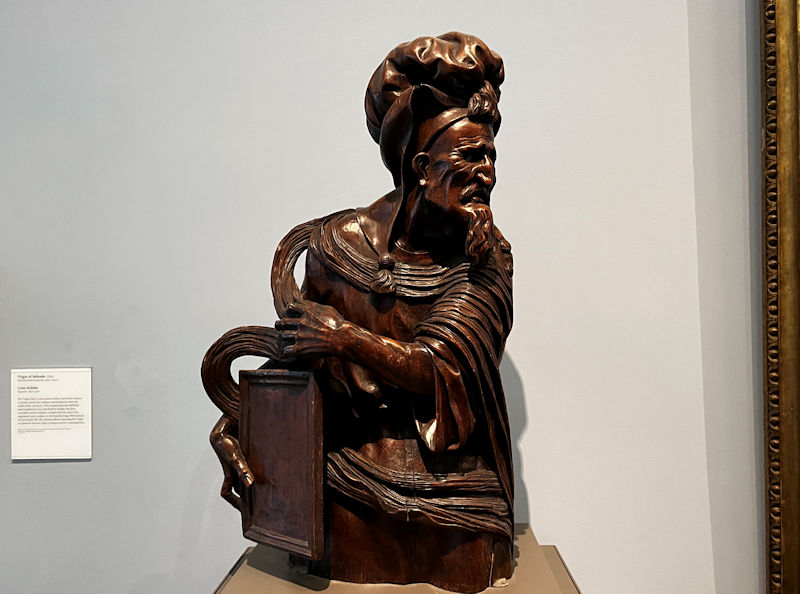
[No caption would be helpful here.]
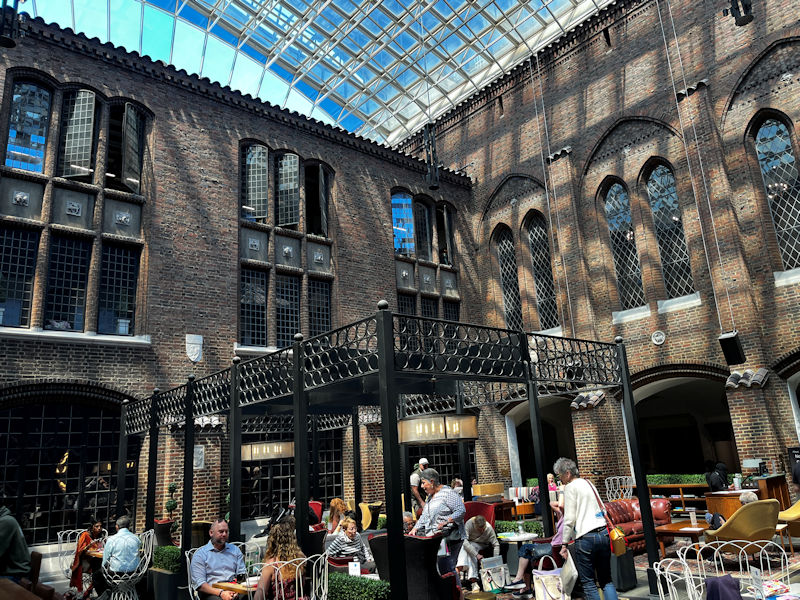
Lunch time in the Kresge Court. There's a fully functional café/restaurant across the ground floor corridor, but this is a very pleasant snack-sort-of-place (a big croissant & a coke for me).
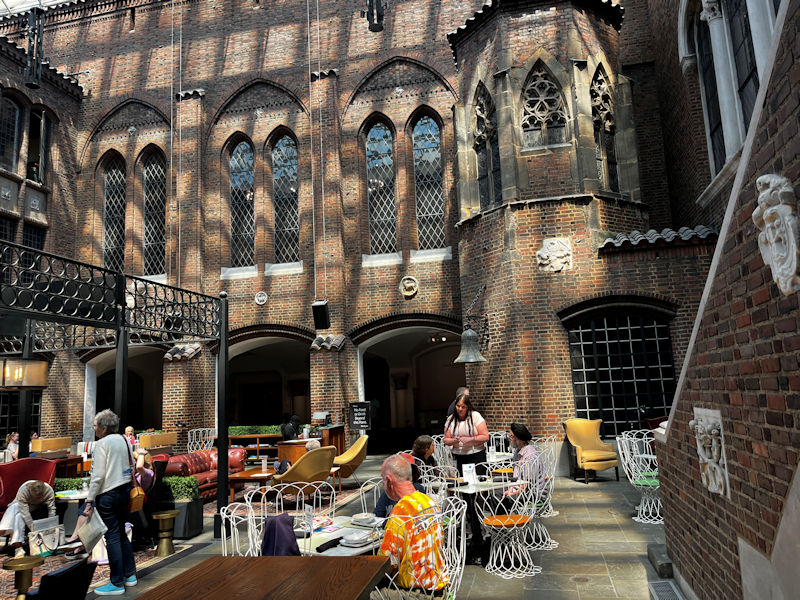
It was built in 1927 as an outdoor courtyard intended to recall similar ones in the medieval castles of Italy, based on the courtyard of the Palazzo del Bargello in Florence. In 1961, a glass roof was donated by the Kresge Foundation.
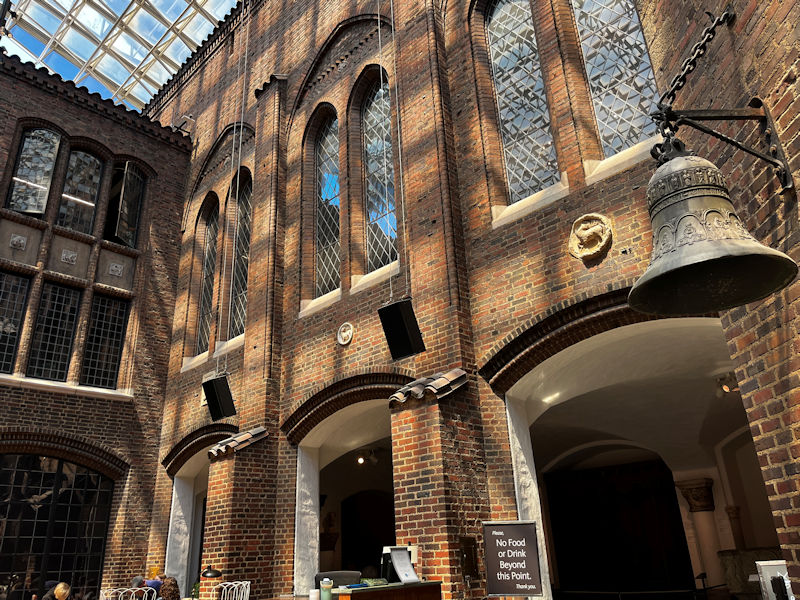
All four walls incorporate elements of 15th to 17th architectural characteristics from various parts of Europe, with a collection of authentic carved coats of arms stuck up on the walls. It's very charming really.
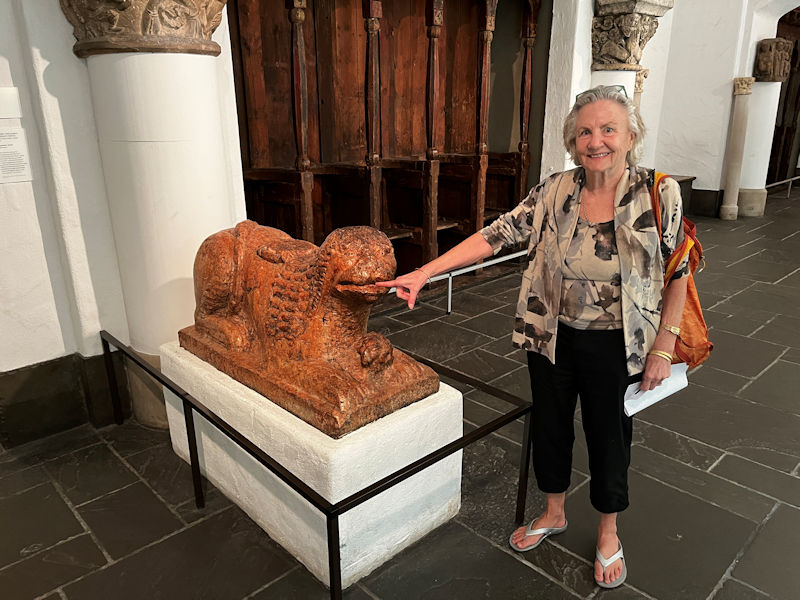
This is another contribution to our collection of photos of Kristin with her hand in a lion's mouth.
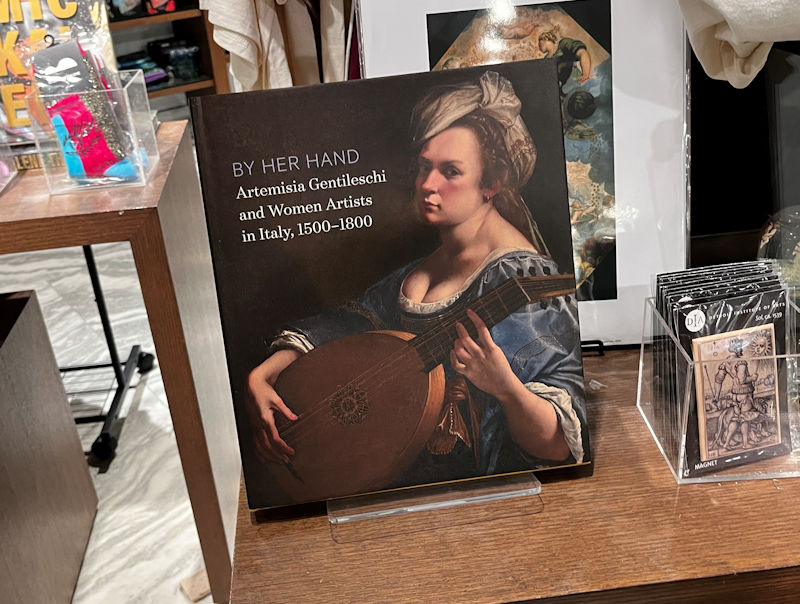
In the gift shop, here's Artemisia Gentileschi (self-portrait, one of her many ones) on a book that is likely wonderful but expensive. This was published by the Detroit Institute of Arts in 2021.
(I've gone for it: Not so bad, it's a catalogue raisonée from an exhibition, only $40, it's got Lavinia Fontana & Sofonsiba Anguissola in it as well.)
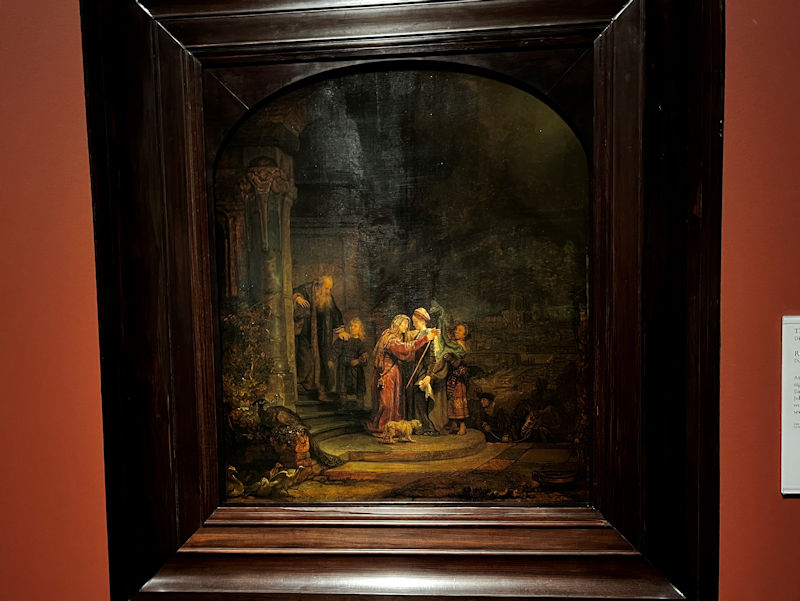
'The Visitation' (1640) by Rembrandt. That's apparently Mary and Elizabeth embracing, each of them pregnant with a 'future spiritual figure'. Rembrandt's hinted at their 'otherworldly holiness' by focusing them in a light which comes from nowhere.
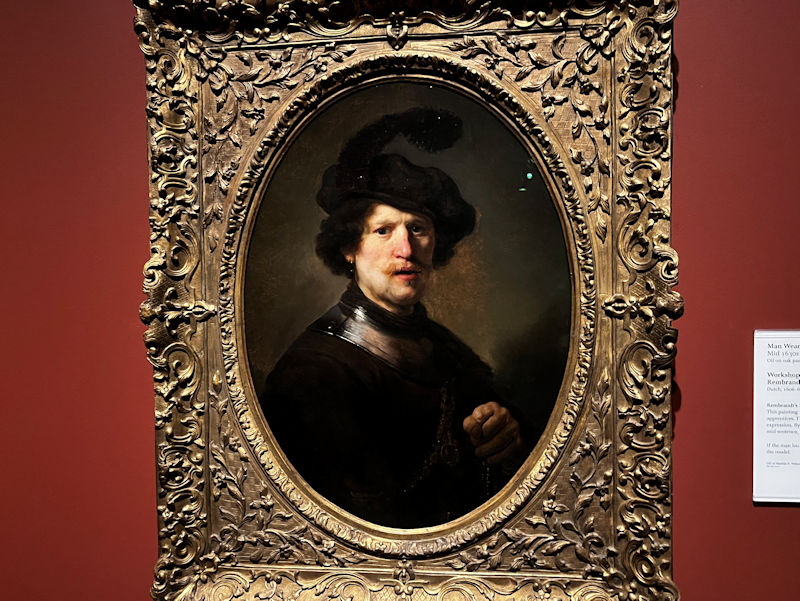
'Man Wearing a Plumed Beret and Gorget' (mid-1630s), by a student of Rembrandt's intended to teach the artist to capture realistic expressions. The model is, of course, Rembrandt.
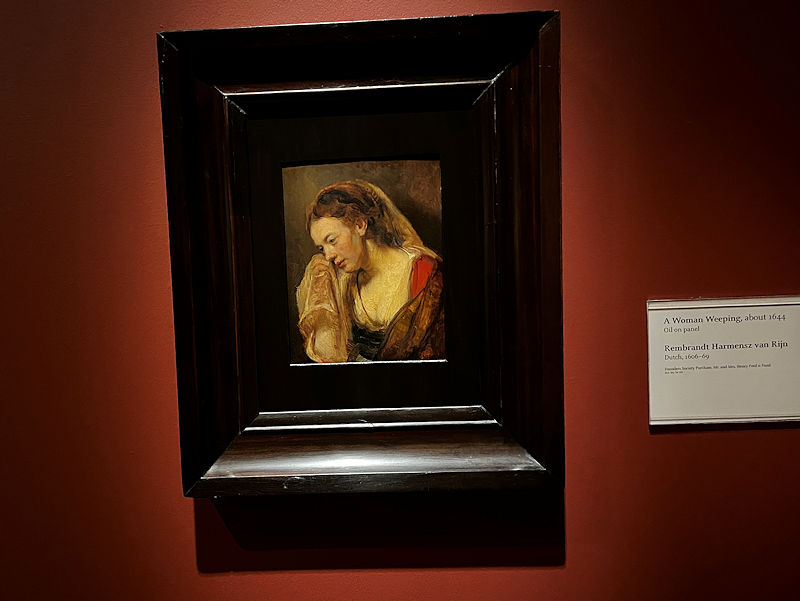
A little more Rembrandt
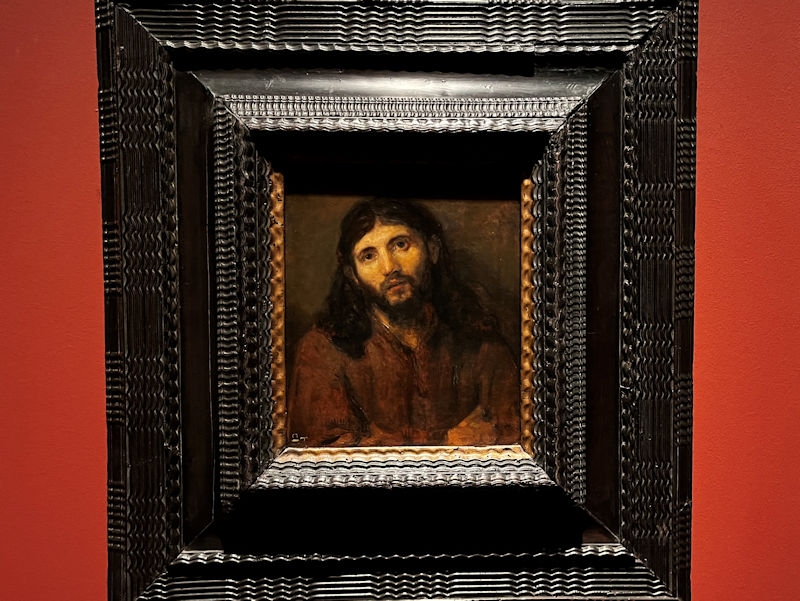
And this 'Jesus' by Rembrandt (ca. 1648) is intended by the Institute to be compared . . .
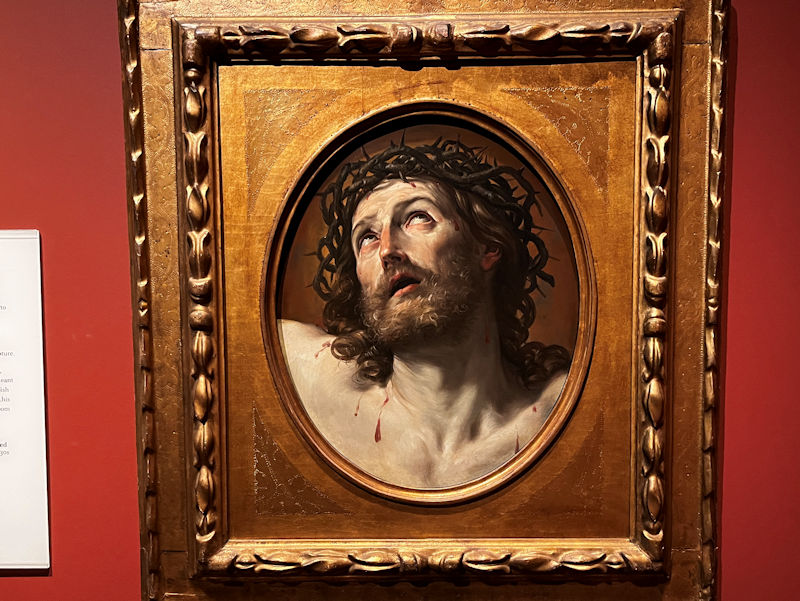
. . . with this one by Guido Reni (early 1630s). Not much alike.
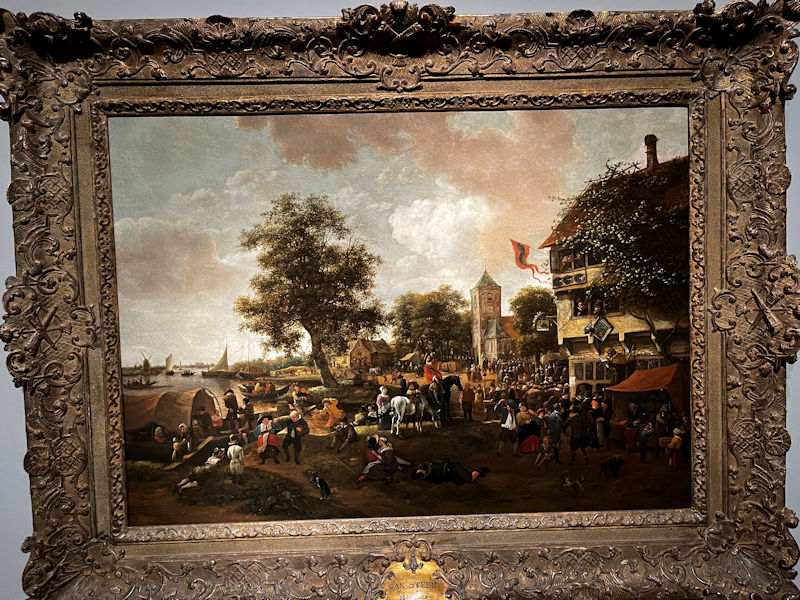
'The Fair at Oegstgeest' (1655-60), by the Dutchman Jan Steen (1625-1679), the Dutch Golden Age genre painter who is normally known for his sense of humor.
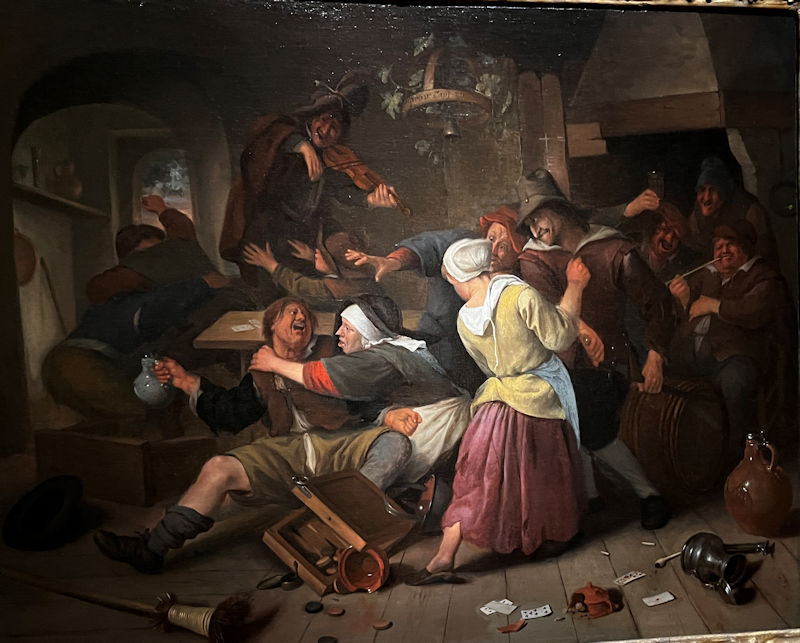
Another in the great Dutch tradition.
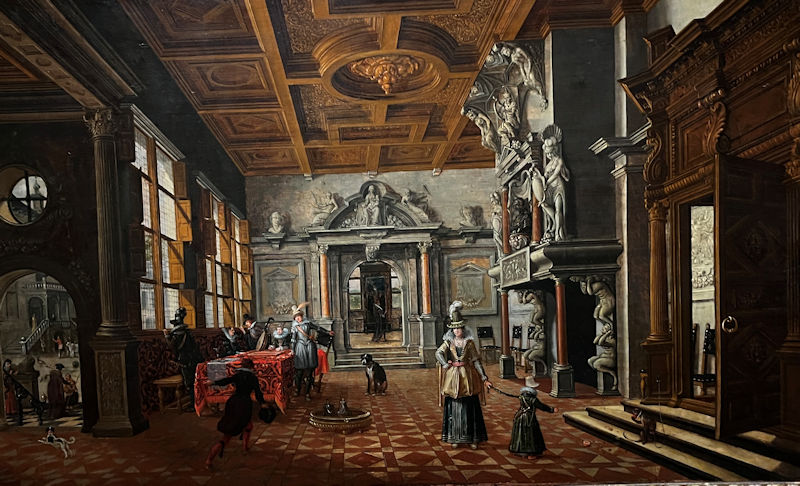
An elaborate 'Return of the Prodigal Son' (1618-20), by Bartholomeus van Bassen.
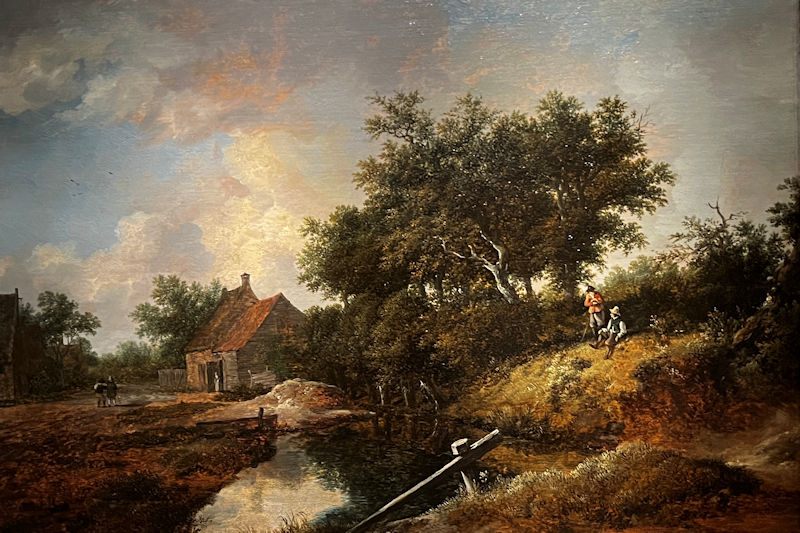
'Path Leading to Farms by a Wooded Brook' (ca. 1645), by Isaack van Ruisdael (1599-1677), and . . .
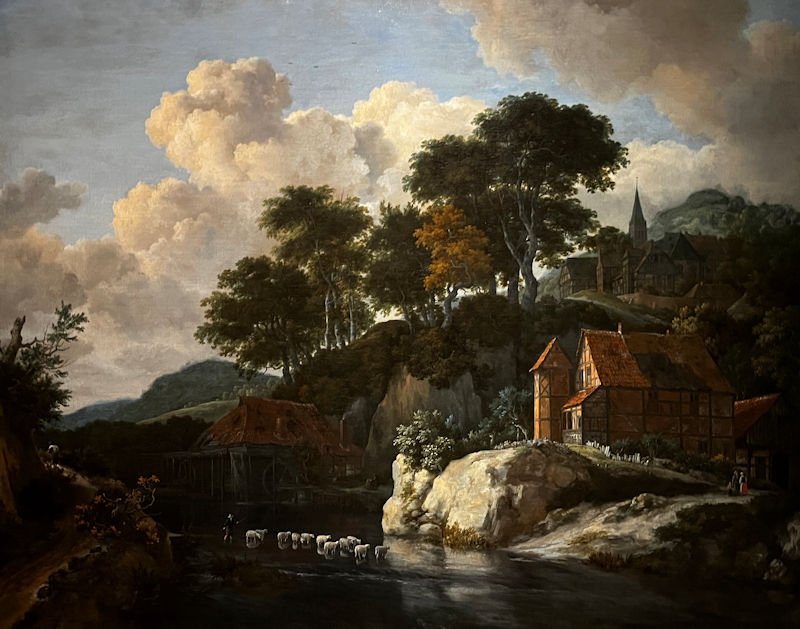
. . . a 'Hilly Landscape with a Watermill' (ca. 1670), this one by Jacob Isaakszoon van Ruisdael (1628-1682).
Right, it's his son.
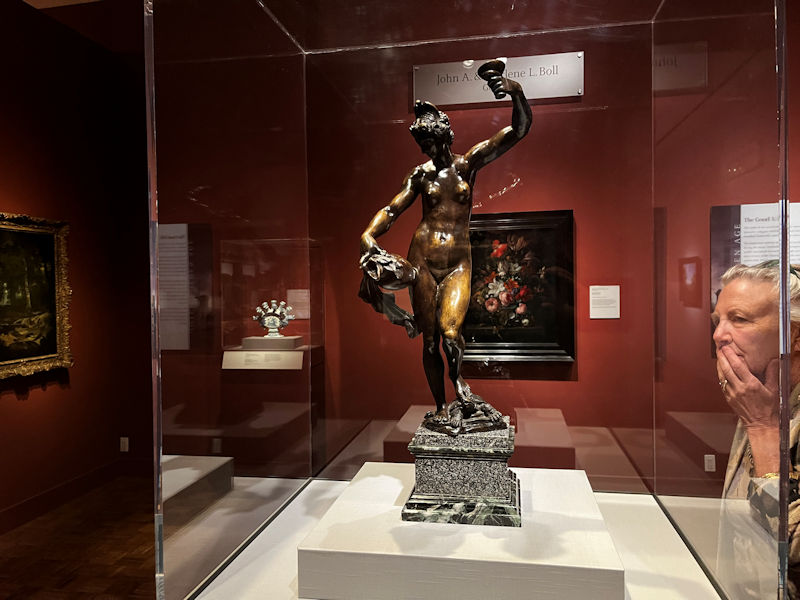
That's Hebe (ca. 1590) [i.e., the lady inside the glass], by Hubert Gerhard, a Dutch chap active in Germany, 1540-1620. Hebe was a Greek goddess of immortal youth (we're told).
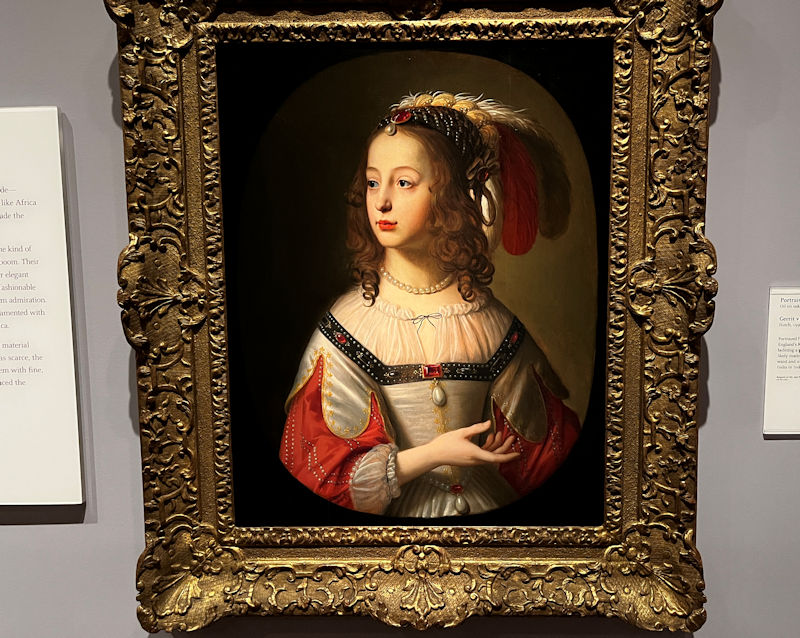
This is a portrait of the Princess Sophia of the Palatinate, born in 1630 in the Hague to Frederick V, Elector Palatine (and very briefly the King of Bohemia) and Elizabeth Stuart, daughter of King James I and VI, after the family had sought refuge at the beginning of the Thirty Years' War. Having married the Elector of Hanover, she became the mother of Great Britain's King George I.
She was slated by the Act of Succession to succeed Queen Anne herself, but she died at 83 in 1714 before Anne died two months later, so Sophia's son George got the nod.
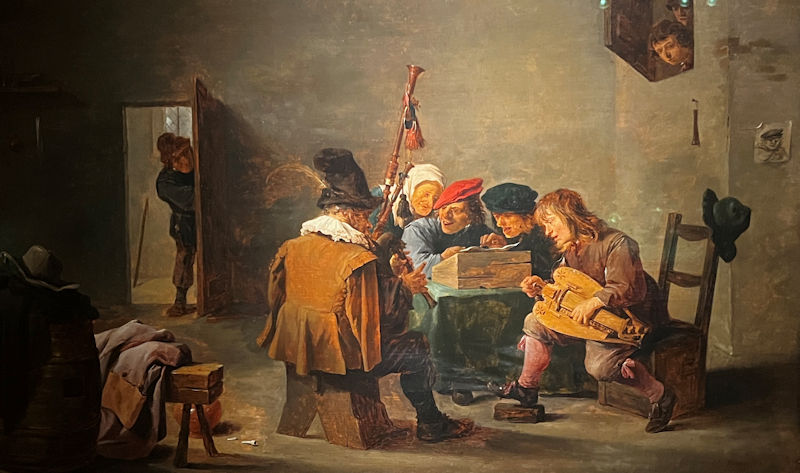
'The Boors' Concert' (early 1640s), David Teniers the Younger (1610-1690)
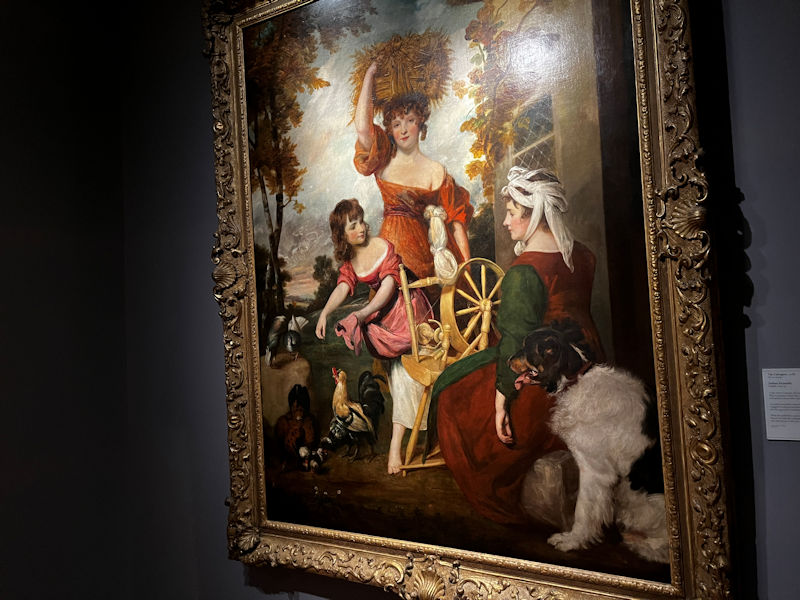
'The Cottagers' (1788), by Joshua Reynolds
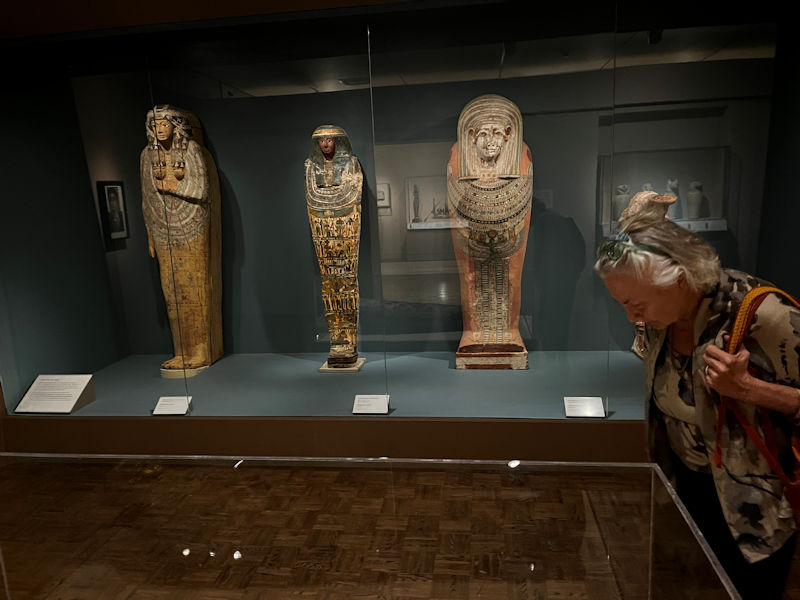
A brief look in the Egyptian rooms. Kristin is a great fan of the ancient Egyptian cultures.
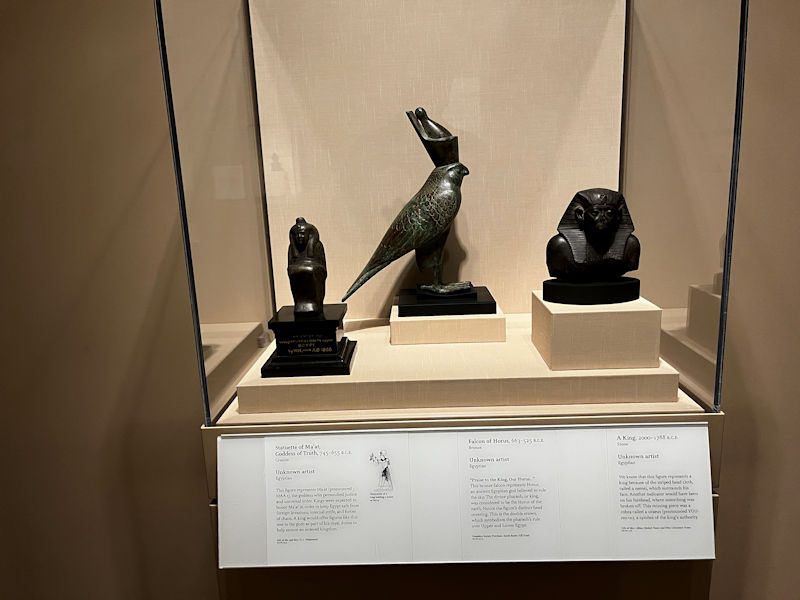
Like the birds with funny hats on
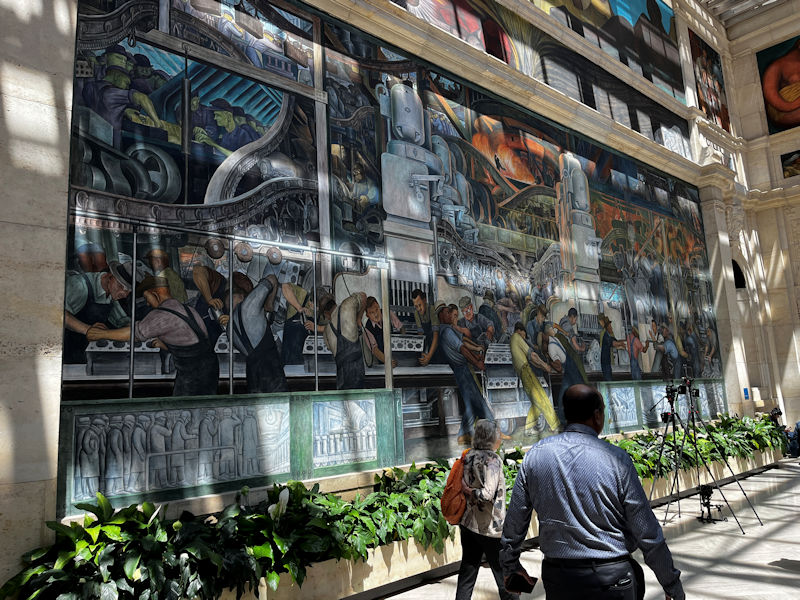
We've finally found the Rivera Court with its 'Detroit Industry Murals', which Kristin was very keen to see. The Mexican artist Diego Riera accepted a commission from the Institute in 1932-1933 to paint the 27 fresco murals celebrating Detroit's industrial progress during the Great Depression, and most specifically the work of the Ford Motor Company's River Rouge Complex, which he visited and researched carefully.
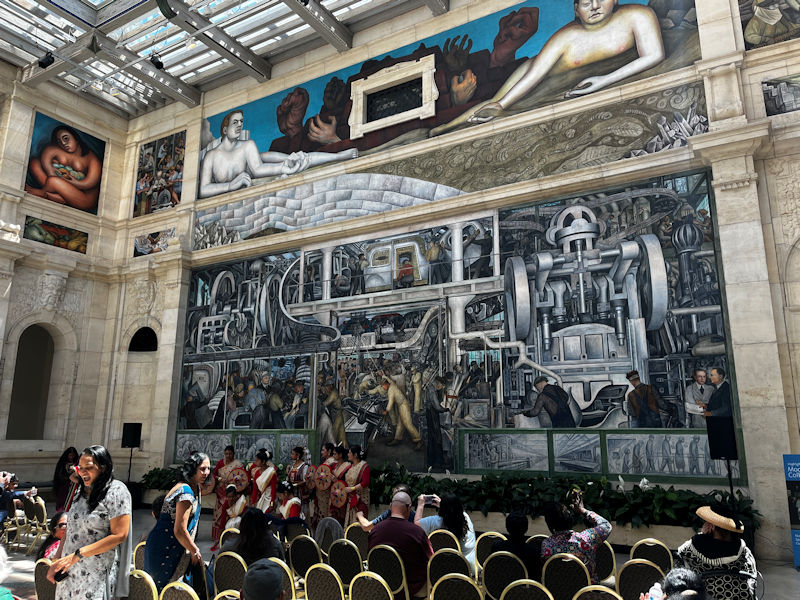
The north and south walls deal with the Ford factory's innovative industrial techniques at its Dearborn plant (Edsel Ford contributed to the costs of the work), whilst the two other walls illustrate some of Detroit's other industries, like airplanes, ships, tractors, and more.
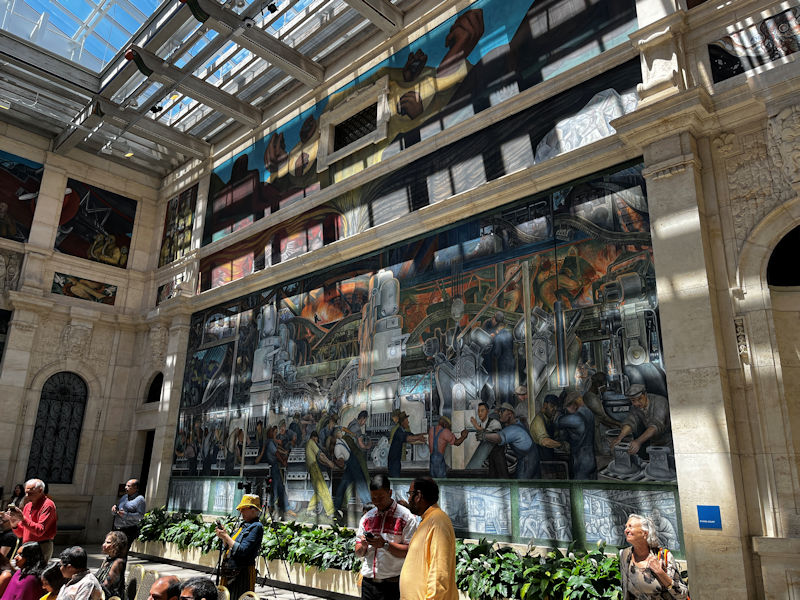
The entire project was completed by Rivera and his assistants in eight months, evidently by working round the clock, and at its unveiling some members of the religious community called it blasphemous and demanded that it be destroyed, but the Institute held firm. Since Rivera was considered a Marxist, in the 1950s the museum posted a plaque arguing that though 'Rivera's politics and his publicity seeking are detestable', nonetheless he 'saw and painted the significance of Detroit as a world city' and should be celebrated for that.
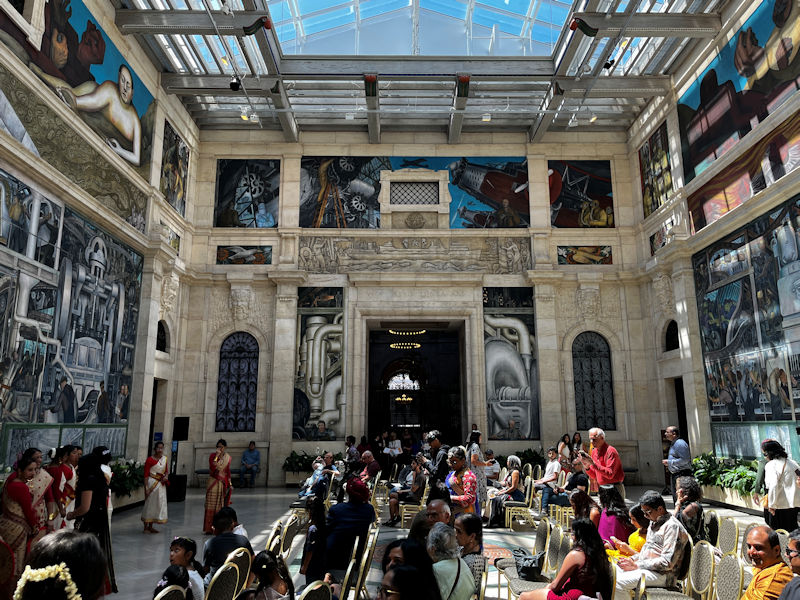
In April 2014, the Murals were added to the Dept of Interior's list of National Historic Landmarks, as 'the nation's finest modern, monumental artwork with industrial themes', and Rivera himself considered this his most successful work.
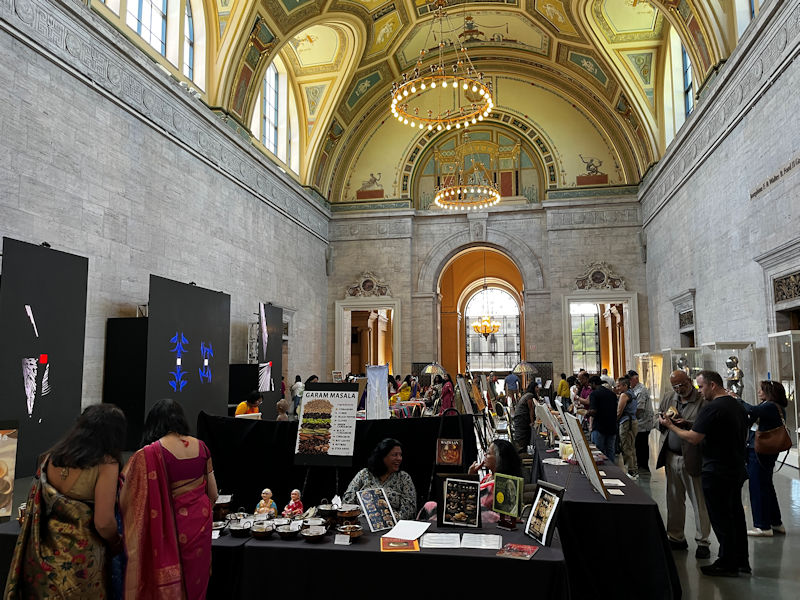
Back through the Great Hall now, on our way out, with just a few more things to notice as we go.
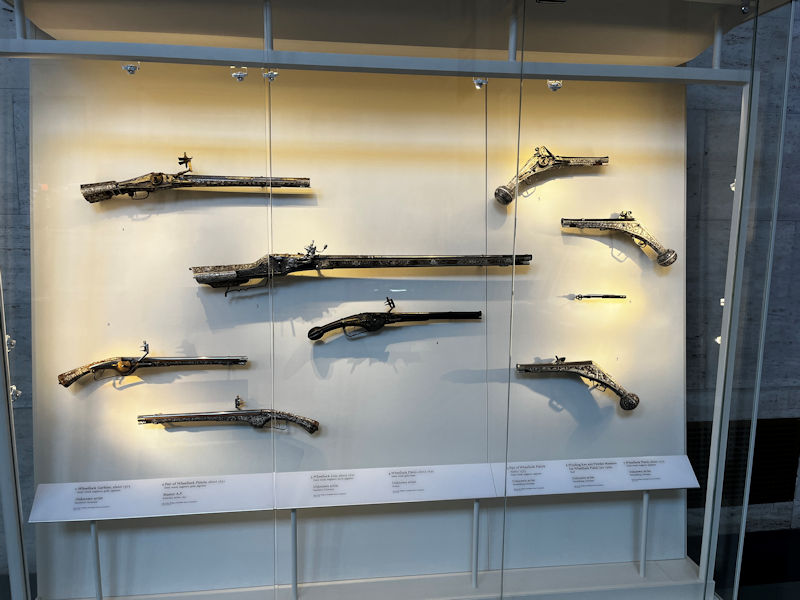
Like old firearms, and . . .
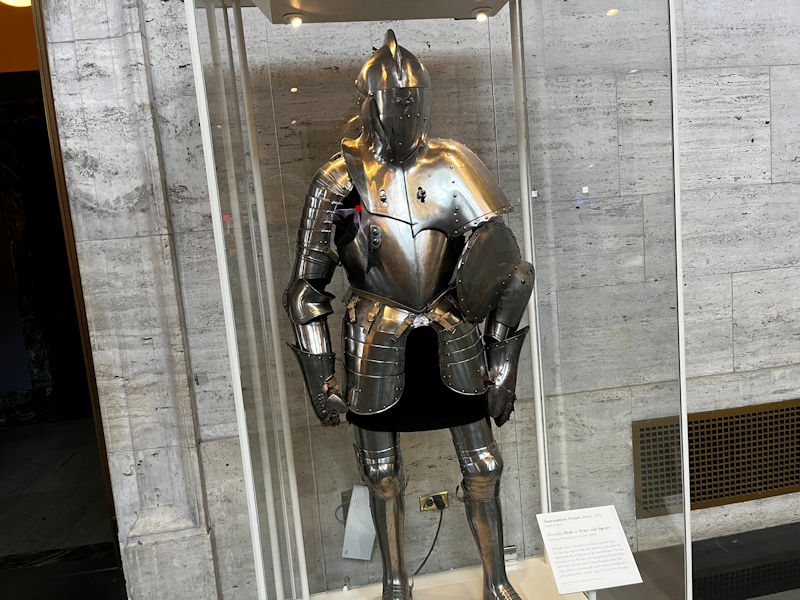
. . . somebody's shiny suit of armor.
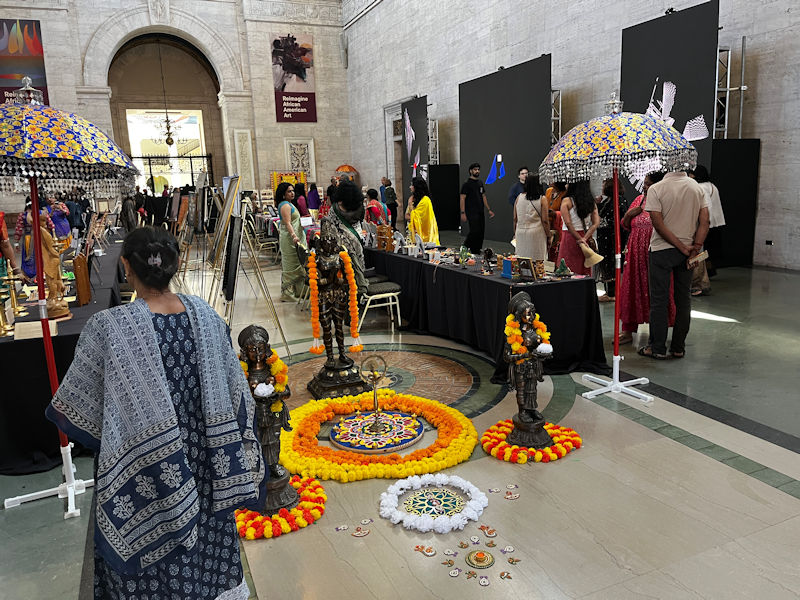
Meanwhile, the cultural festival will have to continue without us.
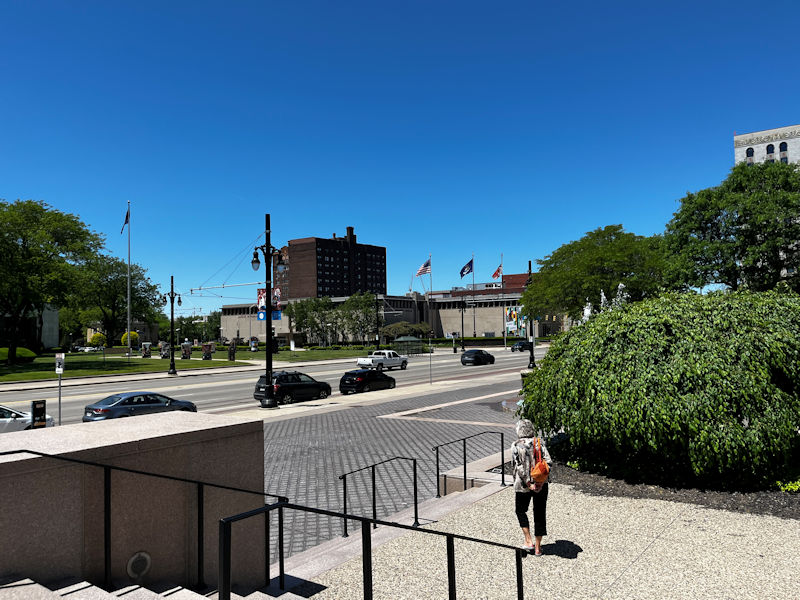
-- Now, where'd we leave the car?
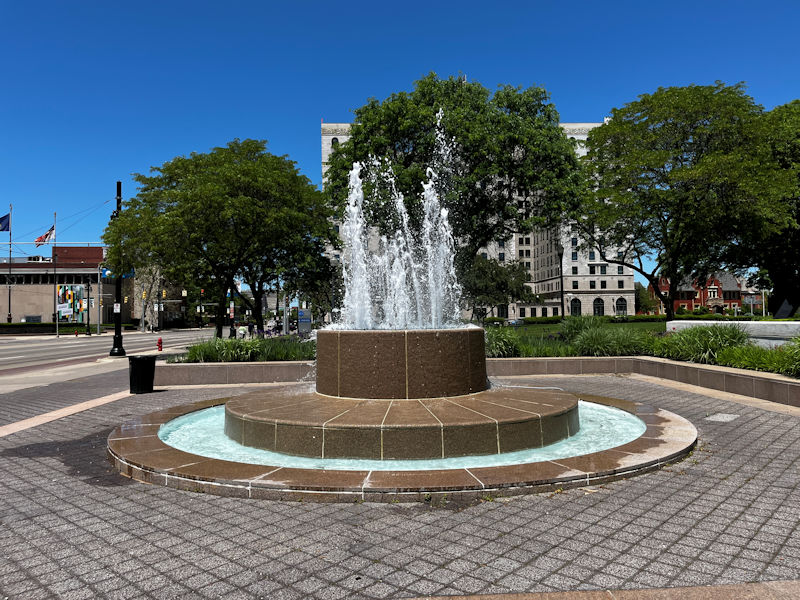
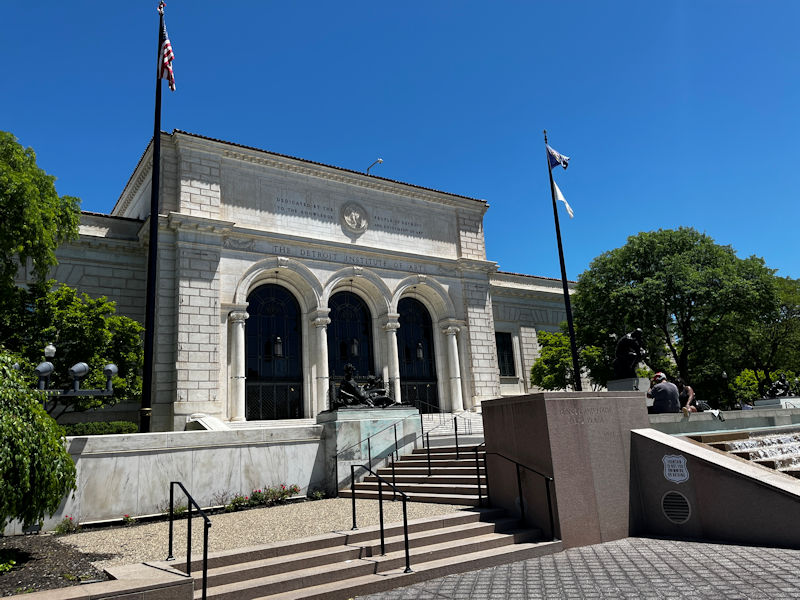
We have the feeling that we saw a great lot of fascinating stuff here, but may have only scratched the surface, in fact. It would be worth another go at it someday.
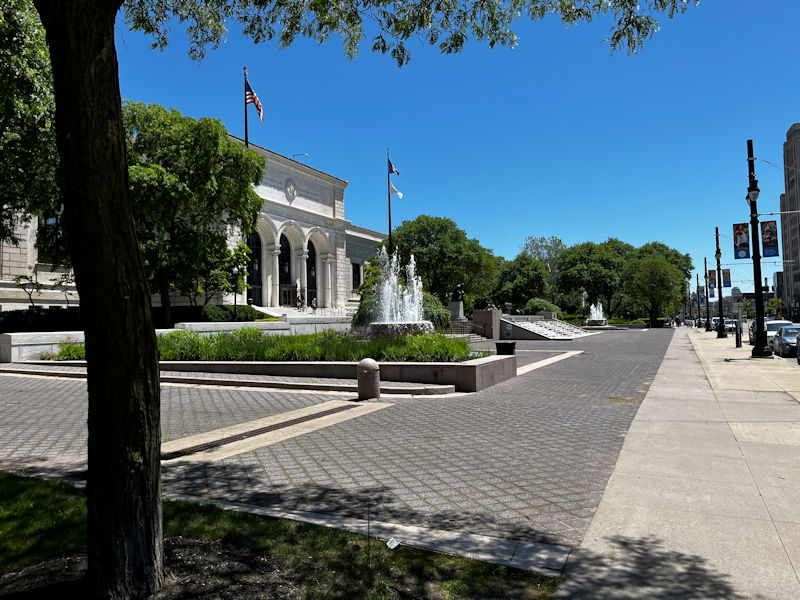
But tomorrow we must continue our motorized trek, northward first, and then westward to the Northwoods.
Next up: The road to the lake, and arrival





 Dwight Peck's personal website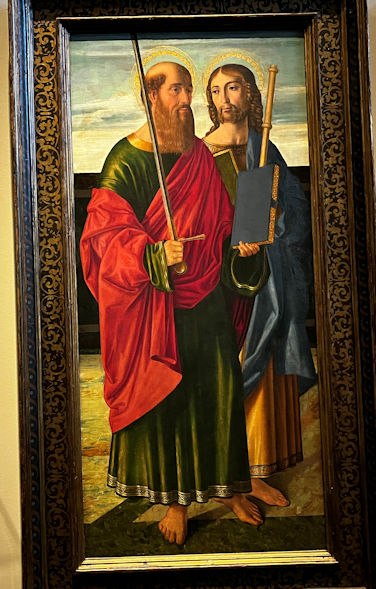



 Feedback
and suggestions are welcome if positive, resented if negative,
Feedback
and suggestions are welcome if positive, resented if negative,  .
All rights reserved, all wrongs avenged. Posted 21 June 2026.
.
All rights reserved, all wrongs avenged. Posted 21 June 2026.