You may not find this terribly rewarding unless you're included here, so this is a good time for casual and random browsers to turn back before they get too caught up in the sweep and majesty of the proceedings and can't let go.
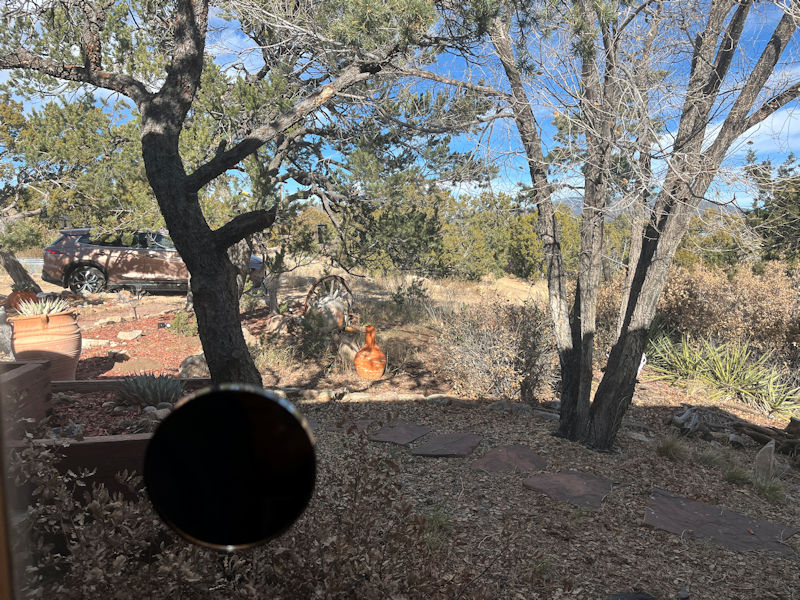
A survey of the countryside from near the top of the 'Apache Ridge'
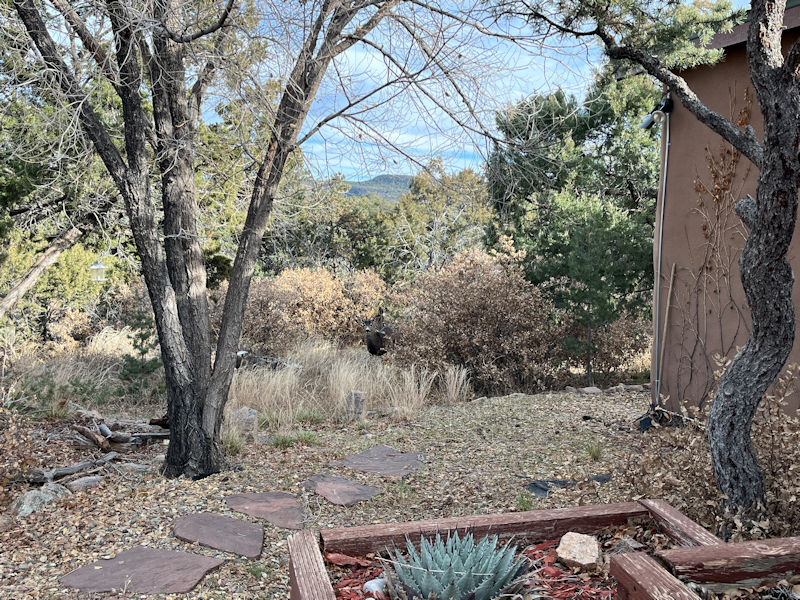
Off to the east
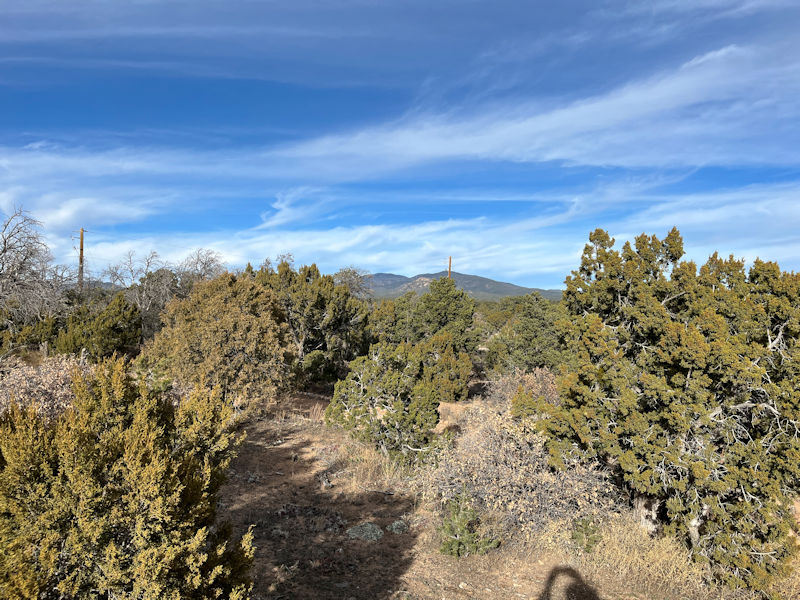
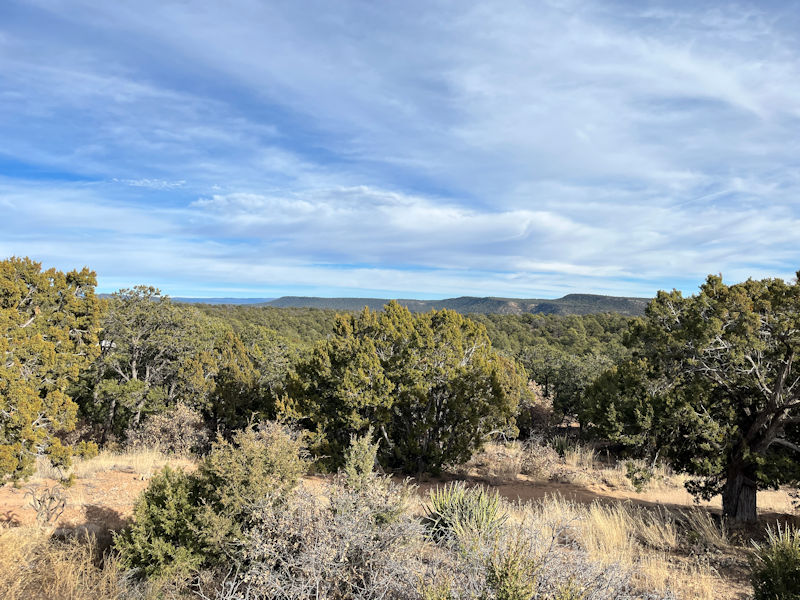
To the southwest
The southern end of the Sangre de Cristo Mountains is up the hill to the north, just behind us.
Downtown Santa Fe
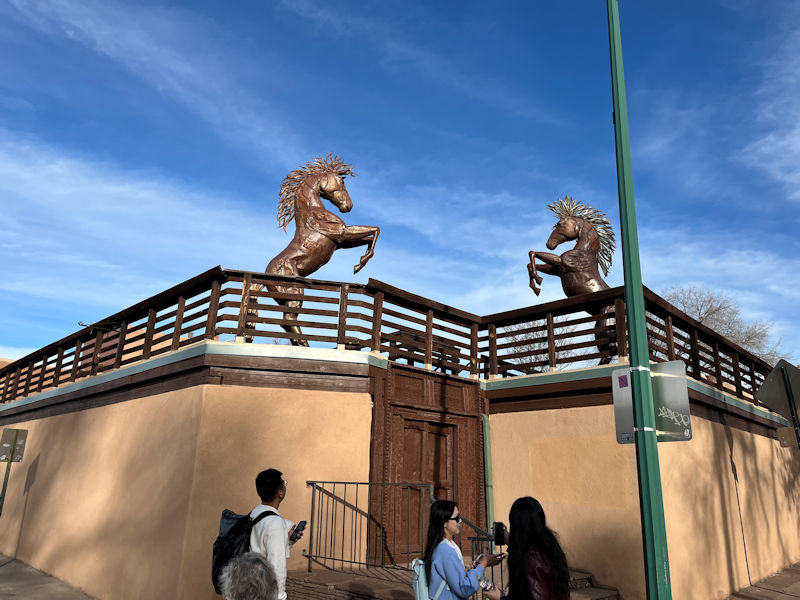
Kristin's son George has let us out on East Alameda St, two blocks from the famous central Plaza, and . . .
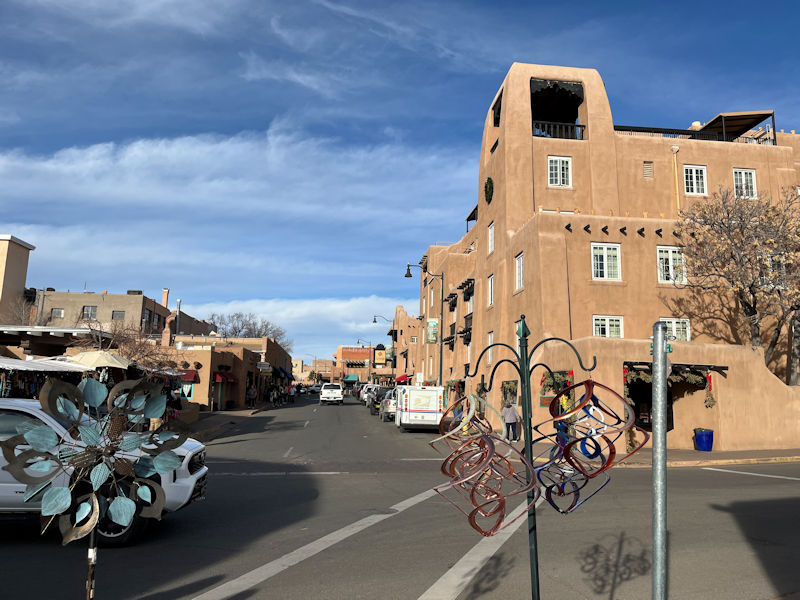
. . . we're proceeding thither.
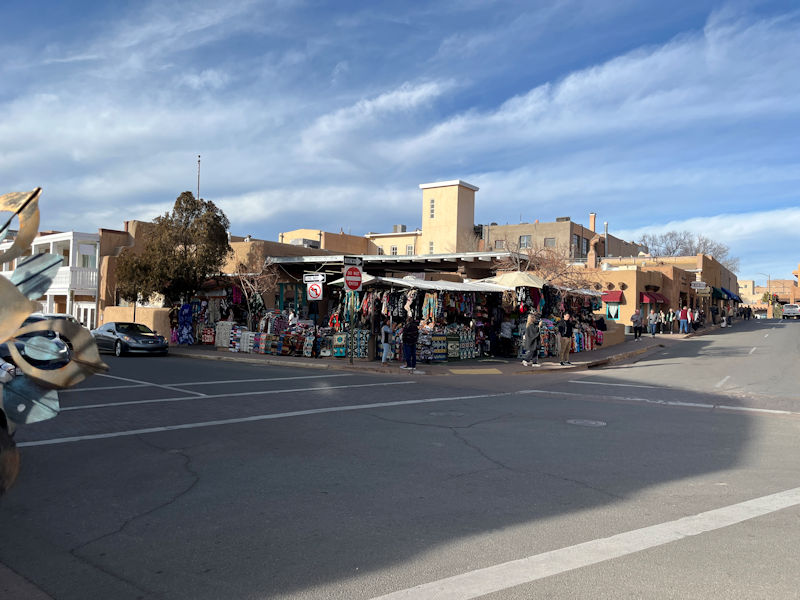
We're presently on Shelby St, admiring the street markets, but soon to advance on the Old Santa Fe Trail towards the Plaza.
Santa Fe city, with in 2020 a very mixed population of 87,505 (the wider Santa Fe area harbors 158,000), is the earliest European settlement west of the Mississippi and oldest state capital in the USA. It has a desert environment but sits at a convenient trading central hub from earliest times, poised at the highest altitude of any state capital, to wit, at ca.7,000 feet (2,133m).
(We were concerned that our Melvin might have trouble breathing, but he didn't.)
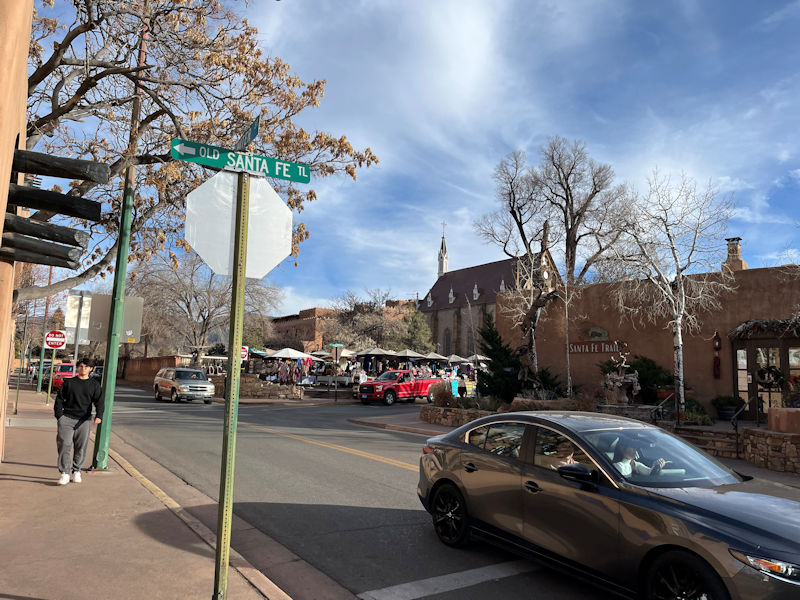
The area was inhabited by early Native Americans from ca. AD 1000 and later the object of Spanish missionaries, founded as the capital of their Nuevo México in 1610. It flourished, especially after Mexican independence from Spain in 1821, but was ceded to the USA in 1848 following the Mexican War of 1846-1848 and the Gadsden Purchase of 1854.
That's the Loretto Chapel Museum looming right of centre, known for its famous 'Spiral Staircase', which we were yearning to
add to our List of Amazing Sights, but when we returned some days later, it was all closed up.
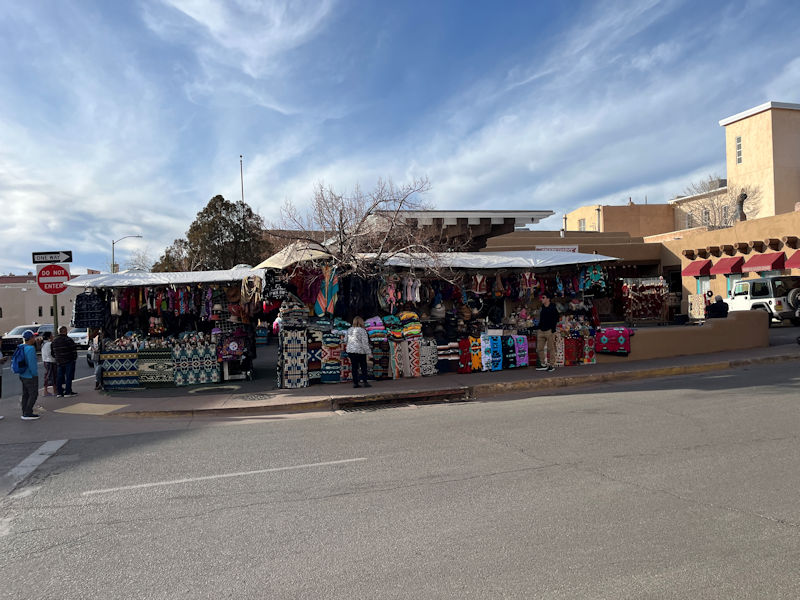
Lots and lots of tourist opportunities to stock up on the artisanal souvenirs.
Santa Fe benefited from the 'Santa Fe Trail' bringing immigrants and traders to the West by the 1820s, and it expected to benefit still more from the building of the Atchison, Topeka, and Santa Fe railroad, which was mainly following the Santa Fe Trail south in the 1870s and serving both commercial traffic and cattle shipments northward. Alas, Santa Fe itself was bypassed by the engineers because of its topographical difficulties, and the railroad was pushed through Lamy 20 miles to the south.
A short branch line was established from Lamy up to Santa Fe in 1880, but having been circumvented by the major traffic led to the beginnings of a decline in the prosperity of the city.
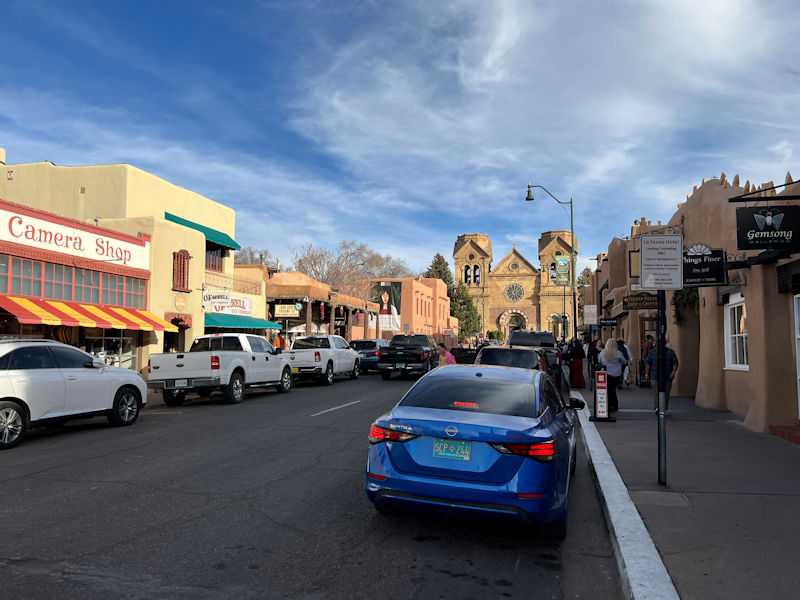
The famous Plaza is just off to our left, but a casual glance to the right played havoc with our itinerary. We simply could not pass up a fine cathedral.
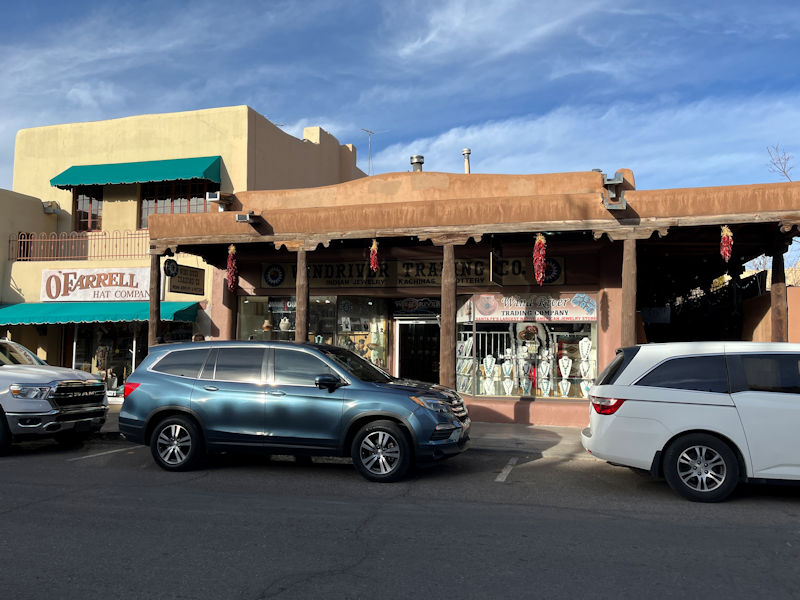
Even the O'Farrell Hat Company, and the Wind River Trading Company, will need to wait for us, if we come back this way.
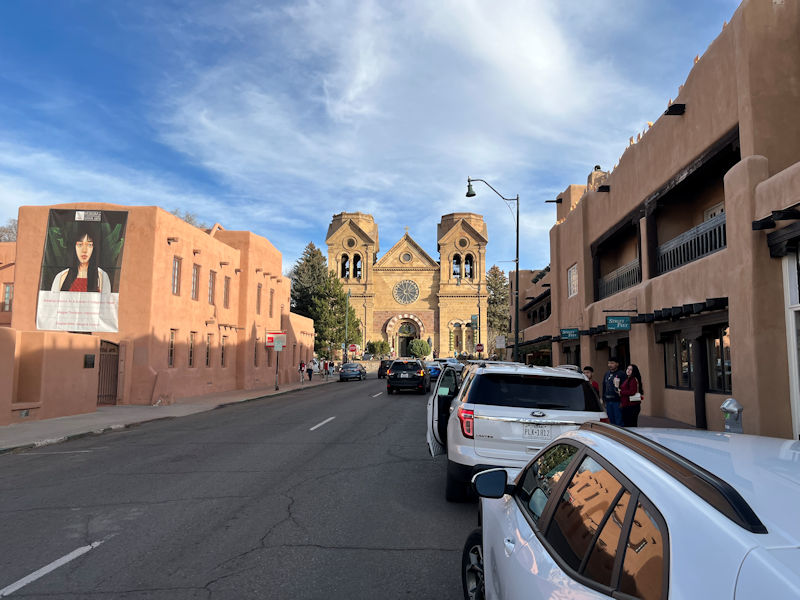
The present cathedral -- properly, the Cathedral Basilica of St Francis of Assisi -- was commissioned by Archbishop Lamy and built on the site of a church dedicated by missionaries in 1717, on the site of another built by missionaries from 1626, which was destroyed in 1680 during the Pueblo Revolt.
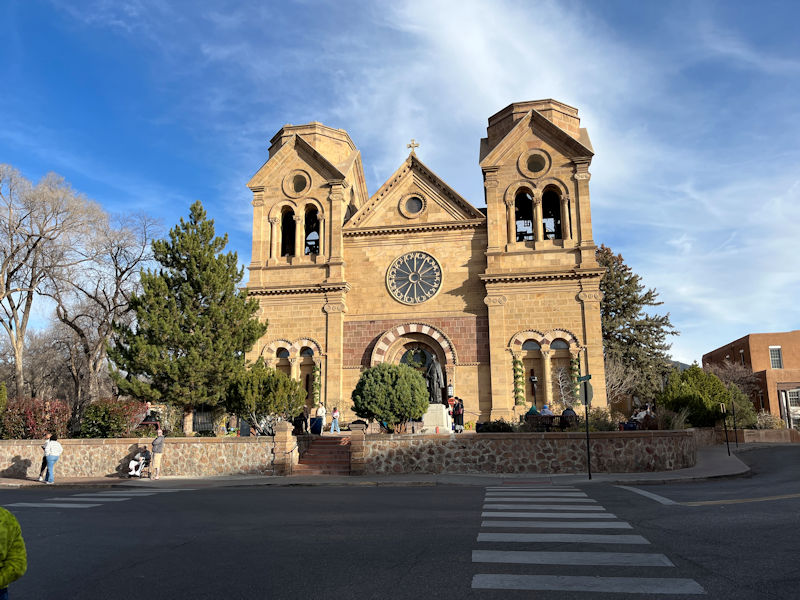
The Frenchman Jean-Baptiste Lamy (1814-1888) was assigned to Santa Fe in 1851, and he created the cathedral in 1869 in a French Romanesque Revival style, employing French architects and Italian stone masons (standing well out from the adobe styles of this region); it was dedicated in 1887. A 1915 bronze statue of the good archibishop is seen here in front of the door.
Willa Cather's novel Death Comes for the Archbishop (1927) is based in good part on his life.
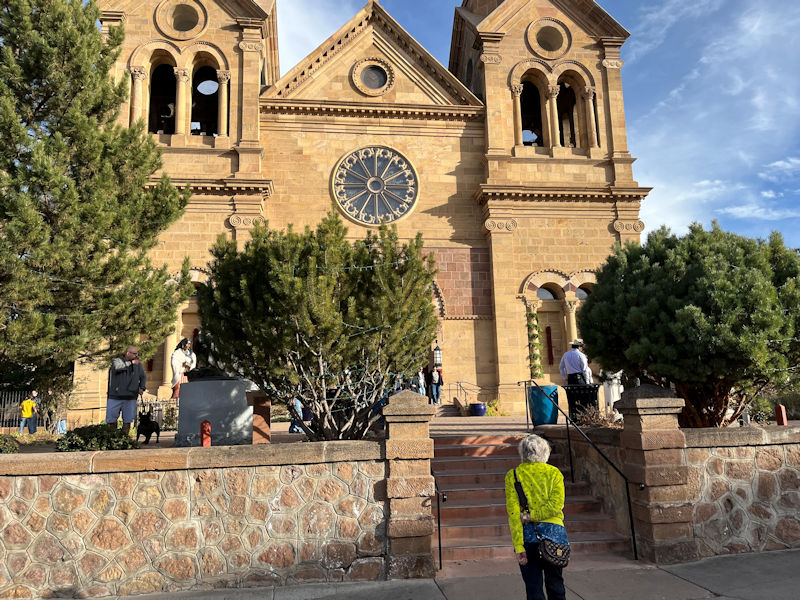
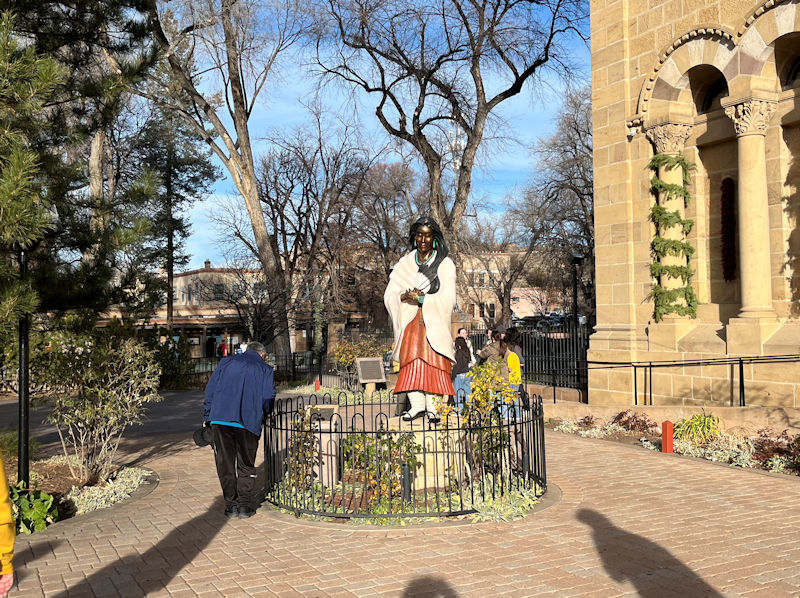
That's a statue of Kateri Tekakwitha (1656-1680), a Canadian Algonquin, the 'Lily of the Mohawks', the 'Protectress of Canada', who led an exemplary but short life in upstate New York and about whom there were significant miracles reported after her death. She was canonized by Pope Benedict XVI in 2012, said to be the first Native American saint, and apparently she had some earnest fans down this way. Why not? A worthy example for the younger parishioners.
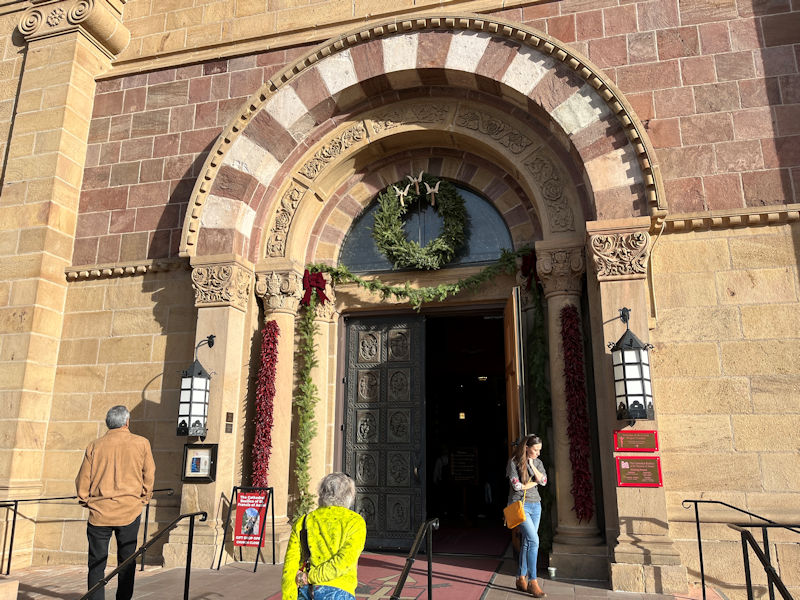
Here we go . . . this is so exciting.
The bronze doors are new, part of the 1986 restoration, and illustrate on ten panels events in the history of the Catholic Church in Santa Fe.
(We didn't notice!)
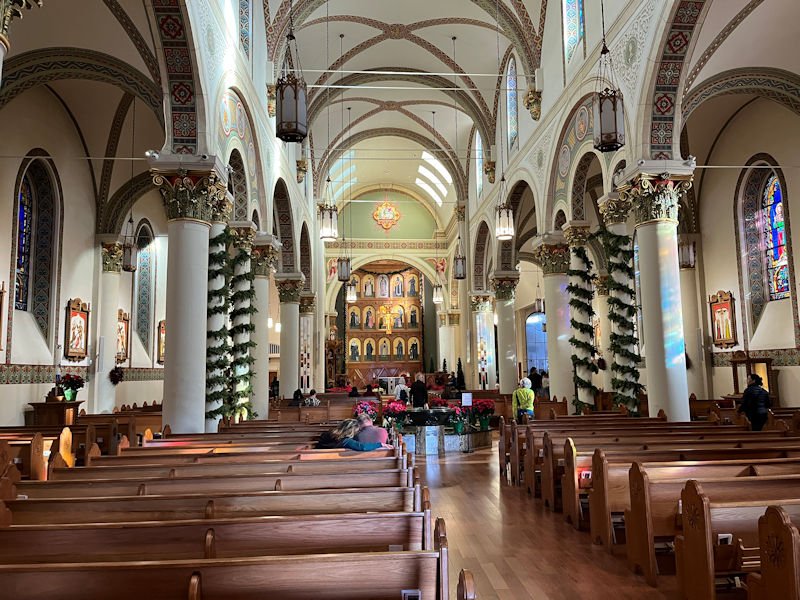
A simple nave with two side aisles. The Christmas decorations round the columns make a pleasant effect.
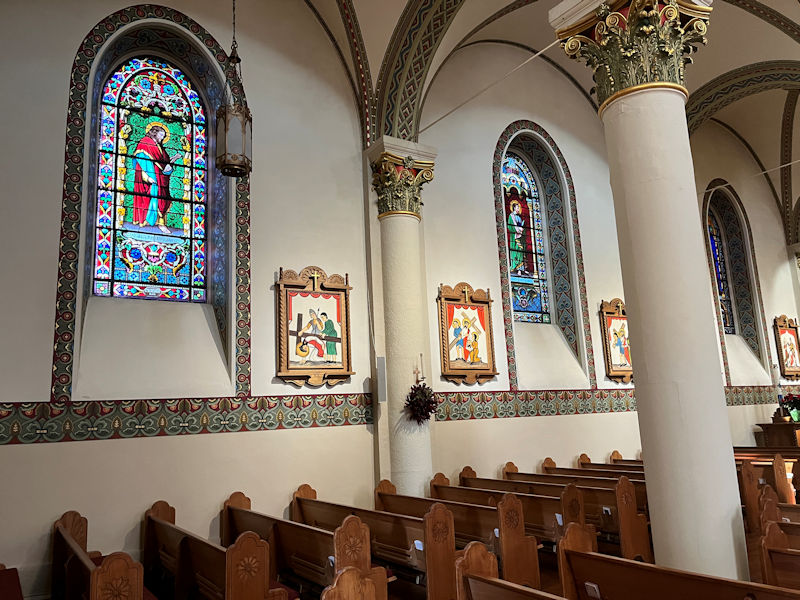
The clean simplicity is remarkable -- there have been two renovations since its founding, in 1967 and 1986, but no wildly baroque or rococo additions fastened up everywhere.
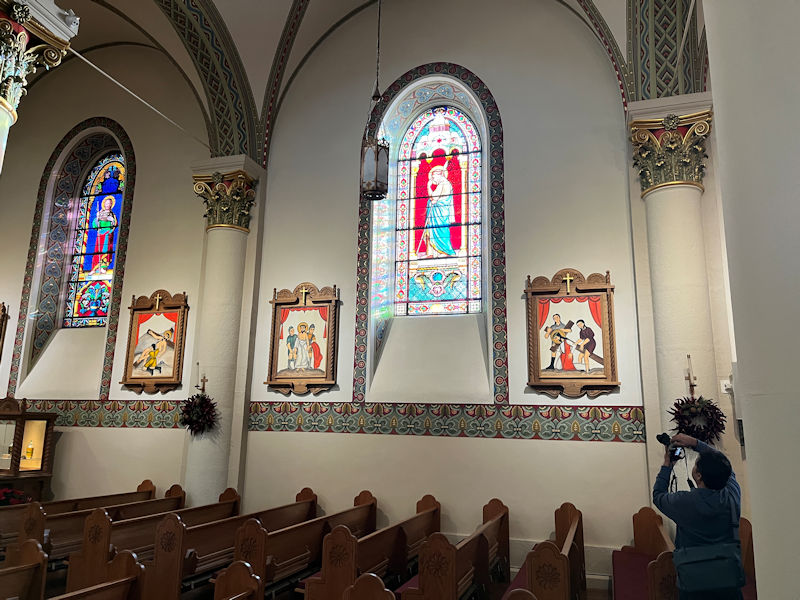
The large rose window out front and these stained glass windows, illustrating the twelve apostles, were imported from Clermont-Ferrand in France (not far from Abp Lamy's birthplace).
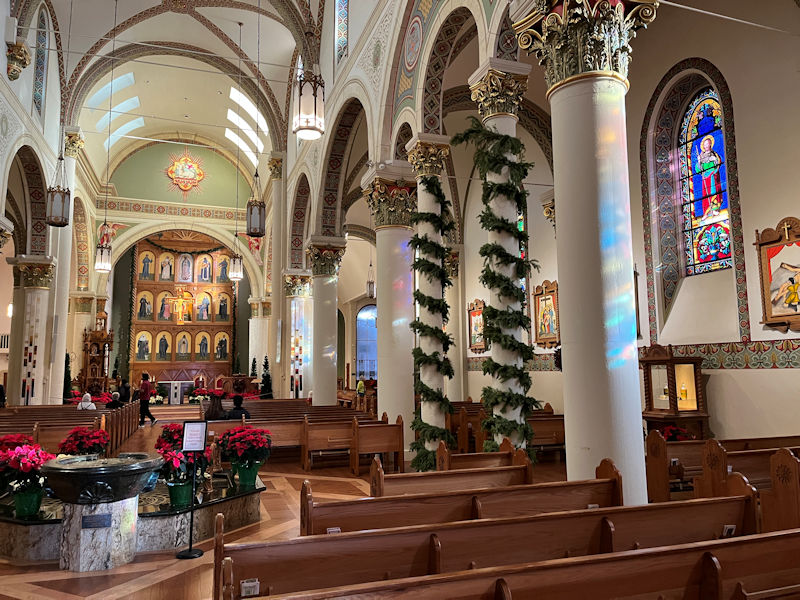
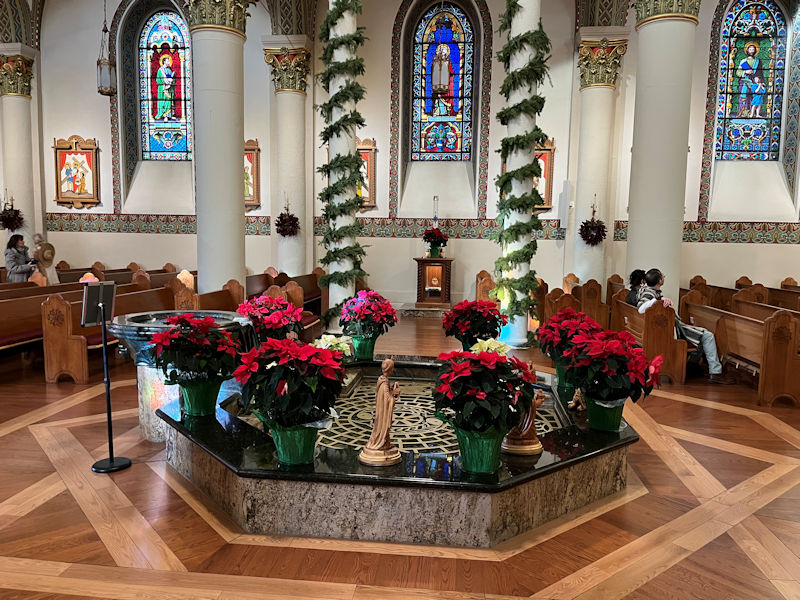
The baptismal font in the dead centre of the nave was dedicated in 2001.
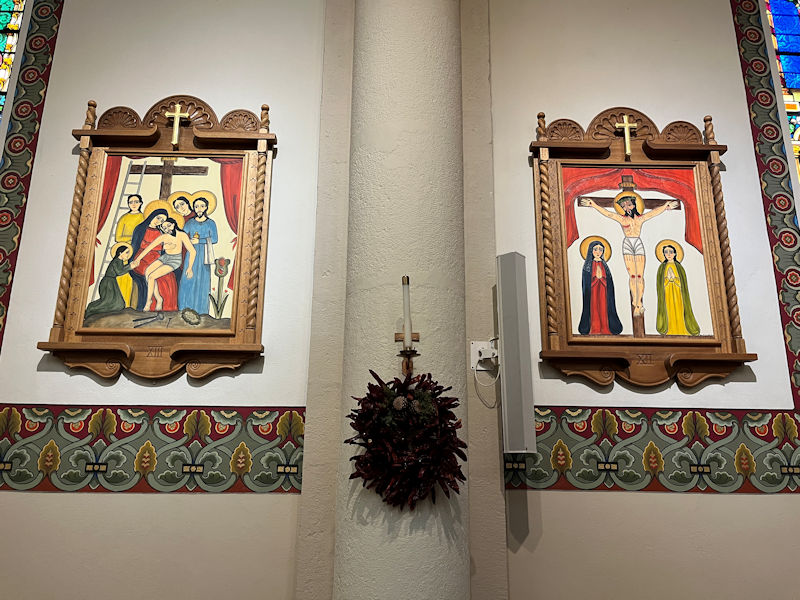
The illustrations of the Stations of the Cross. The decision to paint the walls white was taken in the 19th century, but in 1997 the then-Archbishop Sheehan endeavored to restore the interior to its original design and employed the American Marie Romero Cash to create these in the 'Santero' style.
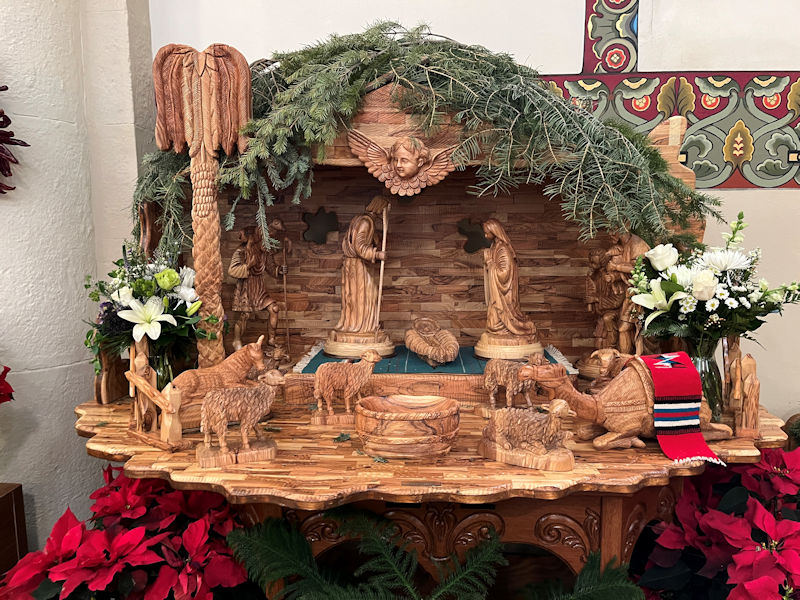
Christmas decorations in wood
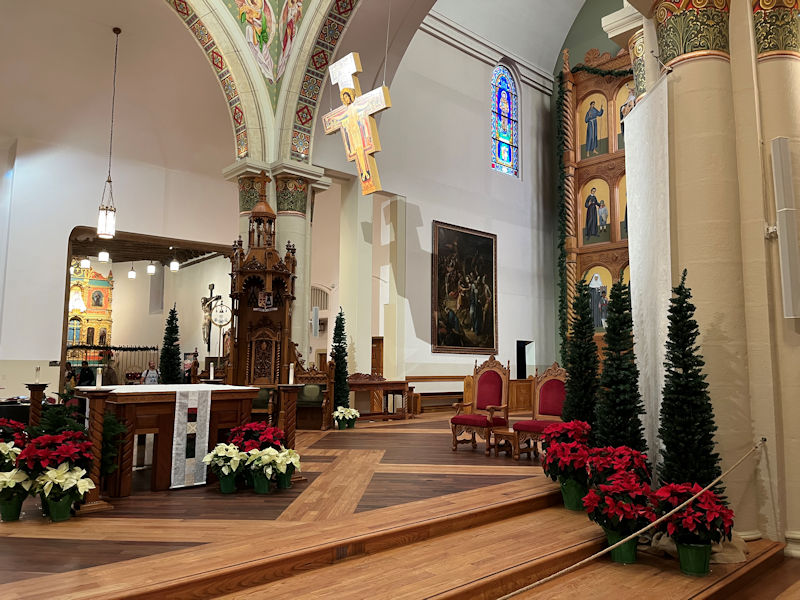
The sanctuary, with the altar, graces a foreshortened apse, and just behind it in this photo, housed by a baldachin or canopy, is the cathedra, the 'throne' of the bishop.
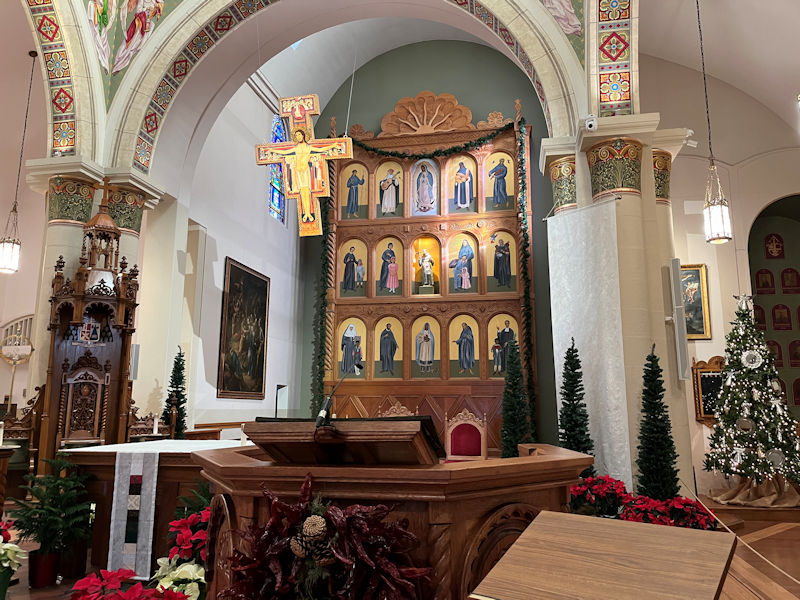
In the sanctuary, the screen (or reredos) behind the altar, created in 1986 for the cathedral's 100th anniversary, has an 18th century statue of St Francis in the centre, with painted images of saints of the New World all round him. The dangling crucifix above the altar is said to be a replica of the one in Assisi from which Christ spoke to St Francis, and like that one it's called the 'San Damiano Crucifix'.
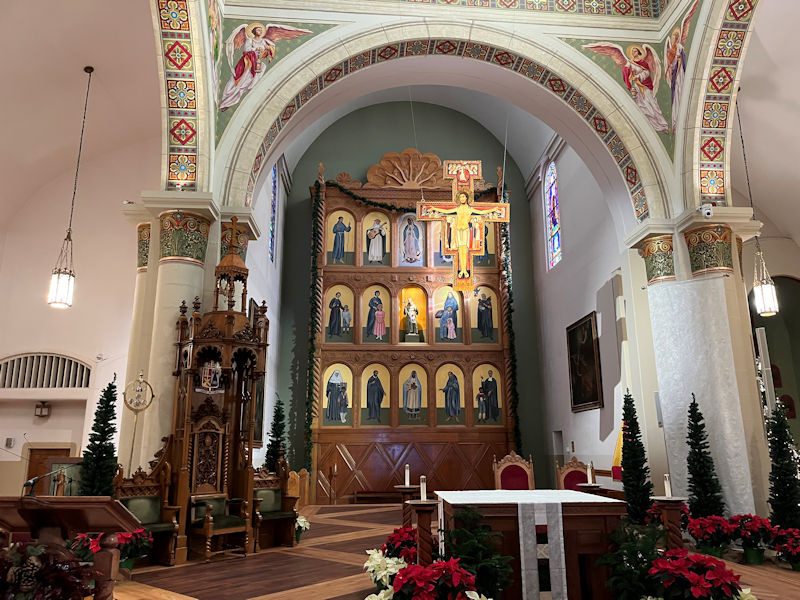
The worshippers' view of the ensemble. The entrance to the crypt is just behind the Sanctuary.
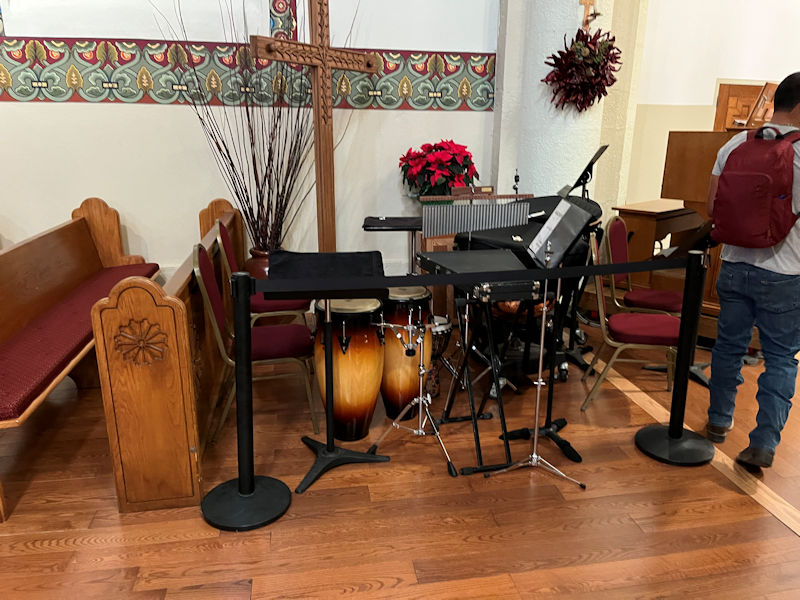
'The sermon's finally over -- get the bongos!'
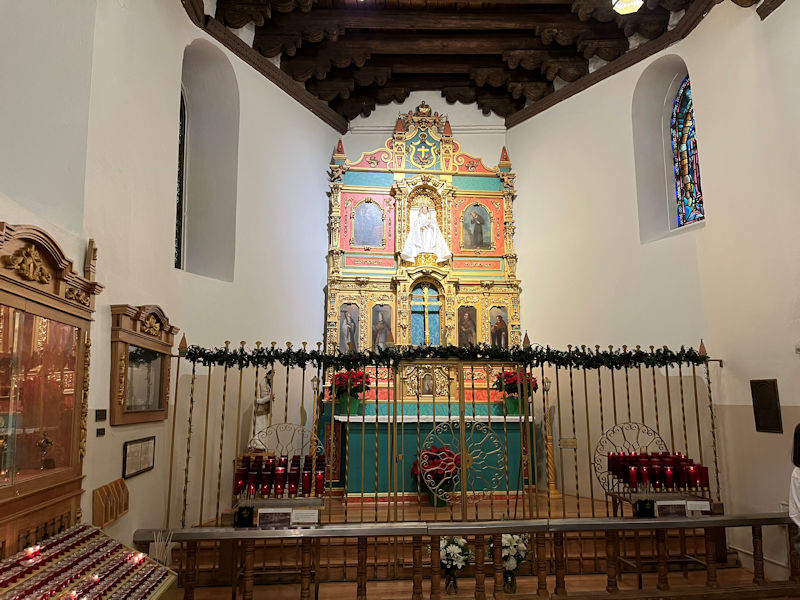
This is called the Conquistadora Chapel in the north (or left) transept, brought forward from the earlier Parroquia Church from 1717. The Conquistadora is a wooden statue of the Madonna carried by missionaries from Spain in 1626. During the Pueblo Revolt of 1680, when the Spaniards had to retreat south into Mexico proper, they brought it with them, and when they were able to end the revolt and return in 1693, they thought of that as a 'Reconquista', and thus she became La Conquistadora, said to be the oldest Virgin Mary statue in the US.
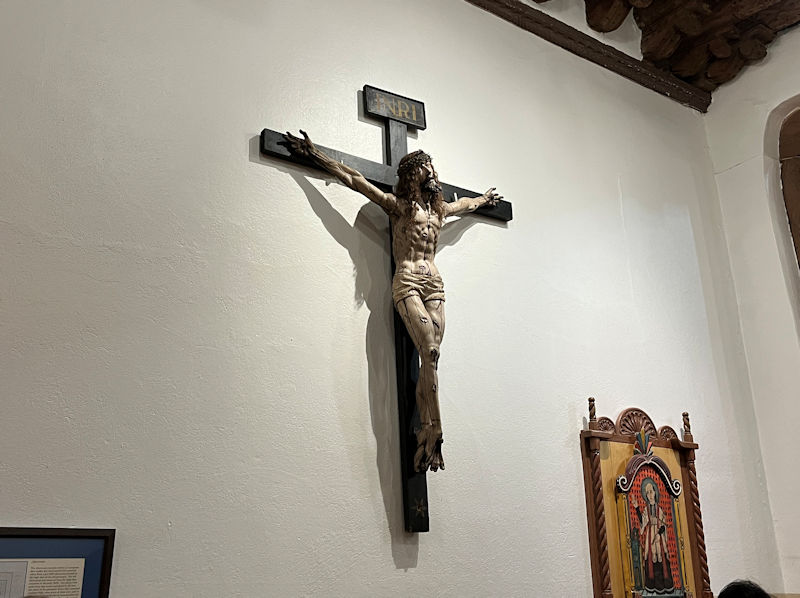
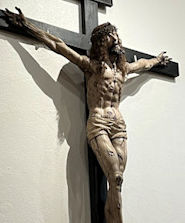
A 19th century wooden crucifix mounted on the wall
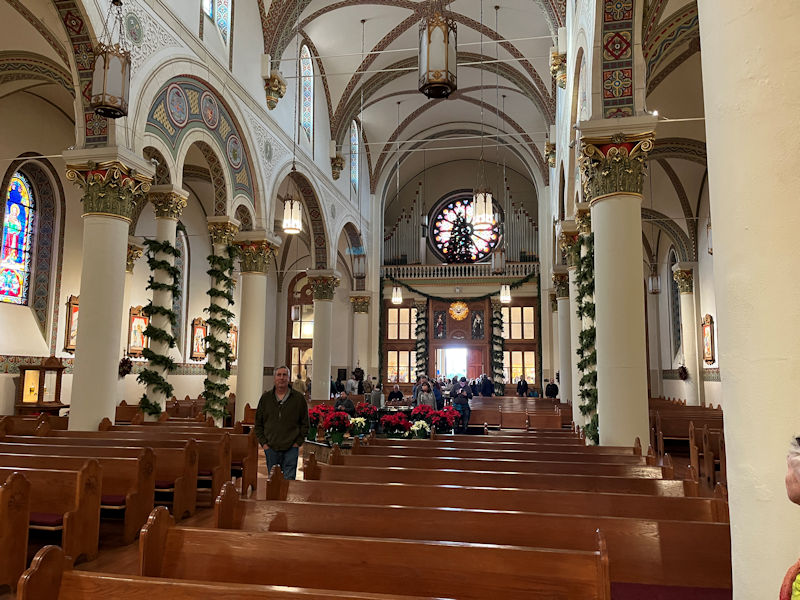
A look down the nave to the narthex with gift shop and the front porch
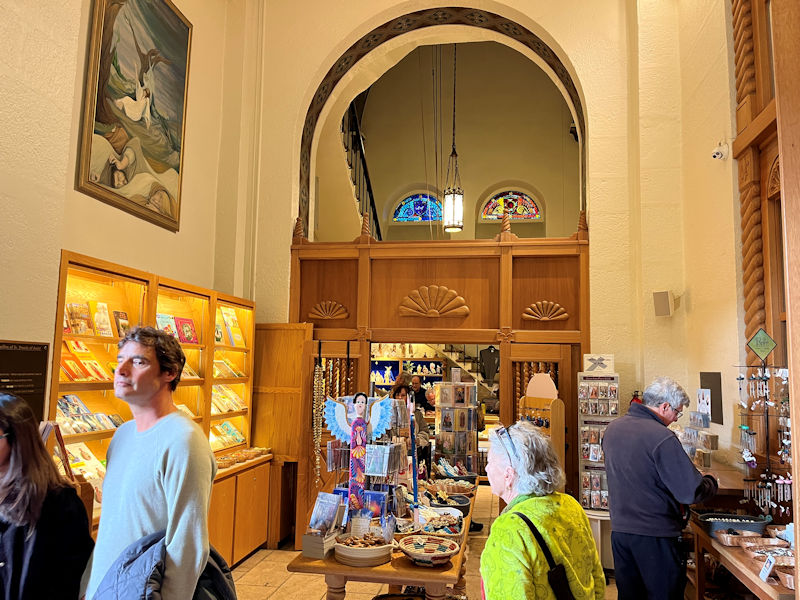
There is a downside to the story of the cathedral, alas; the archdiocese had to take out a mortgage on the cathedral in 2022 to assist in paying off an enormous legal settlement to victims of sexual abuse by clergy.
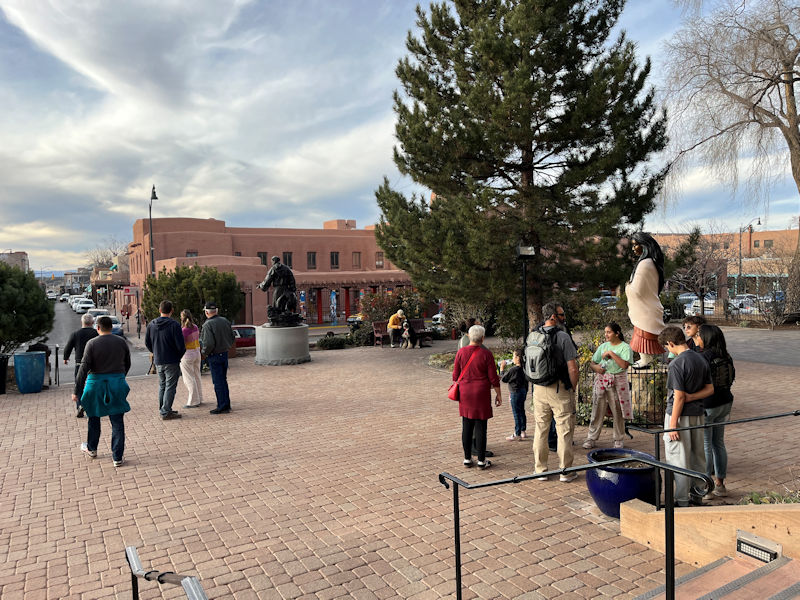
That's the back of Archbishop Lamy and some fans of Kateri Tekakwitha.
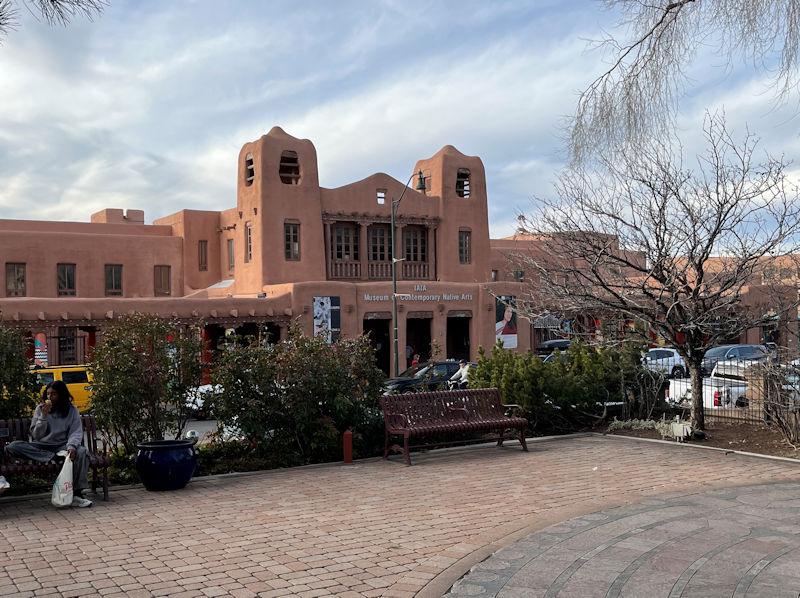
Across the street, that's the Museum of Contemporary Native Arts, in appropriate adobe style. During a decline in the city's fortunes in the late 19th century, it was determined that henceforward it should 1) emphasize an appropriate uniform architectural style, and 2) lean heavily into the cultural virtues of its Indigenous, Spanish, and American heritages.
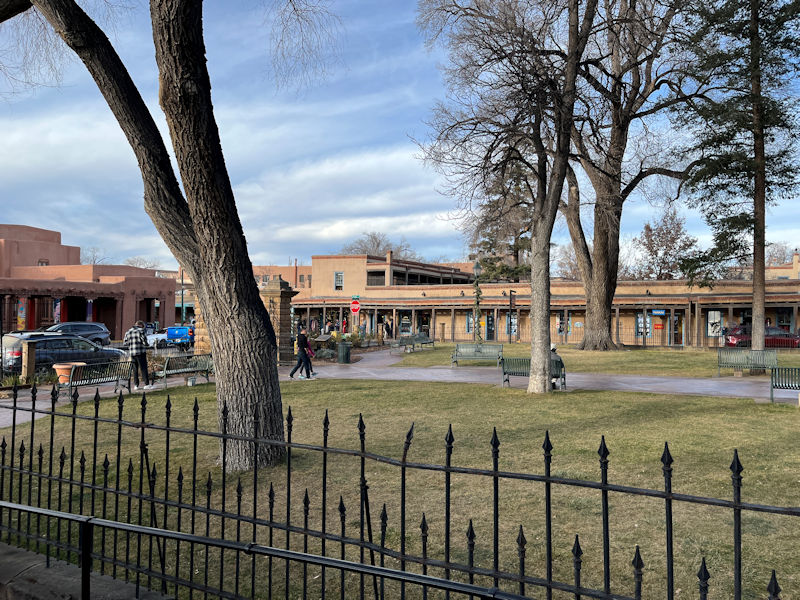
The architectural adobe style was promoted, and after 1912 the uniform Santa Fe Pueblo Revival became official, which in 1957 was broadened to include a revival of the original Santa Fe Territorial Style, 'a distinctive Southwestern blend of traditional Spanish-Pueblo adobe construction and American Victorian or Greek Revival elements'.
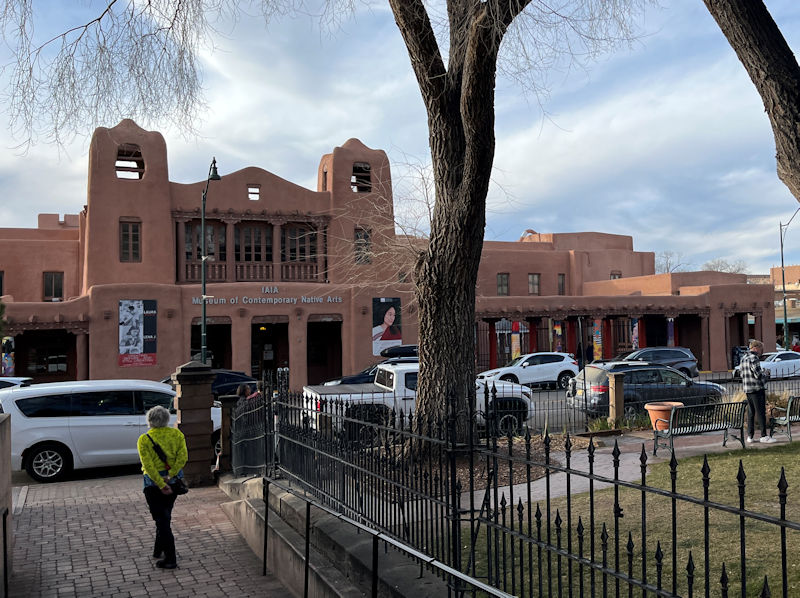
And over time the city has become seriously populated by artists and artisans of all sorts, with a proliferation of galleries and museums (including one for Georgia O'Keefe) and an impressive list of authors who've lived and worked here over the years. It's said that 10% of all employment in the city is focused on culture and the arts, and it's been called 'the cultural capital of the Southwest USA'. It was designated as a UNESCO Creative City in Crafts and Folk Art in 2005.
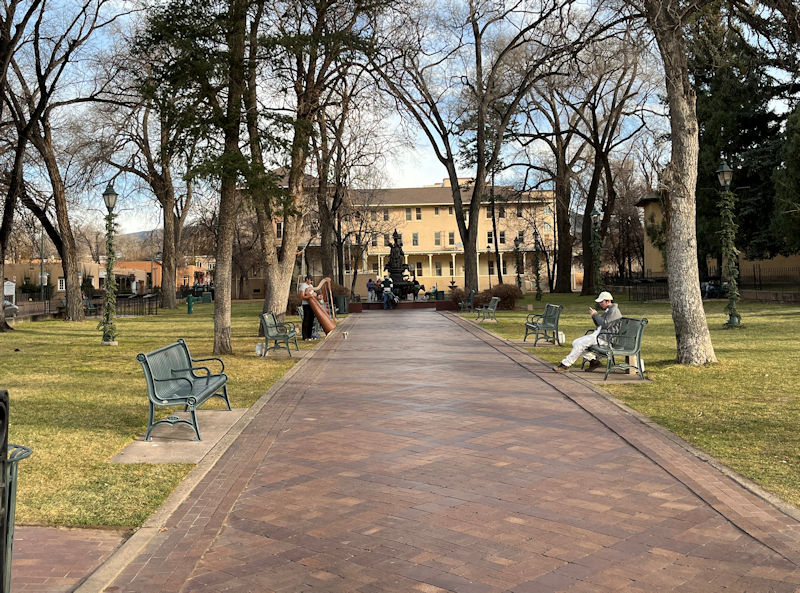
Here in the Cathedral Park, near the northeast edge of the downtown, we wish to stroll about and take a look at that whatever it is protruding down there from the walkway. Beyond the fellow playing his harp.
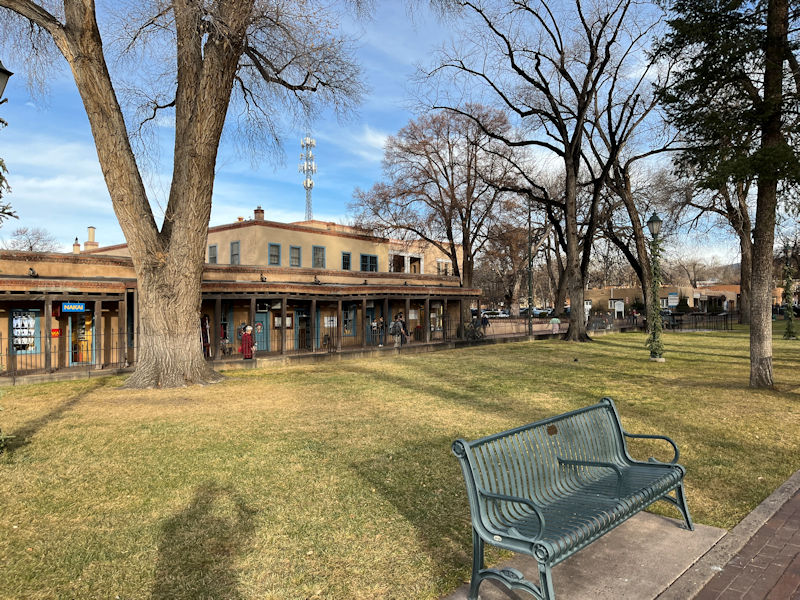
The 'Cathedral Park' is adjacent to the cathedral itself and part of its grounds, but it's actually a property of the city.
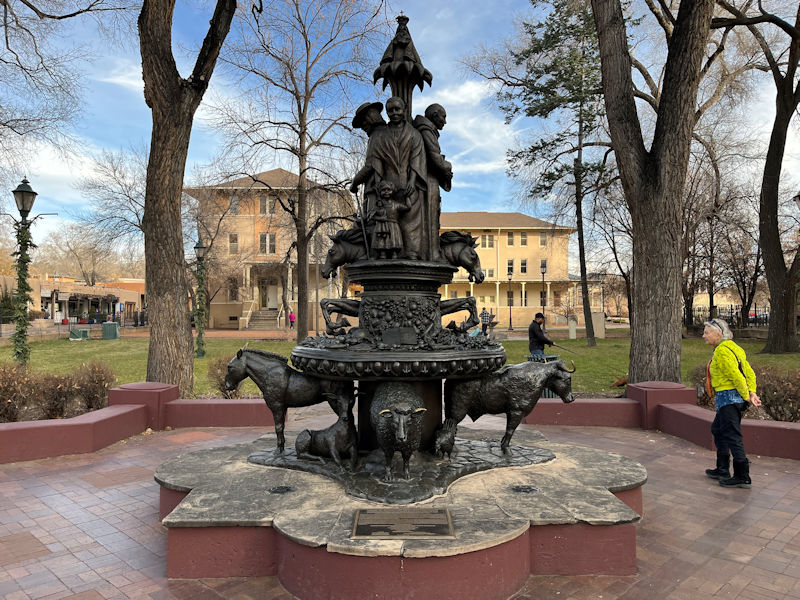
It's certainly intriguing -- what's it all about? Who's that little girl with the dolly?
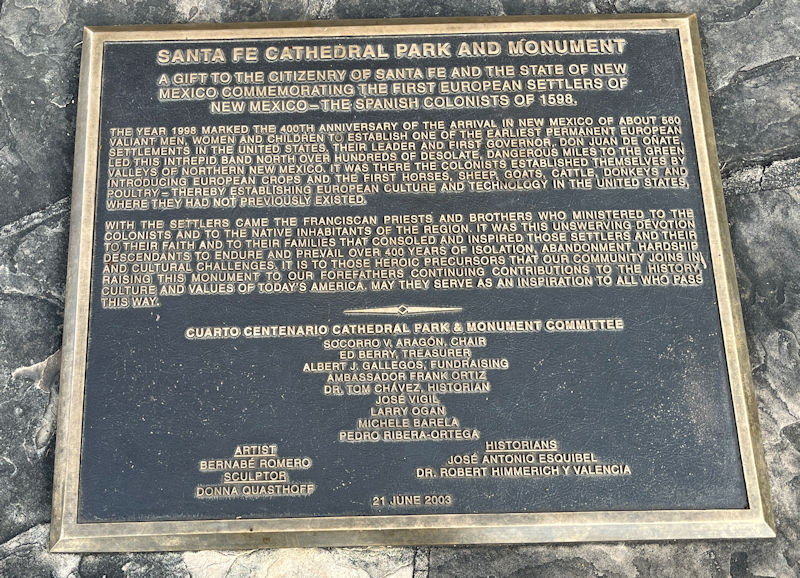
It's known as the 'Santa Fe Pioneer Monument', i.e. in honor of 'the Spanish colonists of 1598' and the Franciscan missionaries who came with them. The various people-types and animals on this side are matched by others on the far side (which we'll come to see in a few days).
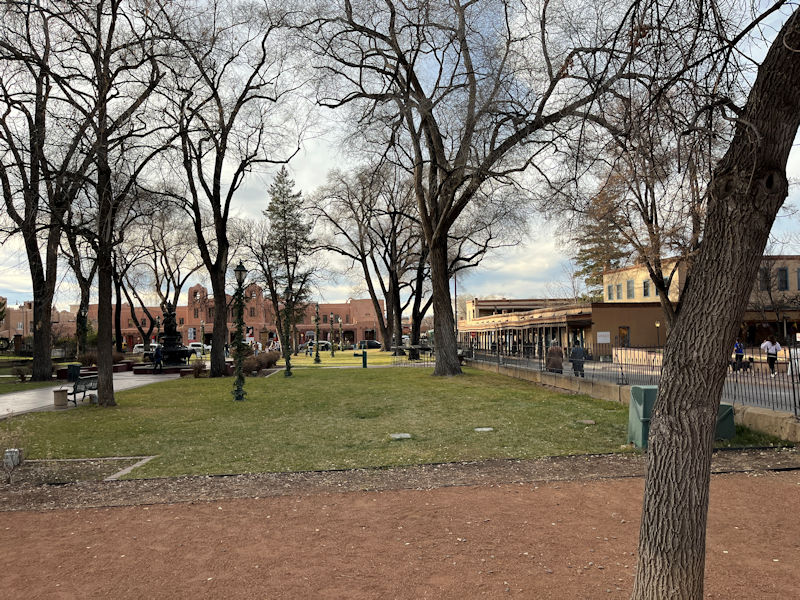
The Cathedral Park on this side -- there's a small 'Stations of the Cross Prayer Garden' (which we didn't see) with 14 life-size statues round the far side, in the remains of Abp Lamy's kitchen garden.
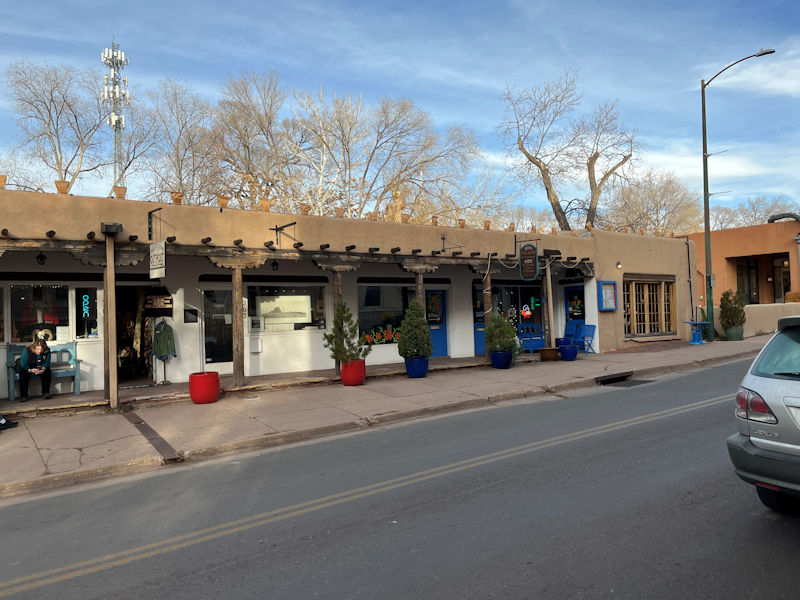
The classic Pueblo Revival style (with a photography shop and the Palacio Restaurant (this is after all E. Palace St))
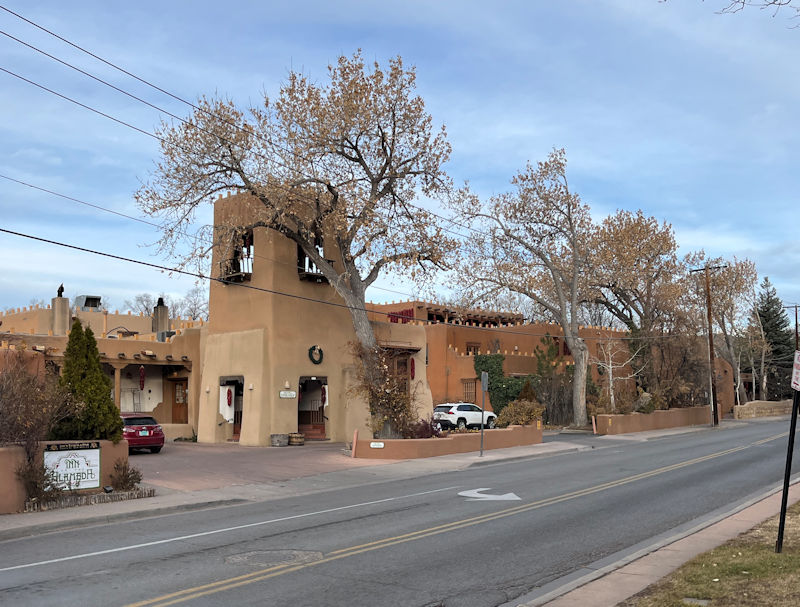
We've ambled back to E. Alameda St, and there's the Inn on the Alameda, featuring Joe's Tequila Bar, and across the road . . .
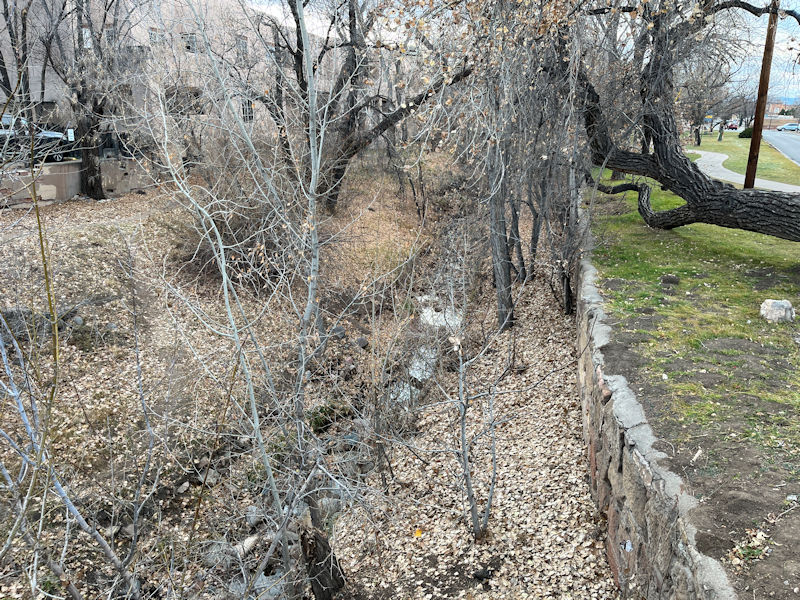
. . . that, believe it or not, is the Santa Fe River. (Looks like the tide's out.)
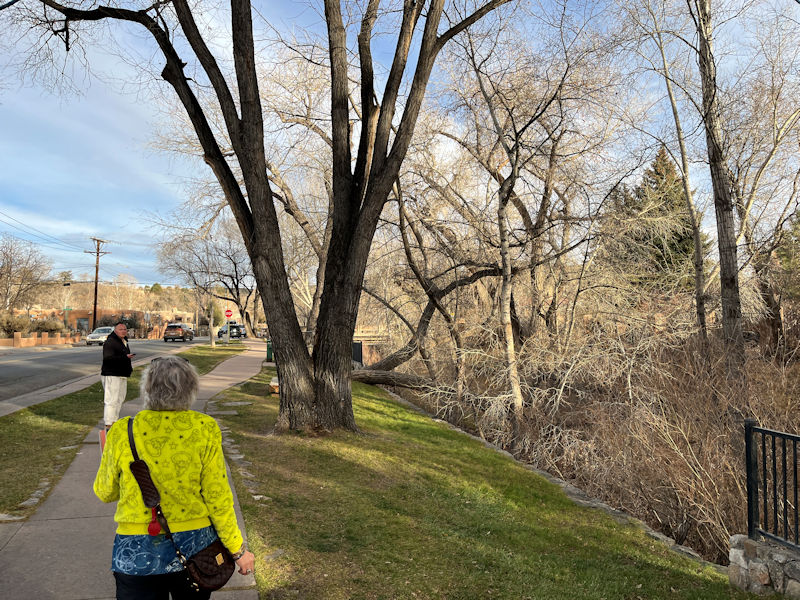
George has completed his errands and come back to fetch us, very kind.
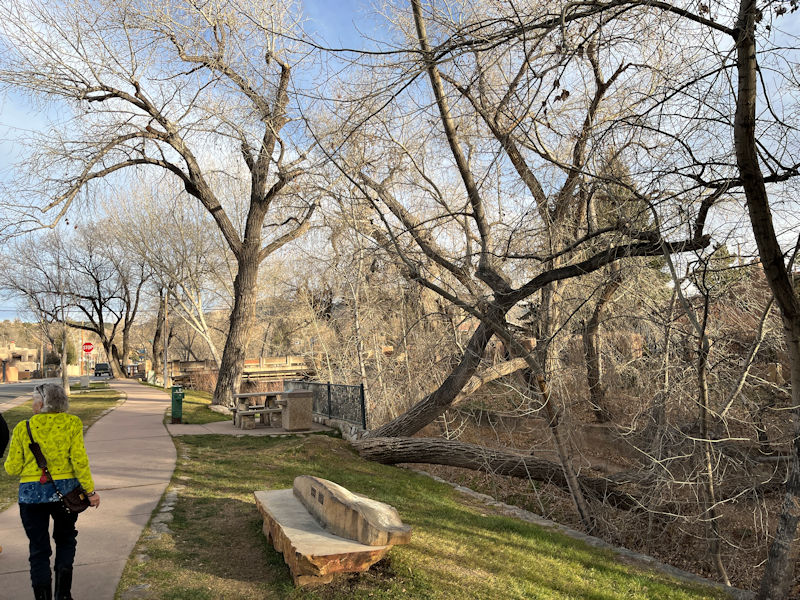
Along East Alameda St
(An 'alameda' is a tree-lined avenue, like this one. The word could also refer, apparently, to a mall.)
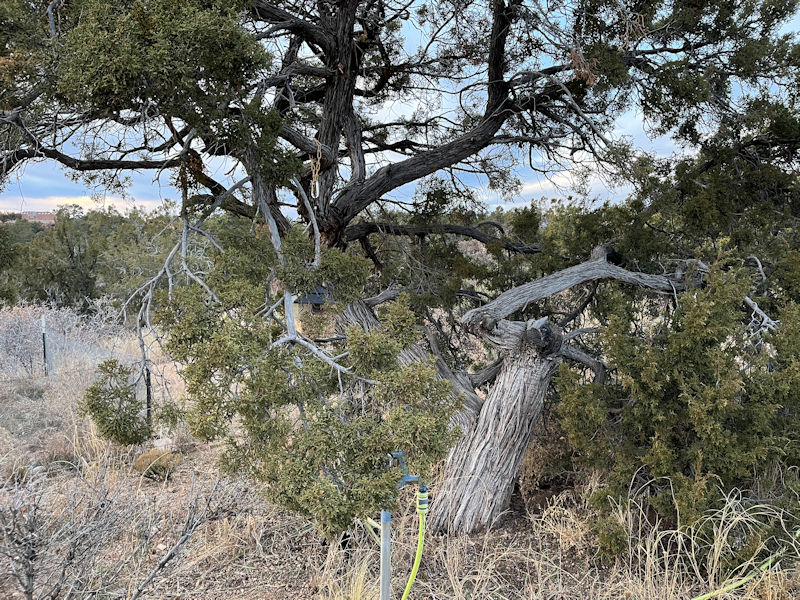
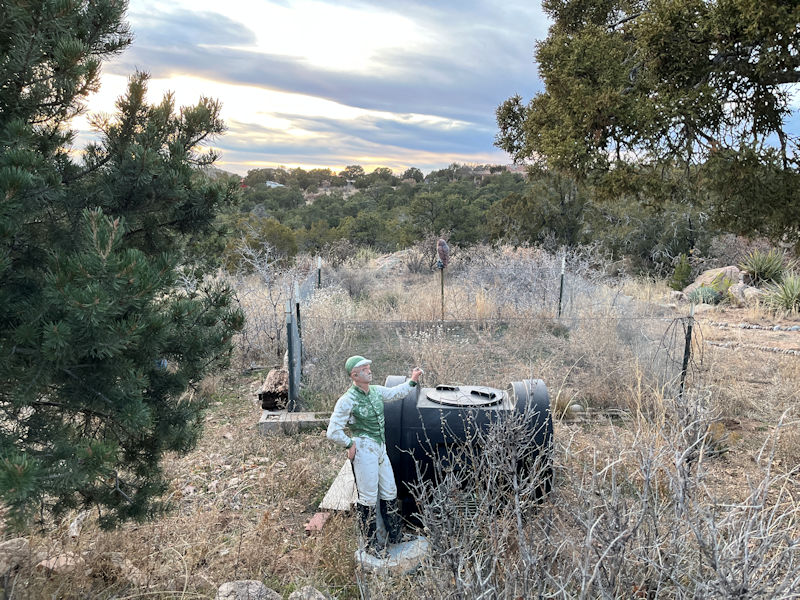
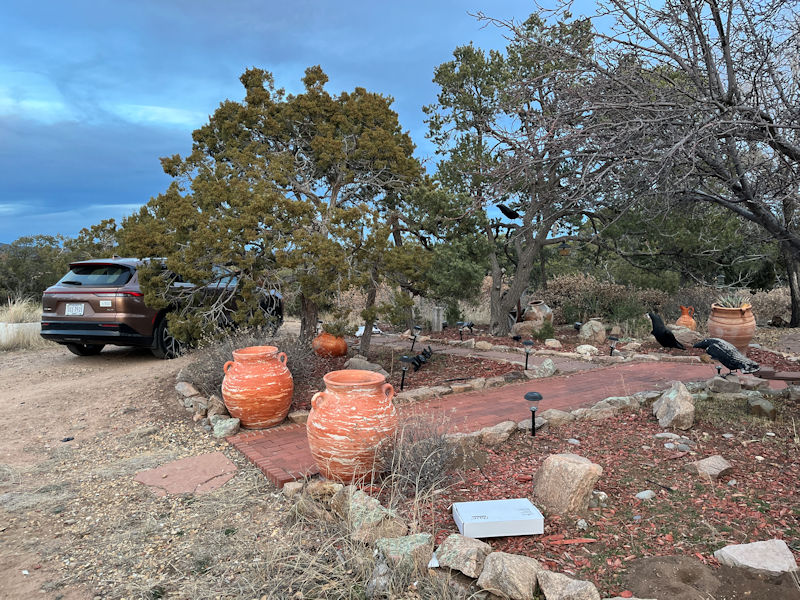
Back to the Apache Ridge, with another testimonial to the environmental configurations to be seen all round.
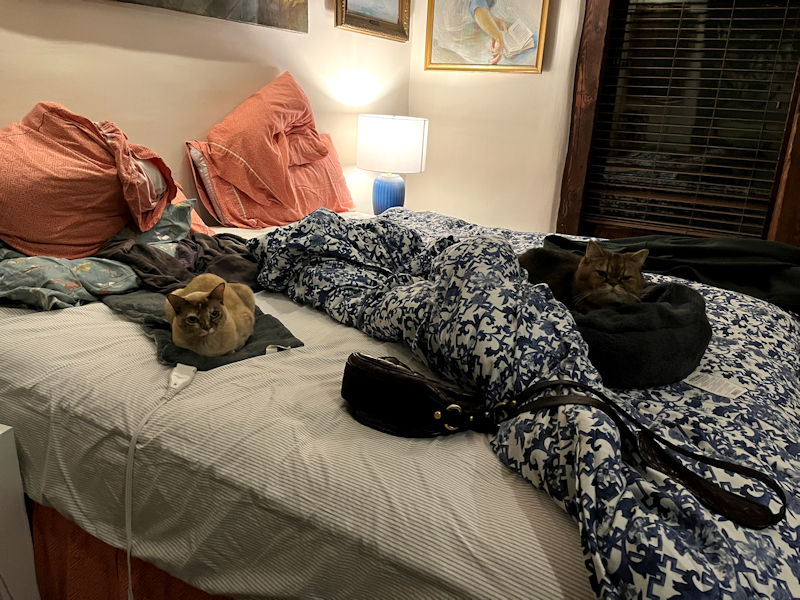
Night time for kitty cats (one chooses the blue catbed, the other prefers the heating pad)
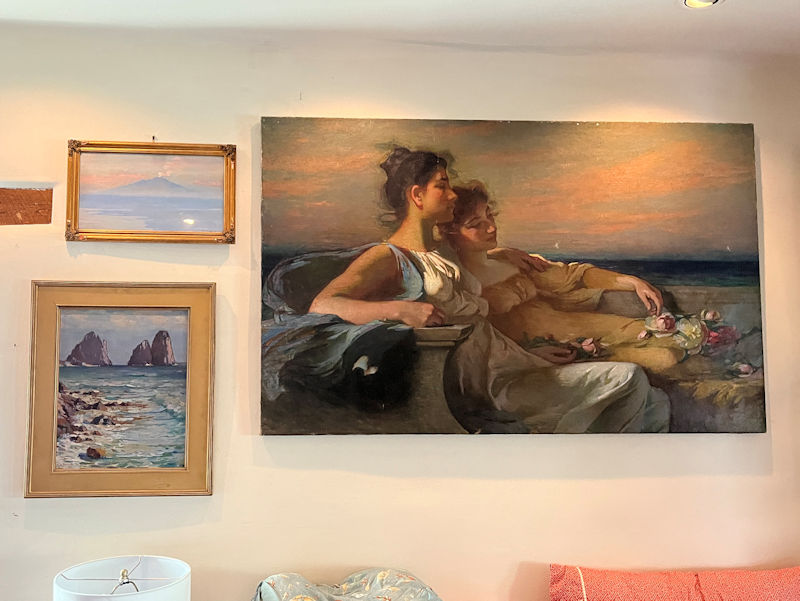
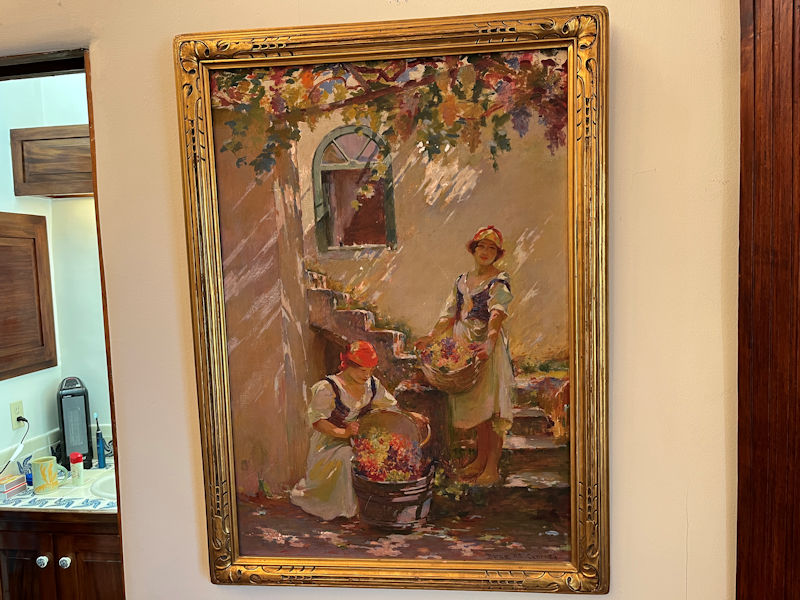
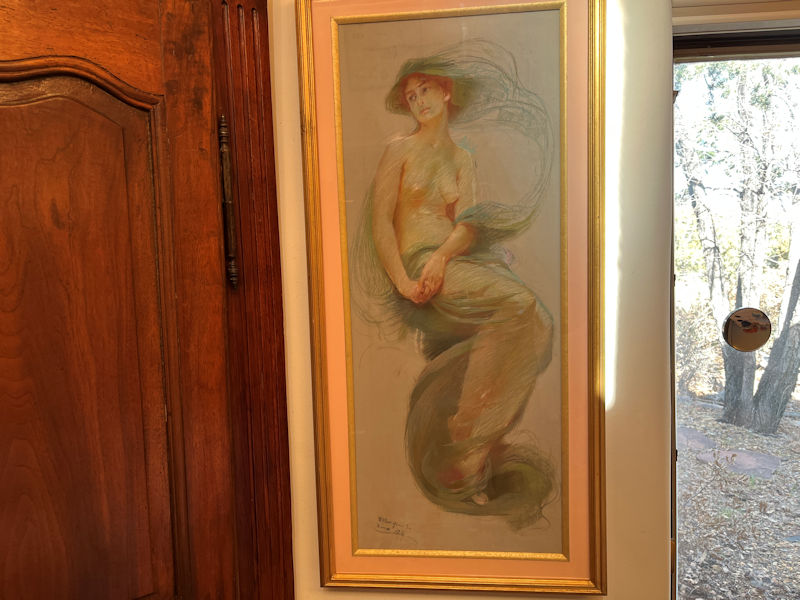
Artworks everywhere. Vesuvius above left, two reclining ladies on the right, and (on the lower left) the Faraglioni rocks off the southern coast of Capri.
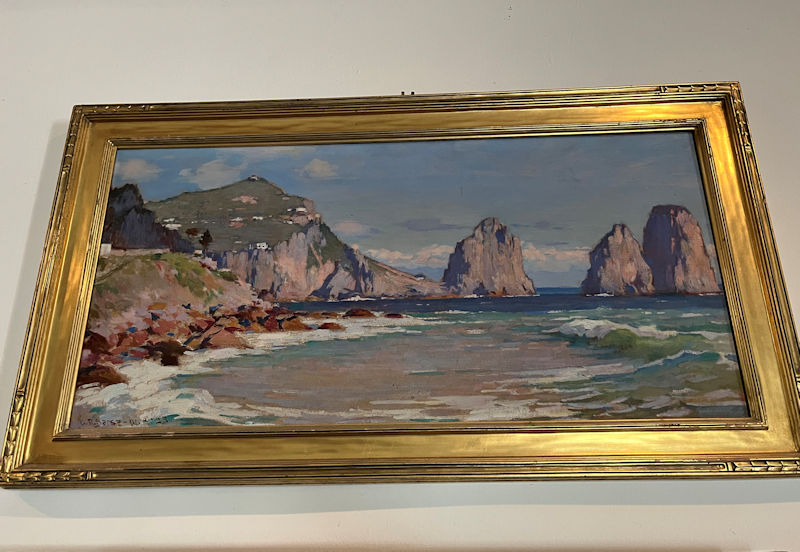
Not to neglect the Faraglioni rocks off the southern coast of Capri (Anacapri up on the left). Capri was a favorite of many artists in the 19th century, most notably Elihu Vedder and John Singer Sargent, whose favorite model in Capri was a local girl, Rosina Ferrara, who in 1891 married the American George Randolph Barse (1861-1938) and accompanied him to the USA, where she died of pneumonia in 1934.
George Barse had connections with Kristin's late ex-husband's family and he and Kristin accumulated a sizable number of Barse's works. Some of them are here now, Kristin has a number at home at our condo, more in her cottage in Wisconsin, and others in storage.
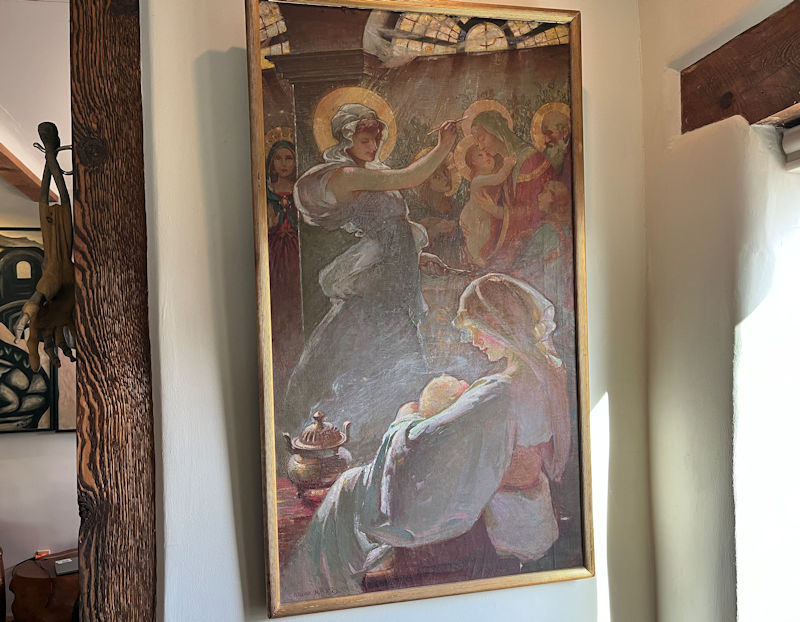
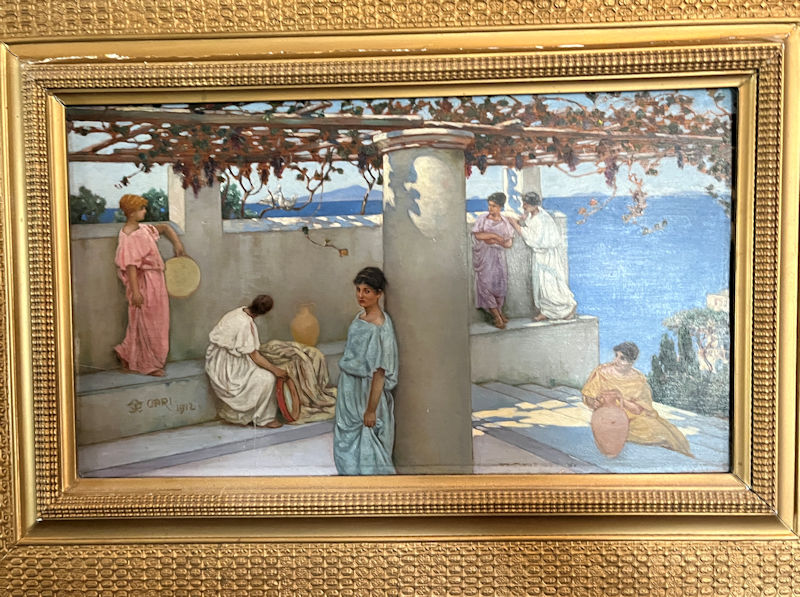
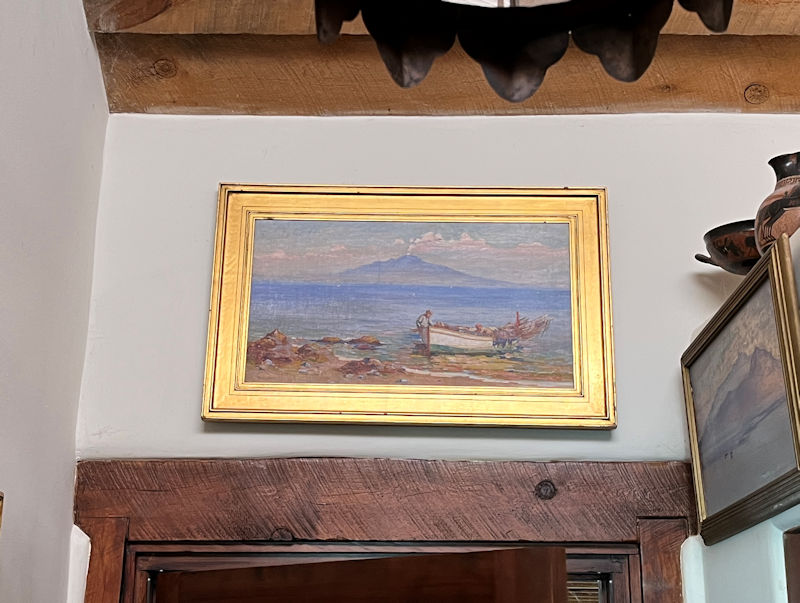
That's another of Vesuvius, seen from across the Bay of Naples.
Next up: A visit to the Pecos National Historic Park





 Dwight Peck's personal website


 Feedback
and suggestions are welcome if positive, resented if negative,
Feedback
and suggestions are welcome if positive, resented if negative,  .
All rights reserved, all wrongs avenged. Posted 2 February 2026.
.
All rights reserved, all wrongs avenged. Posted 2 February 2026.