You may not find this terribly rewarding unless you're included here, so this is a good time for casual and random browsers to turn back before they get too caught up in the sweep and majesty of the proceedings and can't let go.
Daughter Alison is coming to us for a brief visit; retired from the National Science Foundation and returned to her old alma mater in Socorro, New Mexico, restoring an old house with friend Ryan, she's been visiting some good friends in the DC area and has gracefully come to see us.
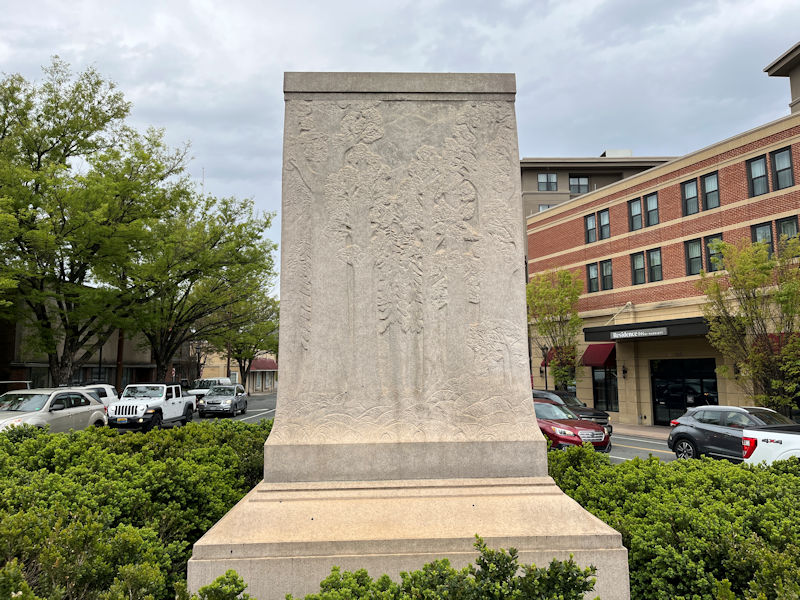
Here in Charlottesville, we're passing the plinth of the former statue of Lewis and Clark, with Sacagawea slumped over at their feet. The solitary plinth itself celebrates more than the statue did.
(See below.)
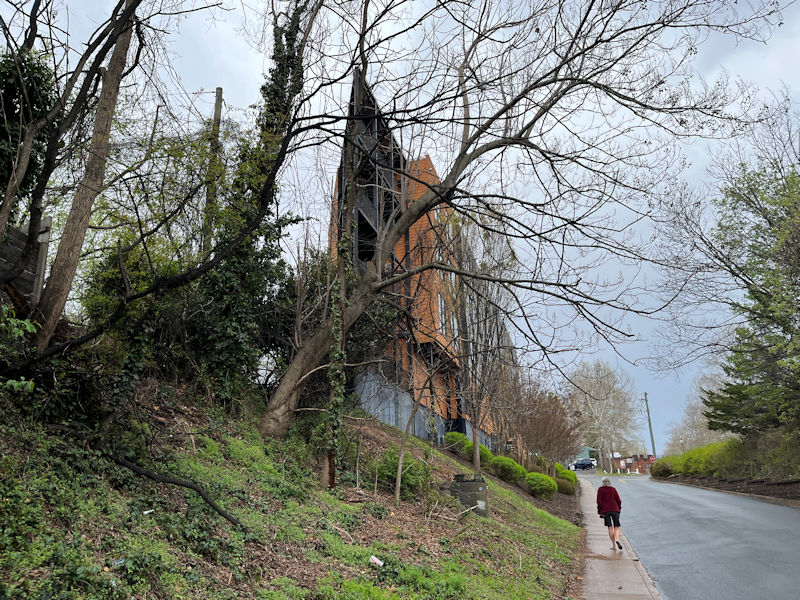
Alison was taking the Amtrak down to Charlottesville, but the tracks are being repaired somewhere and the two hour train ride turned into a four hour bus trek. So whilst waiting we've been canvassing the neighborhoods looking for funny apartment blocks to photograph. Here's one.
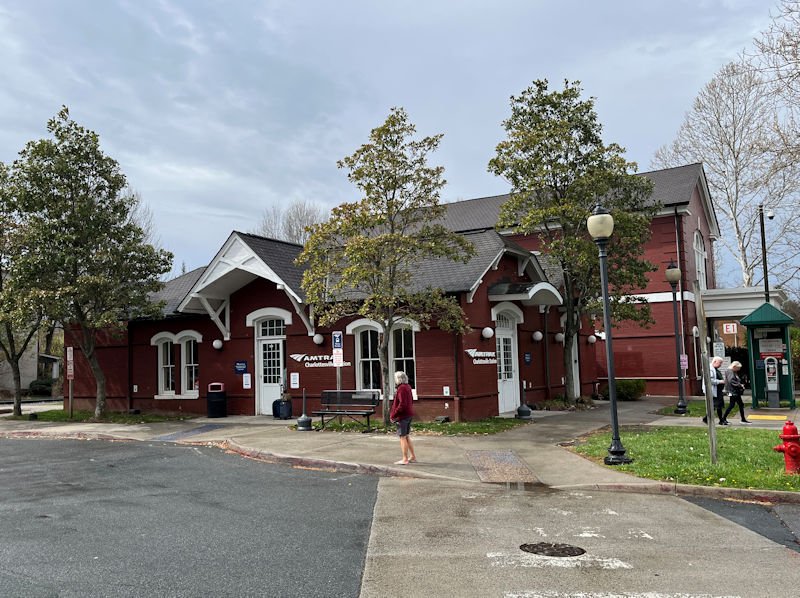
A slow wait at the beautiful Amtrak station, but eventually the bus and its semiqualified driver arrived, and we headed back over the Blue Ridge to Staunton.
A visit to Staunton's Frontier Culture Museum
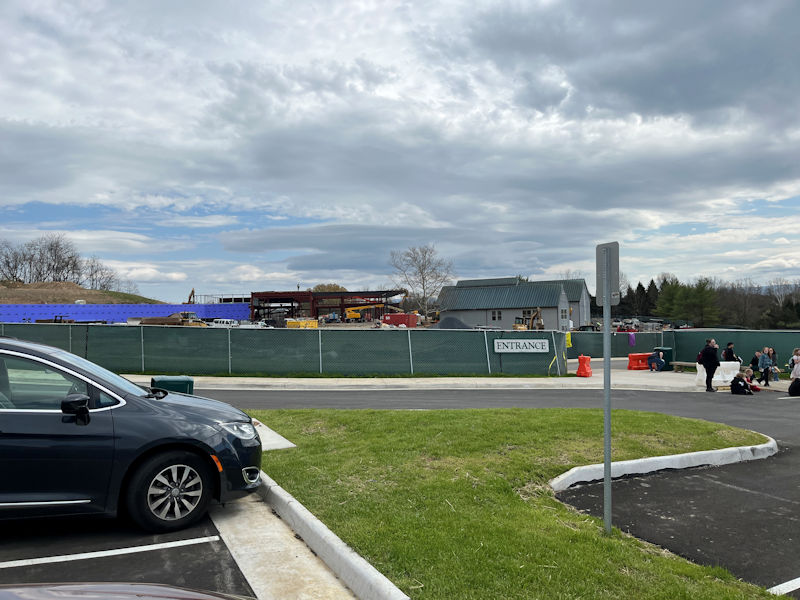
Just imagine our surprise when, last October, we looked in at the Frontier Culture Museum and found various whacking great yellow machines parked about, various holes in the ground, and half the carpark behind a temporary fence. The staff informed us that great happy changes were in the offing.
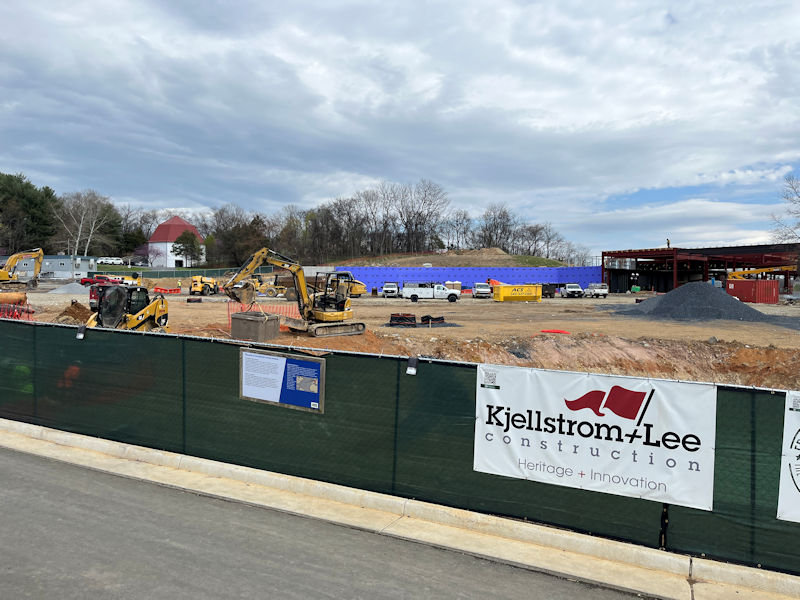
And here they are! We're sure that it's all been thought out, and it will all be much improved (and much larger), and that a great lot of money must have come out from somewhere. But it's certainly an unsettling change at this stage.
We've been coming here since first coming back to the USA, some seven years now (oh, jeez!), and we were feeling very much at home in this place. We bring our friends and relatives, we bring our books and sit on the benches, what will this future do to our quiet lives and pathetic little habits?
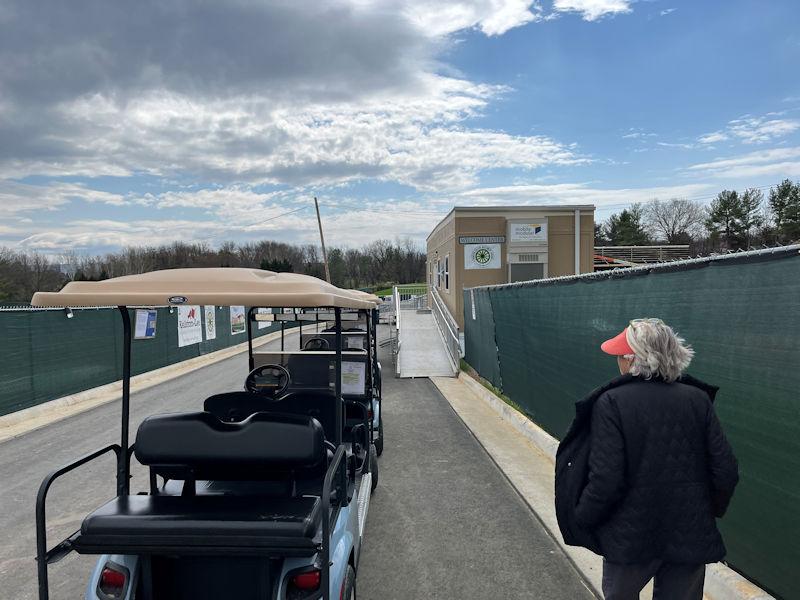
They've even got the Welcome Center packed up in mobile home!
Just kidding! Everything looks like it's being done very carefully and helpfully, and the staff are as friendly as ever.
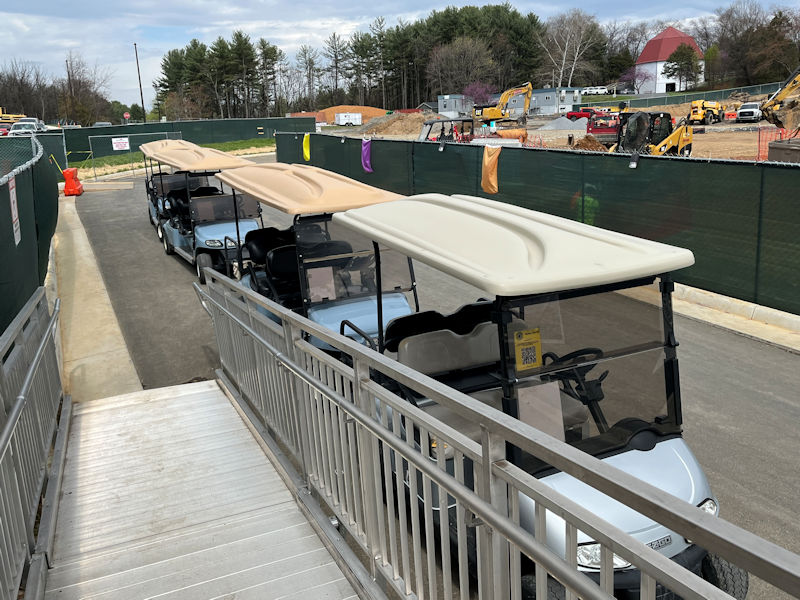
And the carts are still lined up for guides to ferry people about, if required, and available for rent as well.
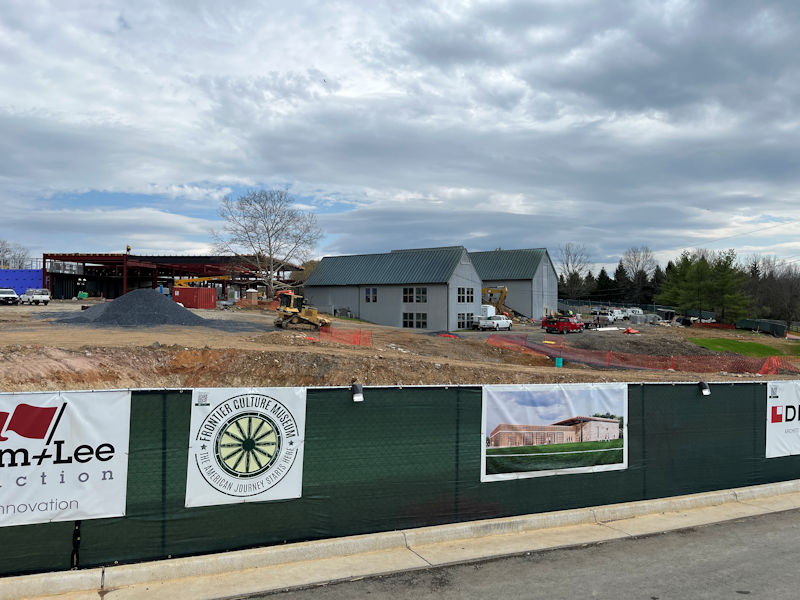
There are the old classrooms, indoor museum, etc.
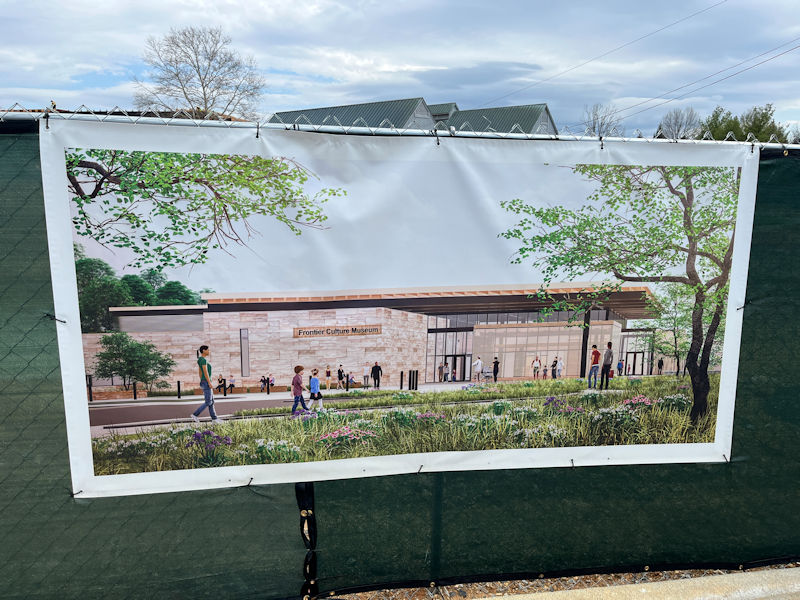
See. Well planned out.
Can't really say I like the very non-frontierish design much, but it's not my call, luckily for them.
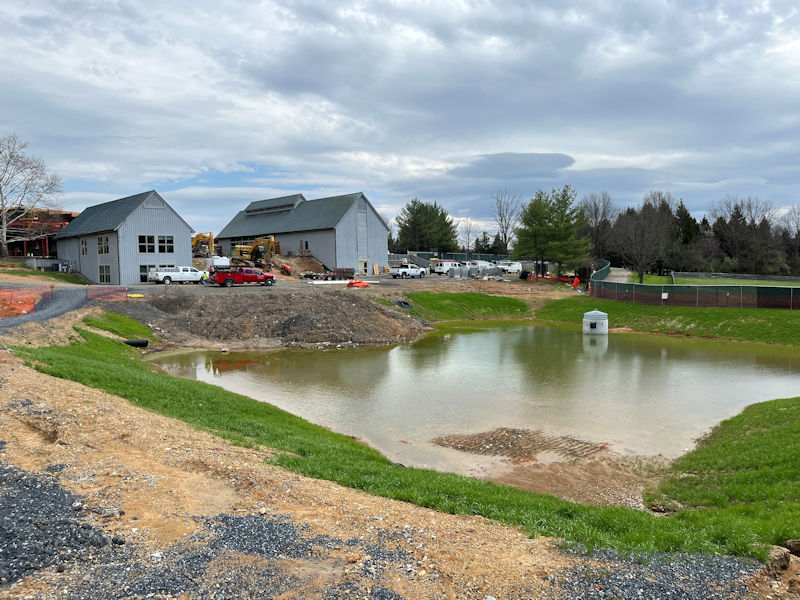
And maybe we'll even have more ponds all round as well.
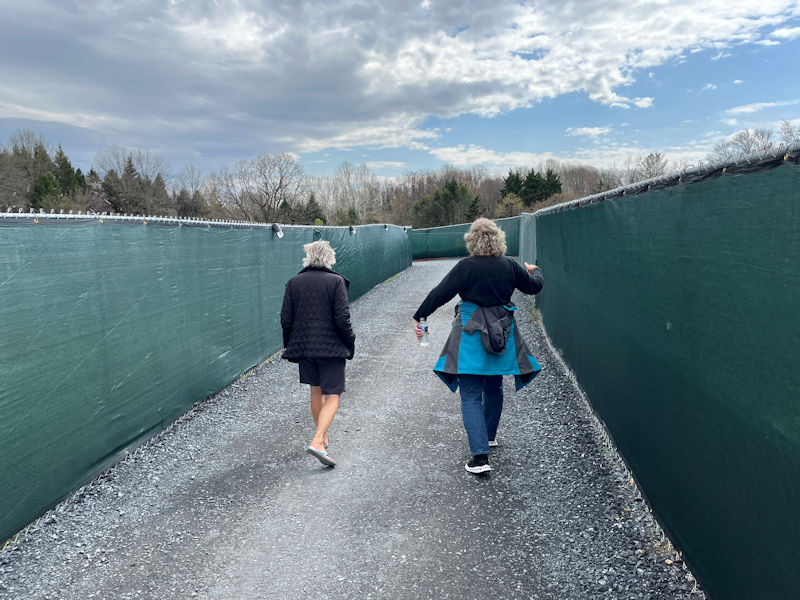
We've been assured that the museum displays haven't been monkeyed with and will be as we've always admired them. Though this is the long way about.
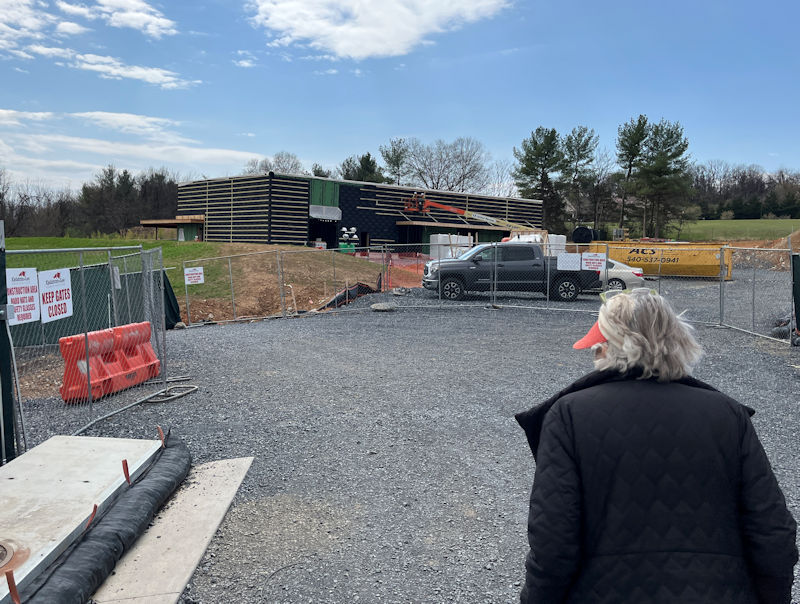
Oh, good grief!
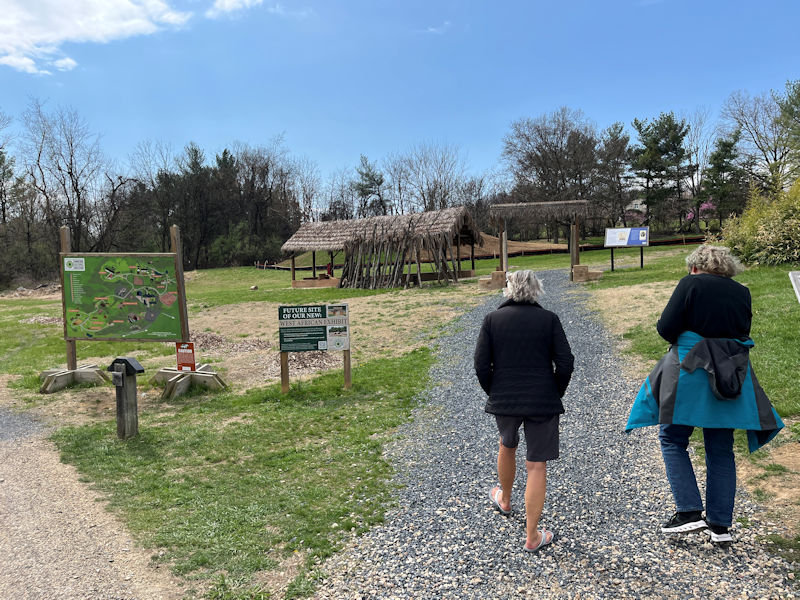
As usual, we begin the normal itinerary with the West African village, which however isn't really here anymore. The Museum is dedicated to demonstrating the influences on the early USA of the cultures of Protestant Germans, Protestant Irish, and Protestant English yeomen farmers on the young republic, with additional displays for West African and Native American cultures. All of these are provided (in season) with docents to explain the cultural messages, either with buildings ferried over from their native European homes or created here.
The African village, formerly here, was meant to embody to cultures of the main sources of the American slave trade in West Africa, but for the past few years it's been difficult to keep it physically maintained and it's presently being moved to another site. In the meantime, there's a poor solitary docent sitting up there praying that we'll come along to hear her explanations of things, but we haven't time today.
In October 2019, our good friend Dan Hinckley got a very good lesson on African drums from the docent, and we all applauded a lot.
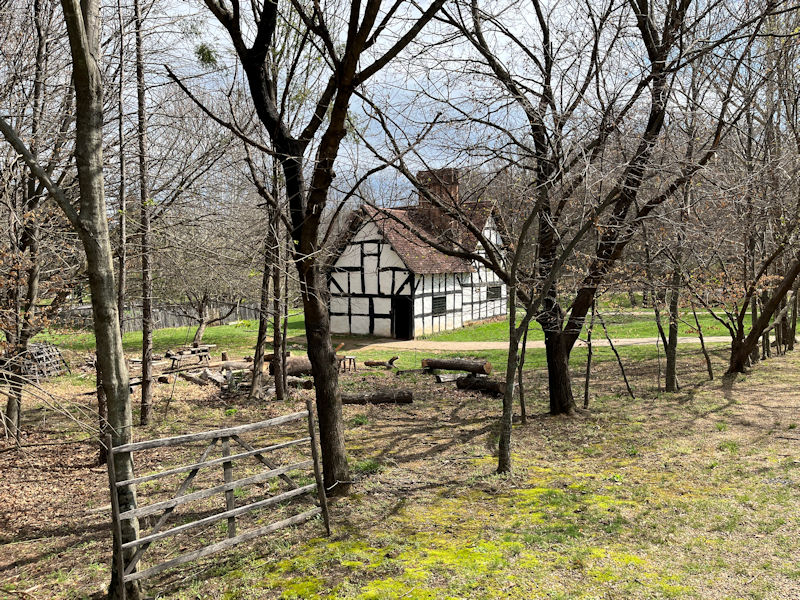
That's the mid-17th century yeoman farmer's house from Worcester in the West Midlands of England . . .
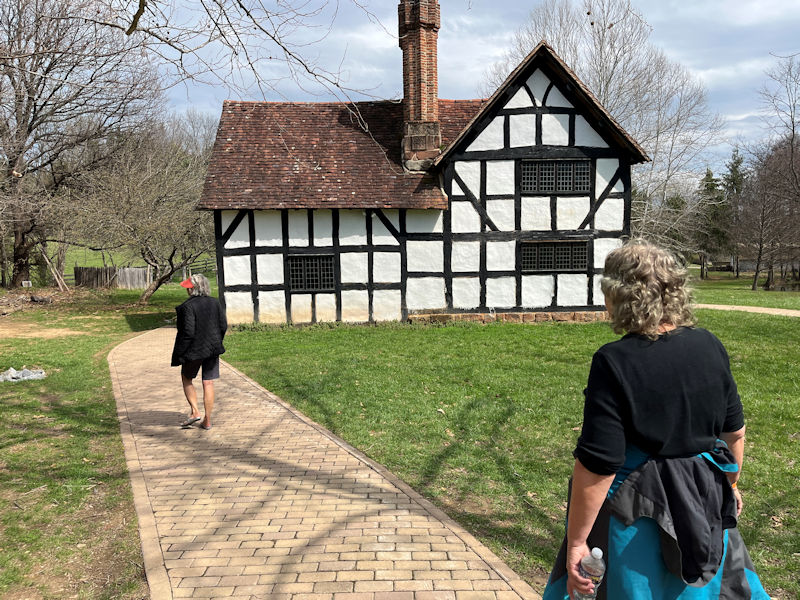
. . . with appropriate gardens and what not all round it.
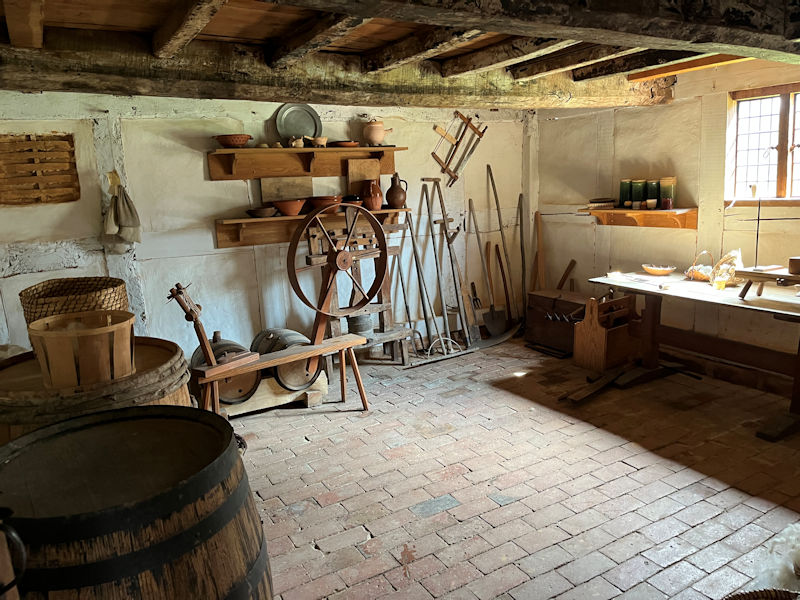
There's no docent on duty this early in the season, but will be soon, for sure. Here's the workroom for carrying out whatever necessary tasks a good yeoman's family might have to keep after.
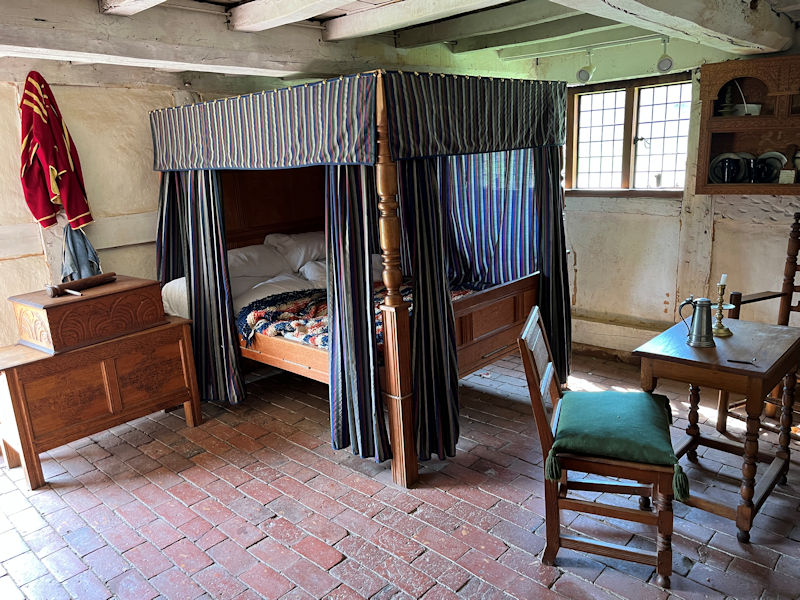
The main bedroom. There's not much else here, but on one of our first visits here we were allowed to take the steep stairs up to the attic, where the children (and the nanny) slept.
Or that was one of the other houses. But for the past years, no upstair visits have been permitted in the museum. Liability issues, one supposes, like much else these days. And rightly so, perhaps.
We've just been visiting the new cow shed. Real cows here now, that's progress, too. But our photo of the new cows was kind of crap, so we won't show it here.
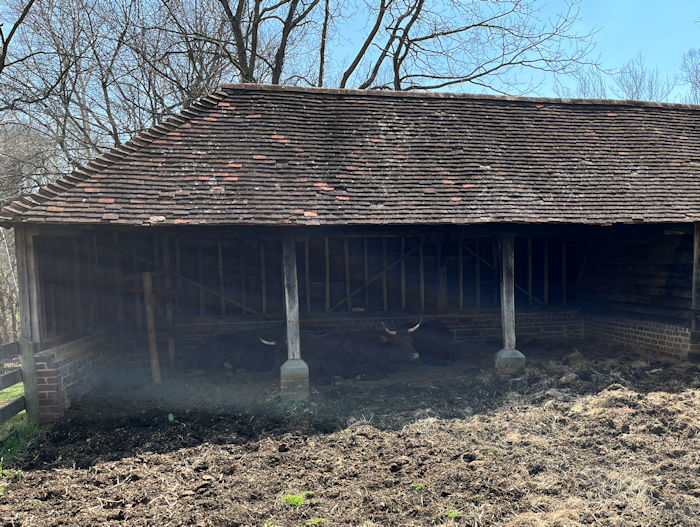
Well, okay, here it is. But we'll be better prepared next time.
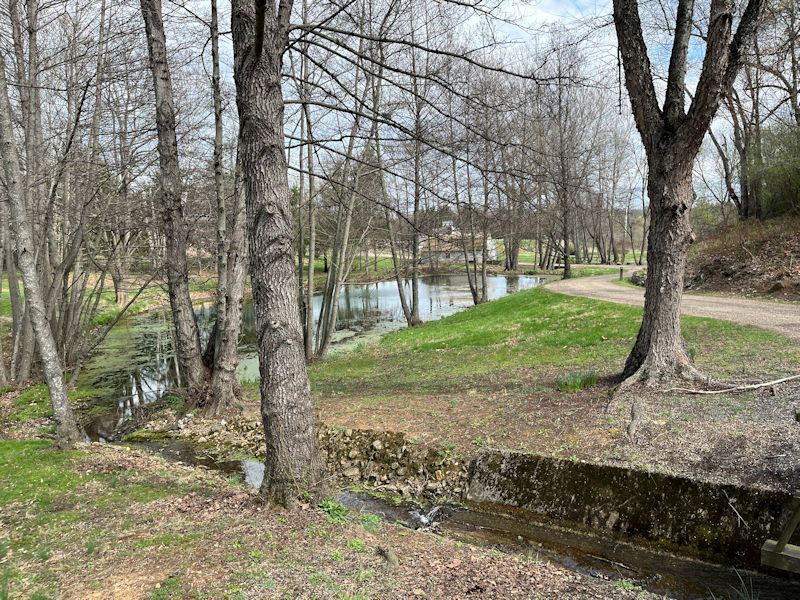
The pond by the Irish forge
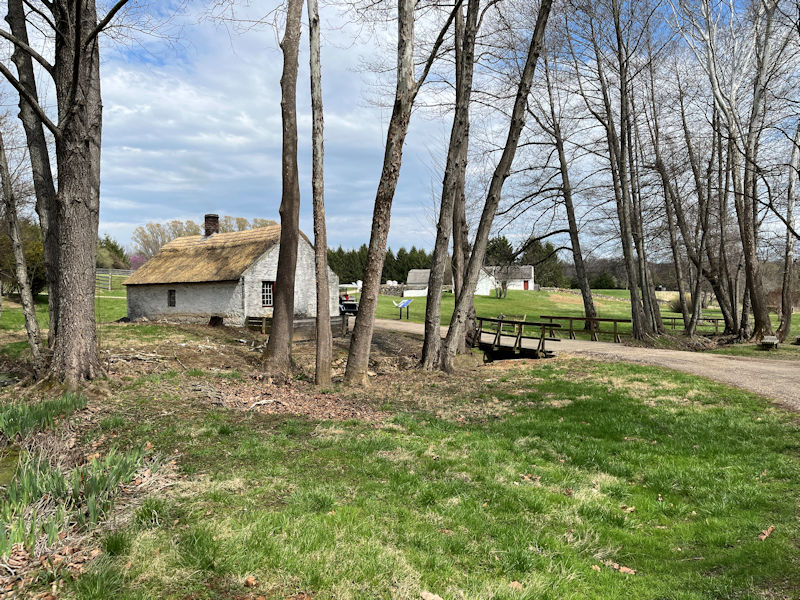
Naturally, every early settlement required a blacksmith, and here he would be (as long as he was a Protestant). The smithies who work here (we've met several of them over the years, but will give it a miss this time) not only explain the methods and purposes of their work, but also forge everything iron used by the museum or sold in the gift shop.
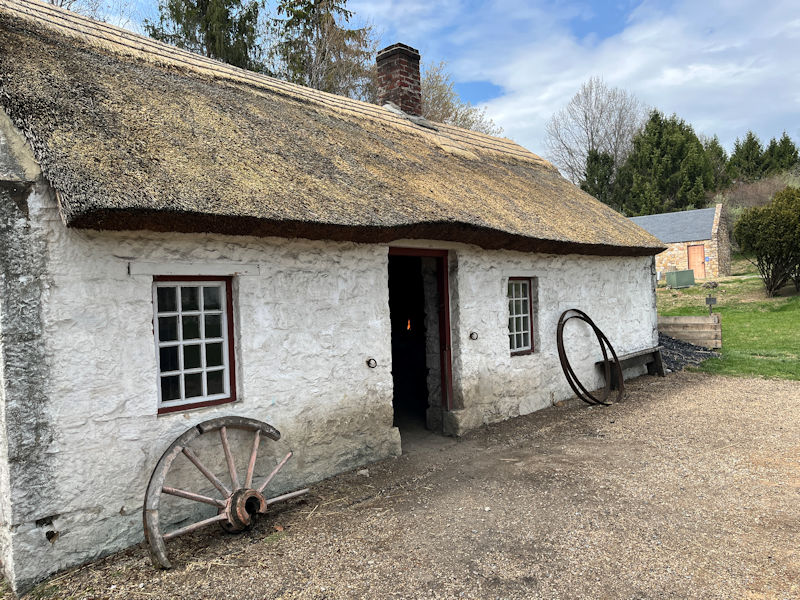
His fire seems to be on, and there are folks inside, so we'll move along.
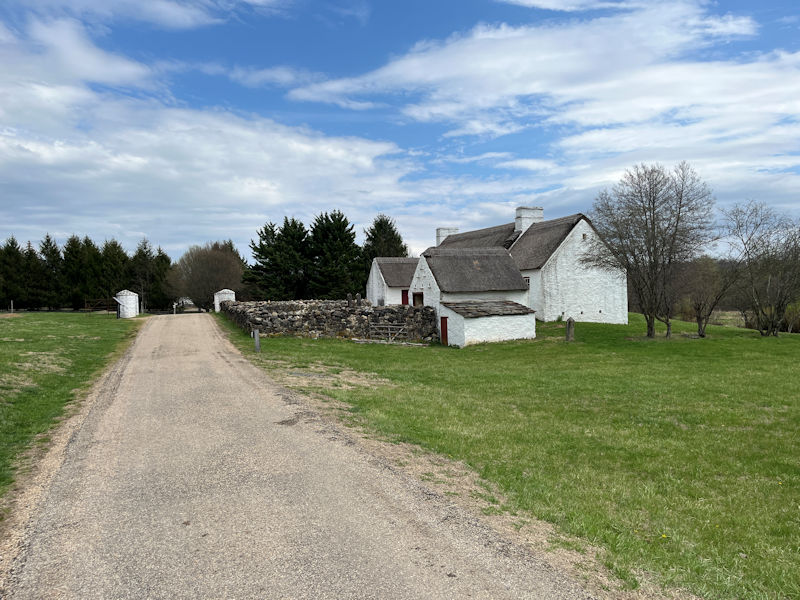
There's the 18th century Irish tenant farm moved over here from Ulster, the Protestant County Tyrone in Northern Ireland.
(Mind you, many of the Irish who immigrated from Ireland then, and especially a century later, didn't actually have farms or couldn't afford the tenancy.)
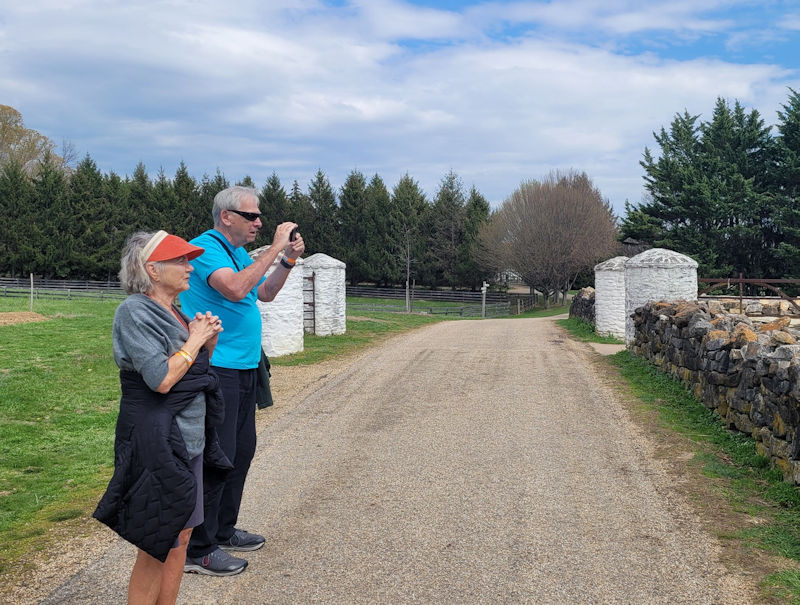
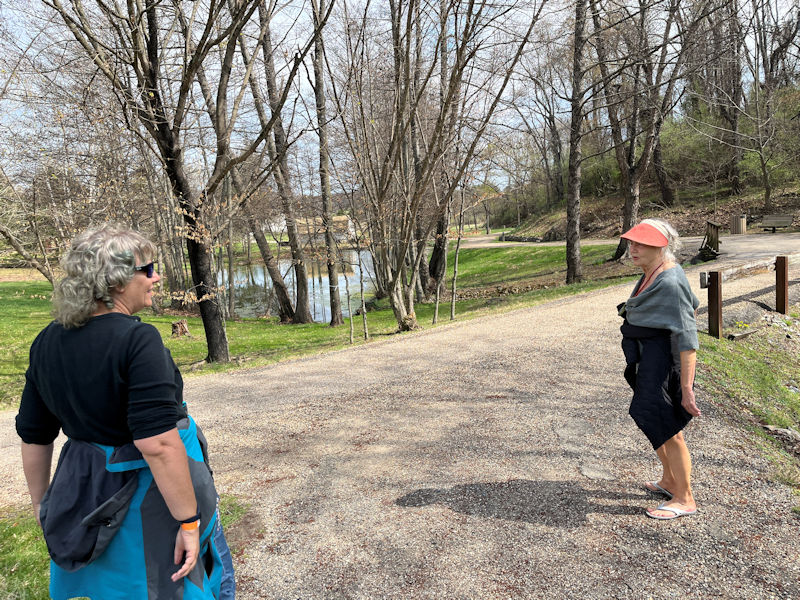
But let's get a good photo, in any case. (Photo by Alison.)
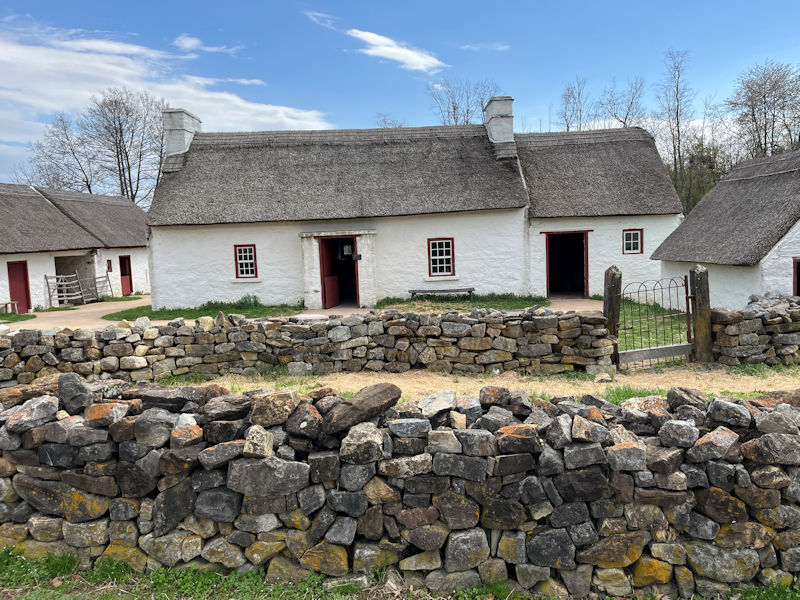
We'll put that with our collection of photos of that very farm and its 'long byre' (i.e., barn).
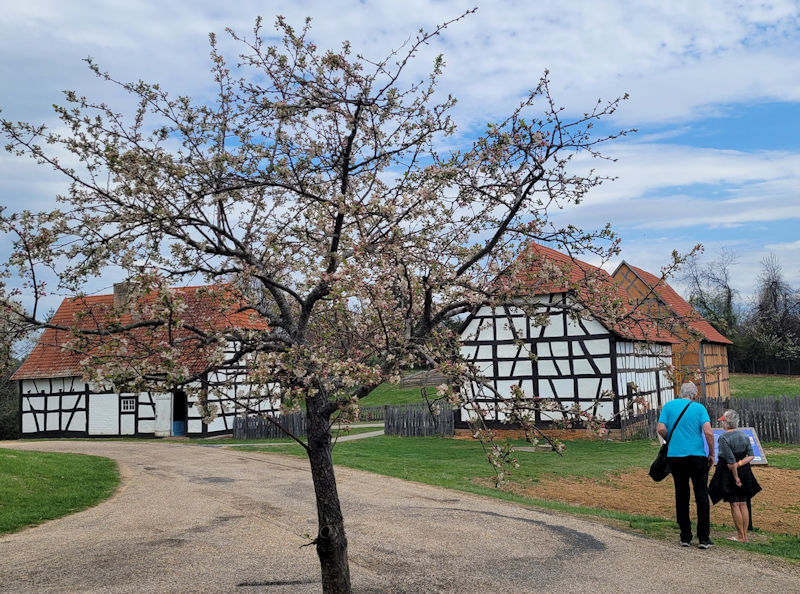
Now comes the 18th century German farm, from the southwestern (Protestant) Rhineland Palatinate. Most German emigrants moved east during the wars of that period, but perhaps 100,000 came to the US and many of them came down the trail through the Shenandoah Valley. (Photo by Alison.)
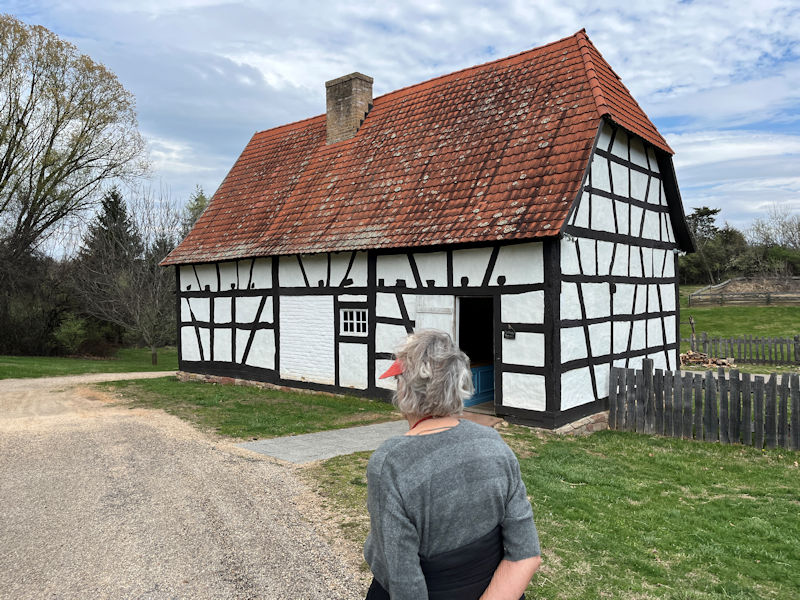
No docent today to explain things, but that's all right at this point . . .
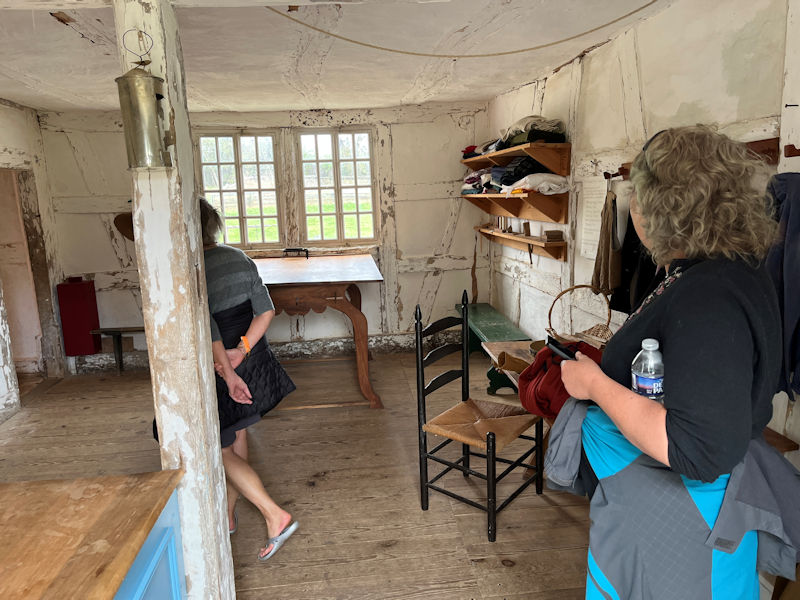
. . . we'll just take a quick look round.
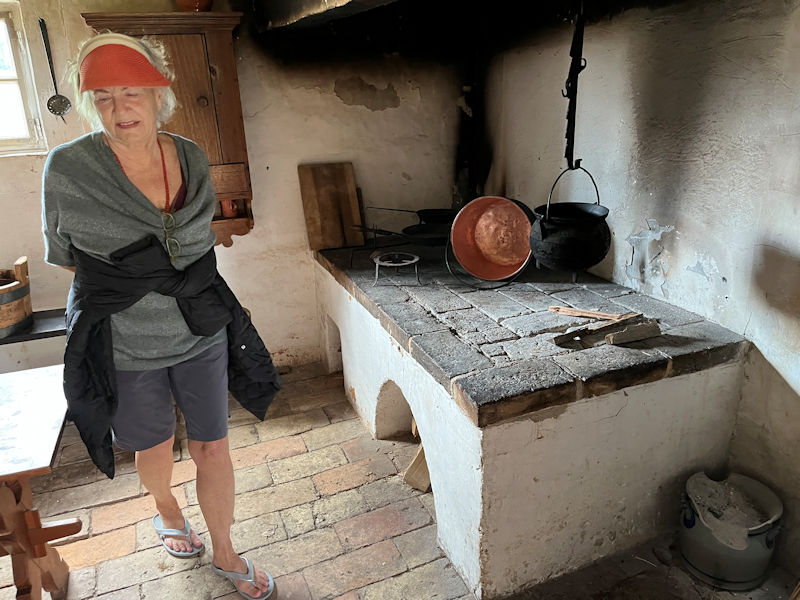
One does remember that it was explained that that stove was made in some efficient, innovative functionality, but at the moment we've forgotten it. Probably something about the fire underneath heating the cooker on top and the room at the same time.
We'll have to look that up at our leisure.
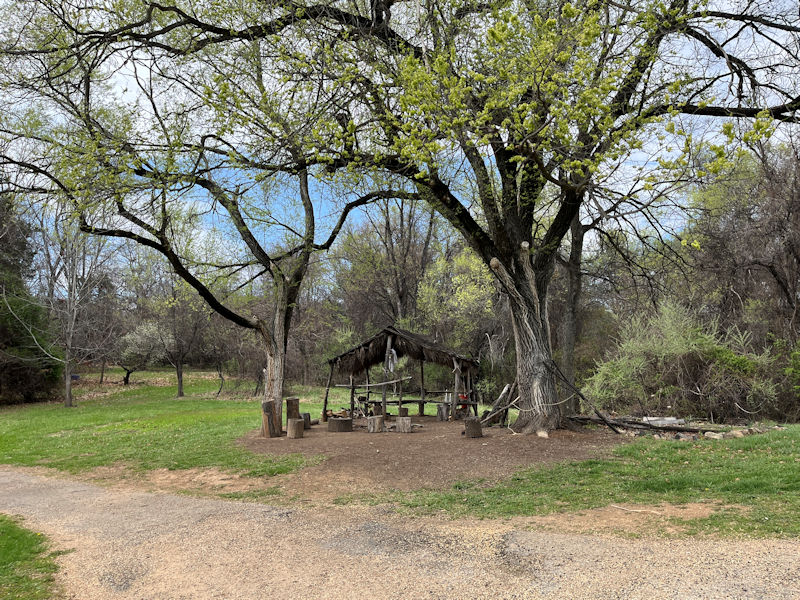
That's meant to be a Native American something or other, and . . .
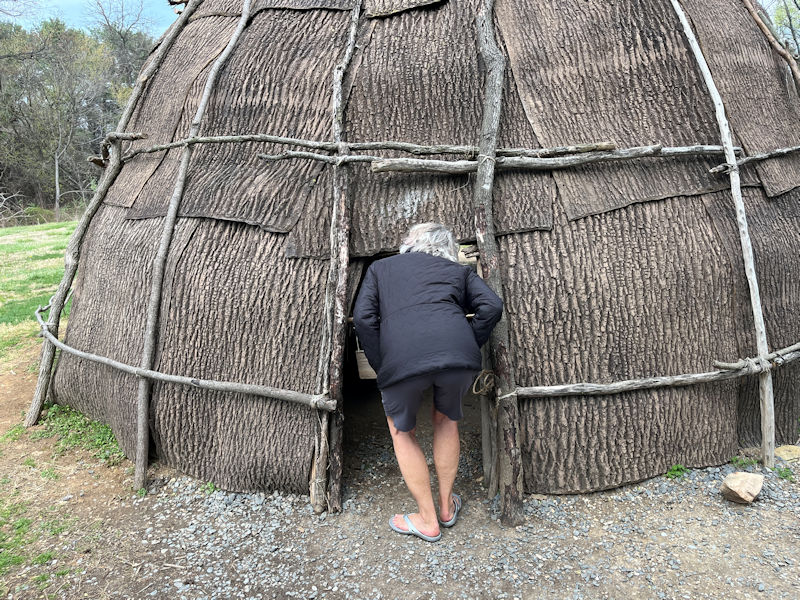
. . . we've got two of their traditional homes, recreated right here (empty). .
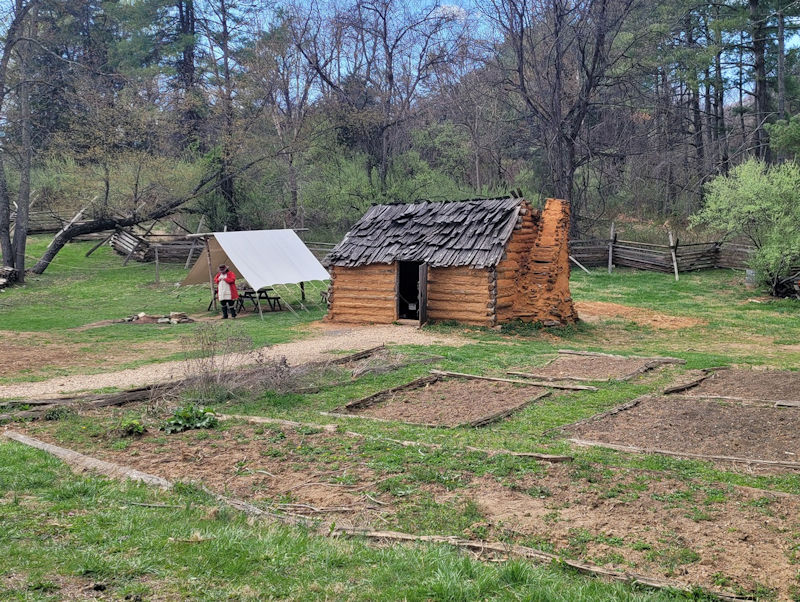
Now we're getting down to local basics -- this is meant to be early settler's, down the Shenandoah Valley, very own starter cabin, whilst he got himself squared away and perhaps (later) his family (if any) brought along. It's a one room hovel, in effect, but that clever mud chimney lifted away from the sidewall was an excellent idea. (Photo by Alison.)
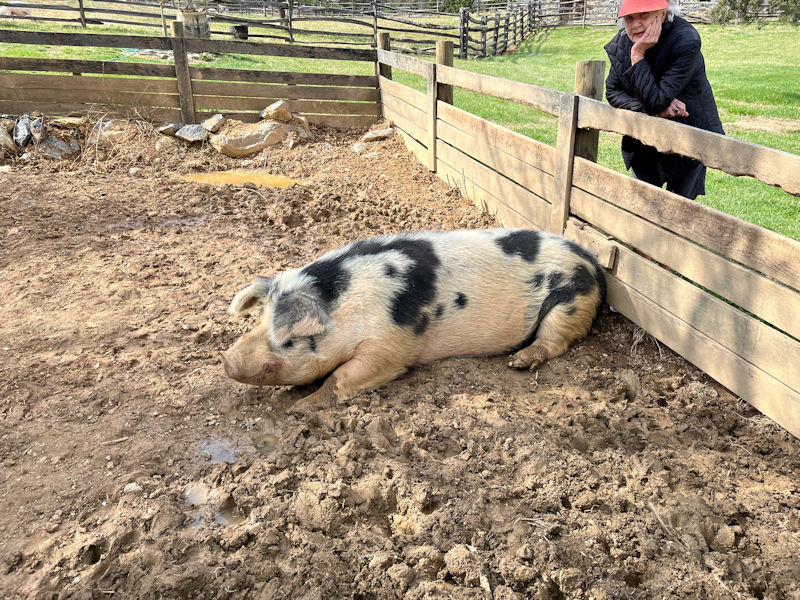
Moving along, that's Dalley. There were three enormous monstrosity pigs here, but we've just learned that Sunshine passed away over the winter. The third one, Trouble, lives in the barn at the end of the American section.
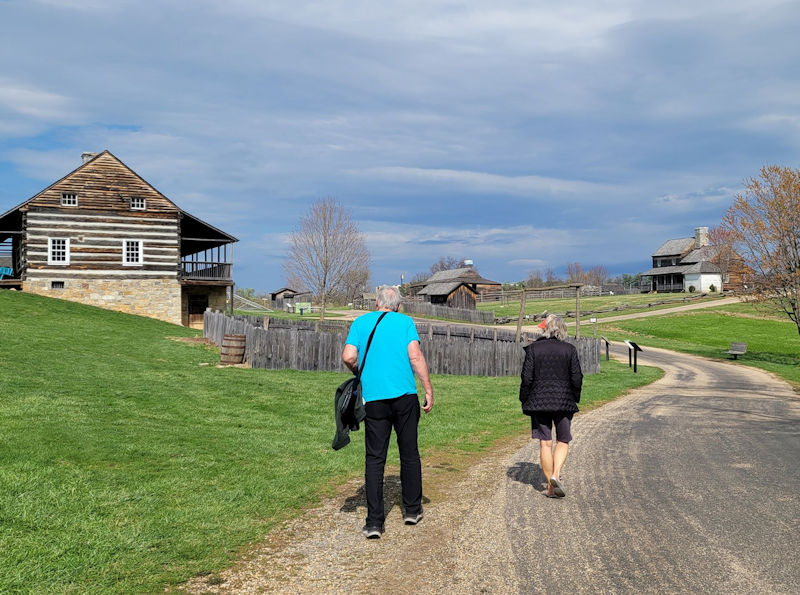
On the left, that's a log farmhouse carried over from somewhere near here, built in 1773 by a German immigrant.
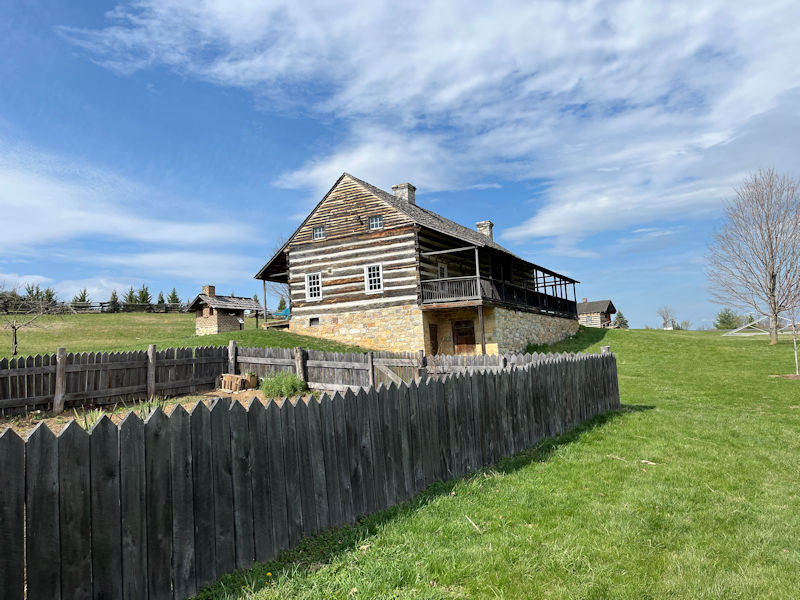
It's very nice inside, and the chicken coop and barn (not shown here this time) are worth a visit.
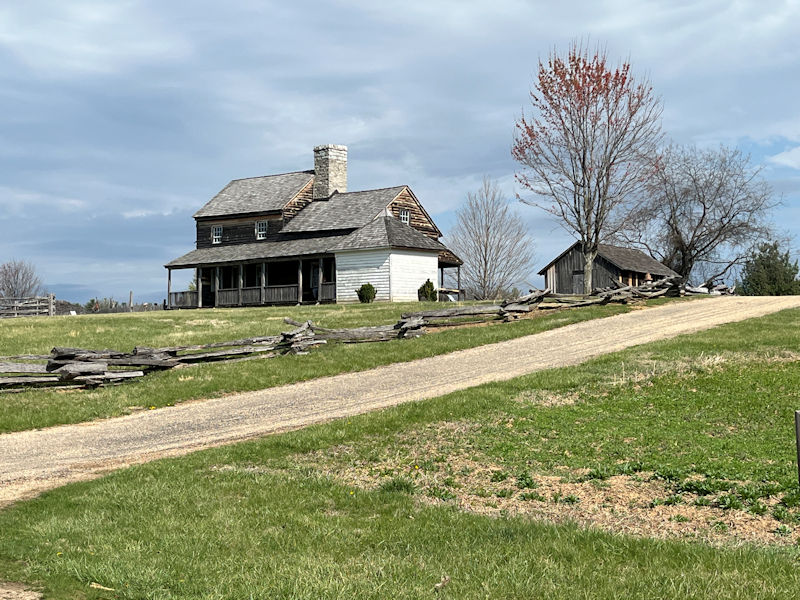
And this one was built by descendants of German immigrants in a nearby county in the 1830s, and . . .
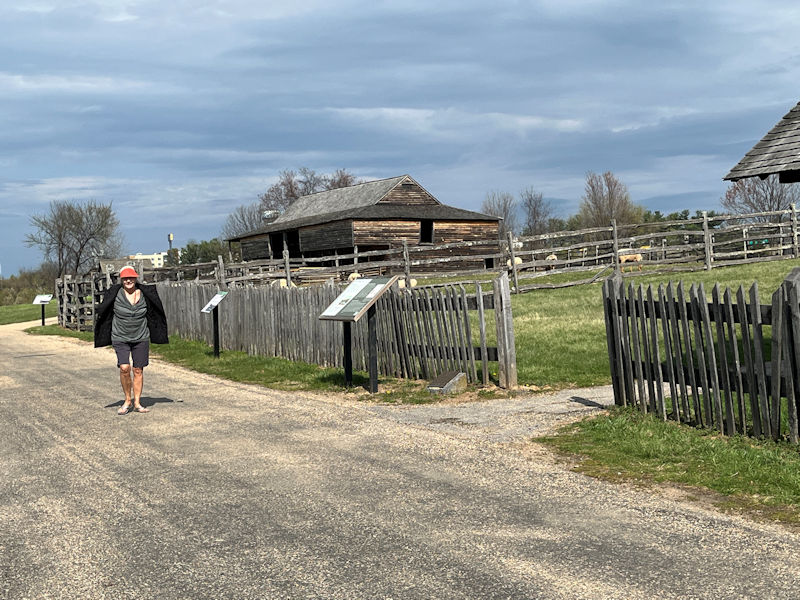
. . . that's their barn; Trouble's probably inside at the moment. Kristin's been ogling all the sheep; the lambing time is coming soon, we're told, but not quite yet.
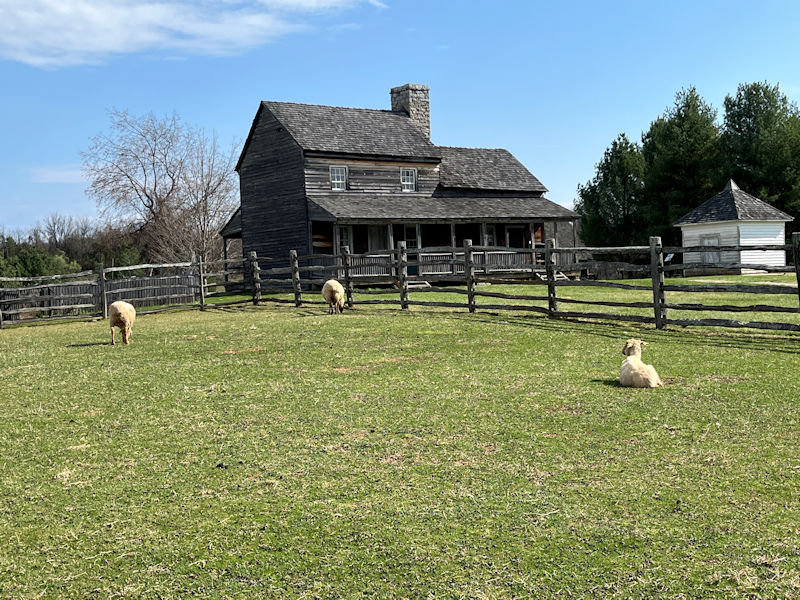
The '1850s house' again, with little outbuildings. And a few of the sheep.
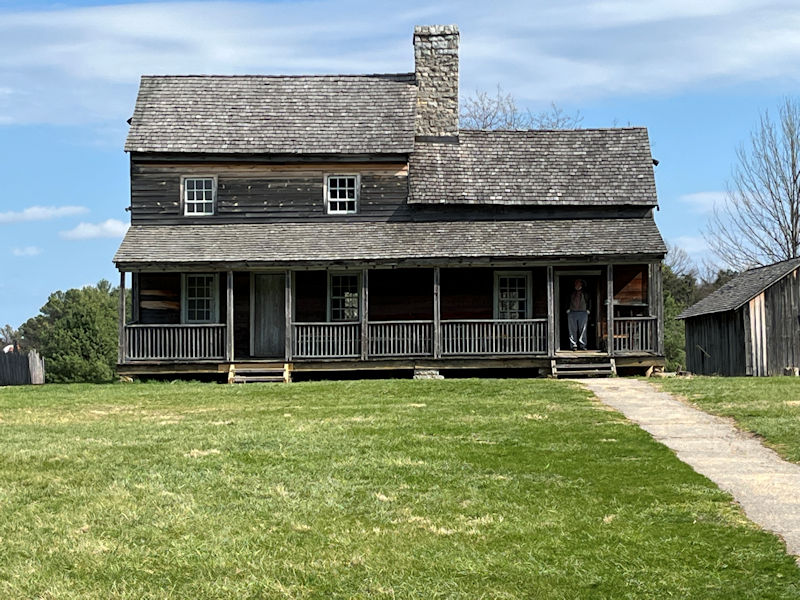
It appears that we're being watched. Stay cool.
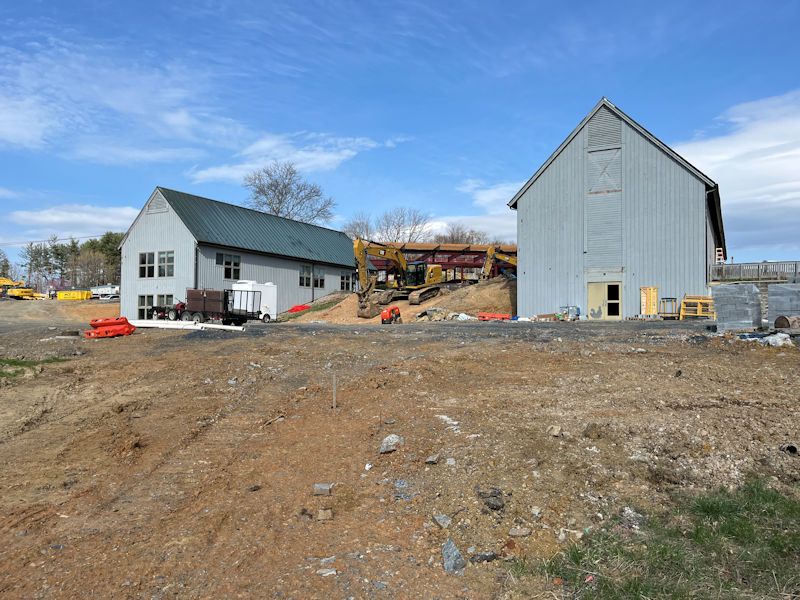
We're on our way out now. We'll probably wait until a lot of these forward-thinking activities have settled in before coming back, but if we're still on this planet next autumn, we'll be coming along for sure.
Lake Sherando, the Cliff Trail
31 March 2026
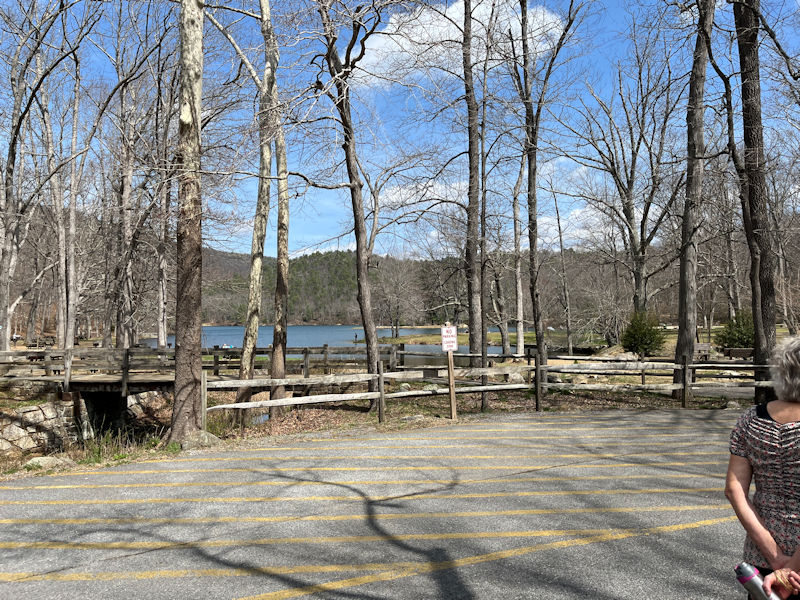
Sherando's a lovely little dammed up lake on a fork of the Back Creek, which feeds the South Fork of the Shenandoah River. It's a fine recreation site for family picnics, overnight or long stay camping vehicles, as well as casual hikers like us. We're not here in the summer months and have never seen it really over-crowded; for us, it's nearly always empty except for 'anglers' squatting on the dam at the far end or off the shoreline spots.
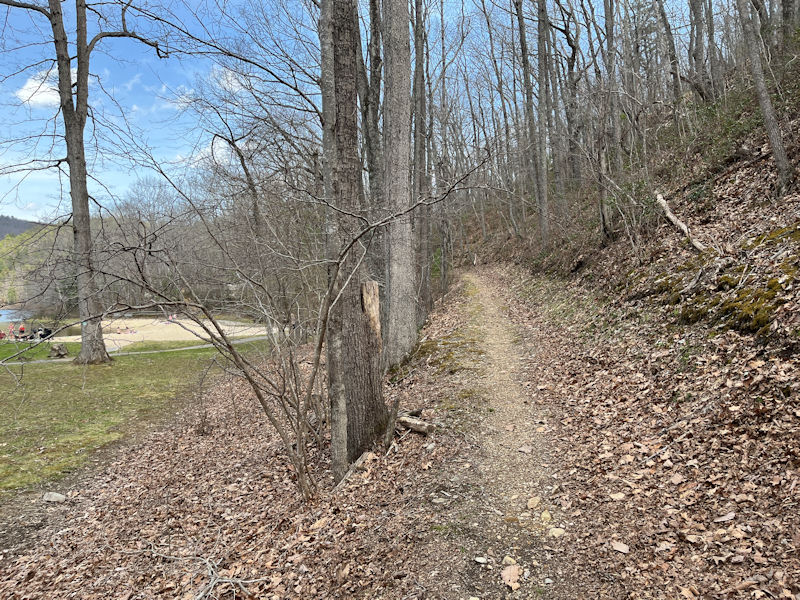
We're starting off on the 'Cliff Trail', our favorite by far, but often we come on fine days also just to read on one of the benches just visible at the farther end of the beach.
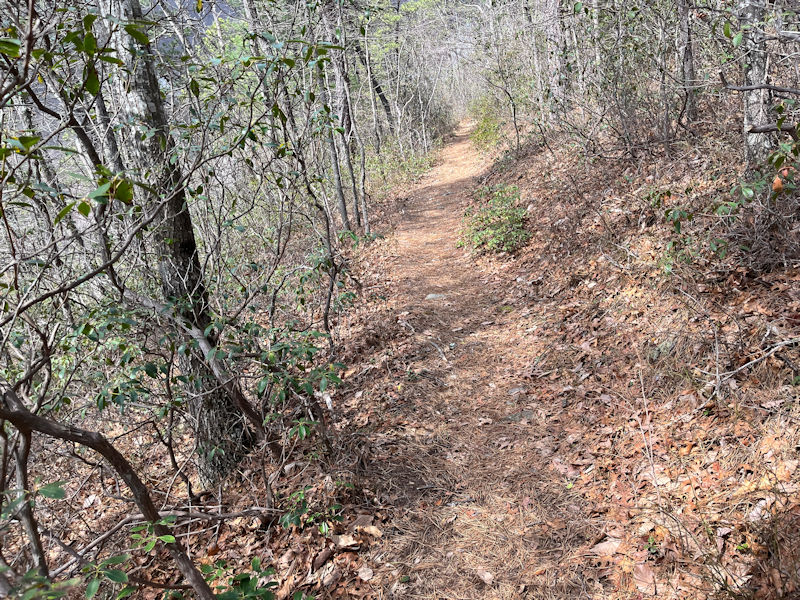
The Cliff Trail, from this end, begins with a 20 minute easy walk up over the lake and onto the hill above, and then descends by a zig-zag path through various levels of cliff boulders. And if one then continues on over the western lake trail across the dam, the lot of it takes not much more than an hour. The lakeside trail alone is probably not much more than 25 minutes or so. Easy game.
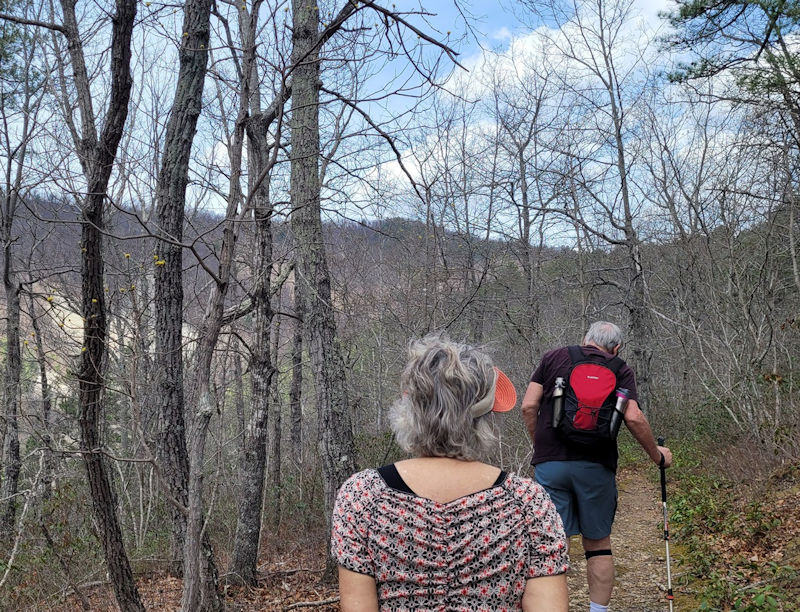
In point of fact, not really an easy game for all of us this time, but one will certainly give it one's all.
(Photo by Alison)
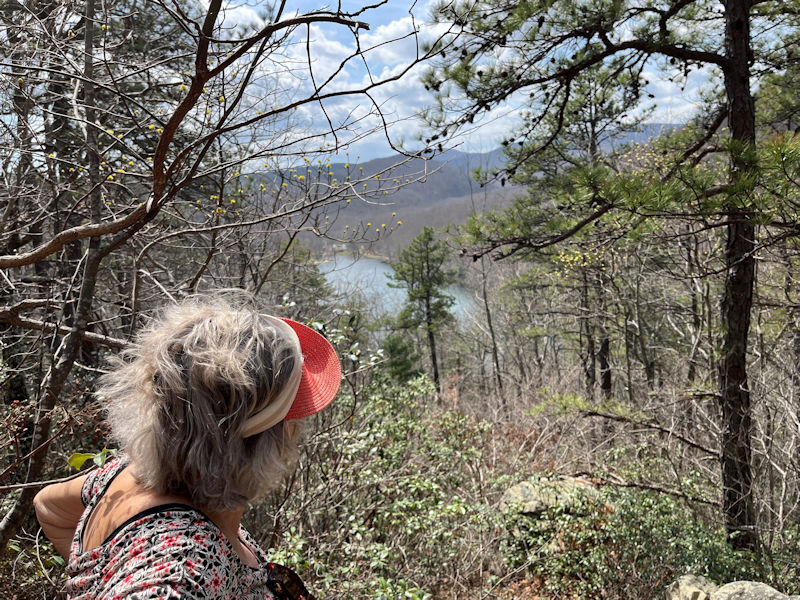
Topping out on the trail, overlooking the lake (which in a month will not be visible from here amongst the foliage).
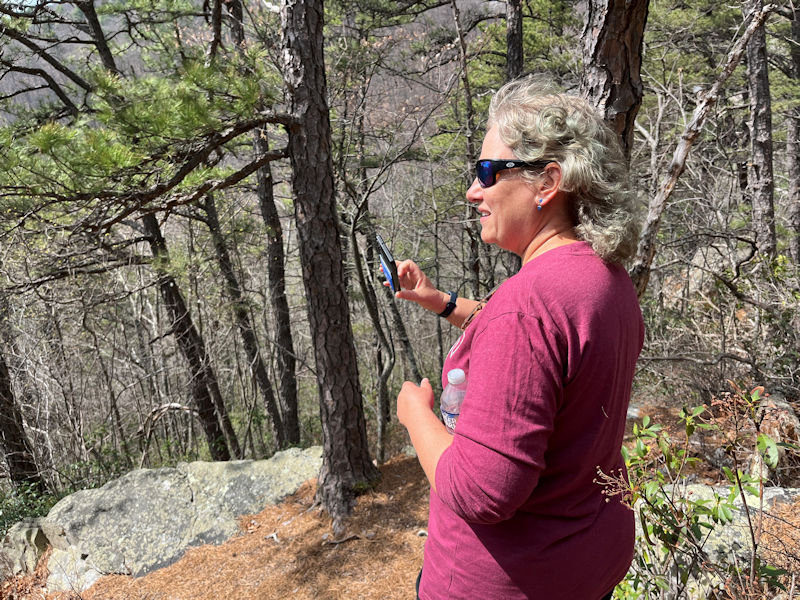
Alison preparing for a memento photograph of the lake, in the wind.
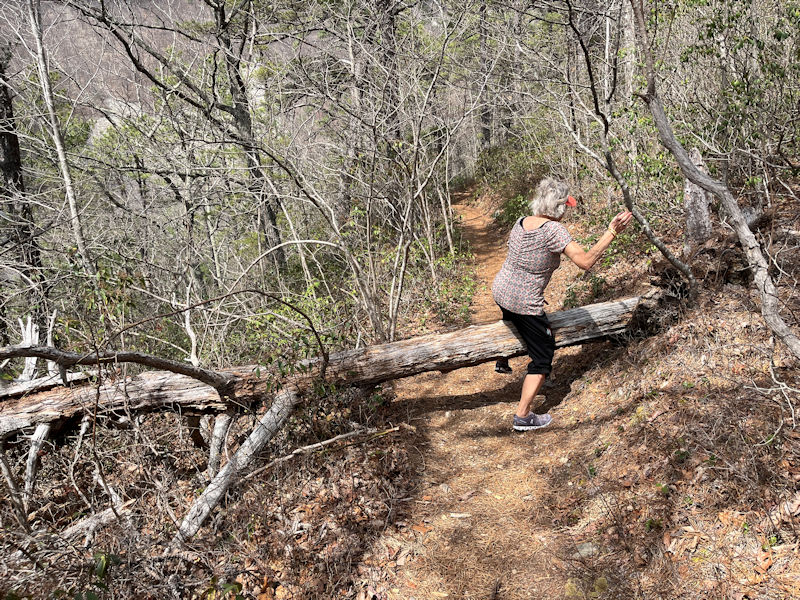
Mind the step.
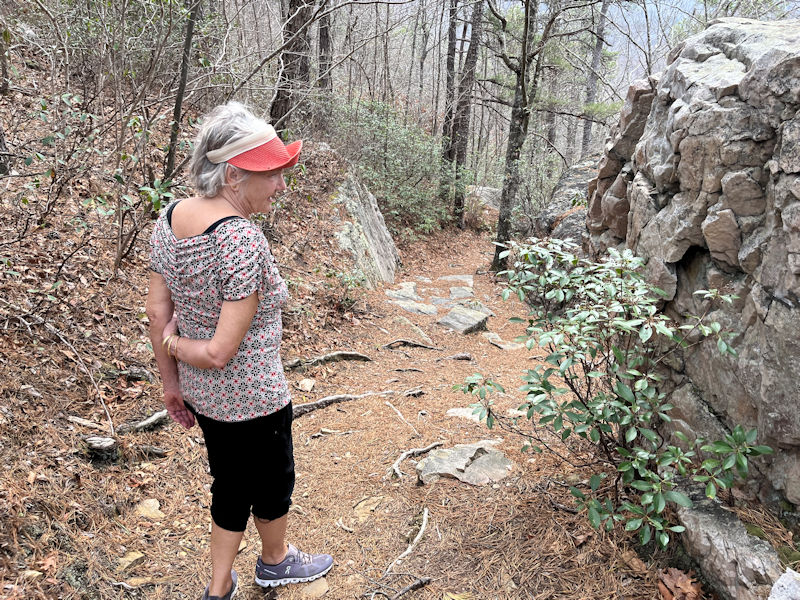
The many and various interesting features of the rock structures on the way down are always worth a photo or three, but we've taken so many on our many trips here that today we're just focusing on getting down through the rocky bits in good order.
Younger hikers would be waltzing through it all.
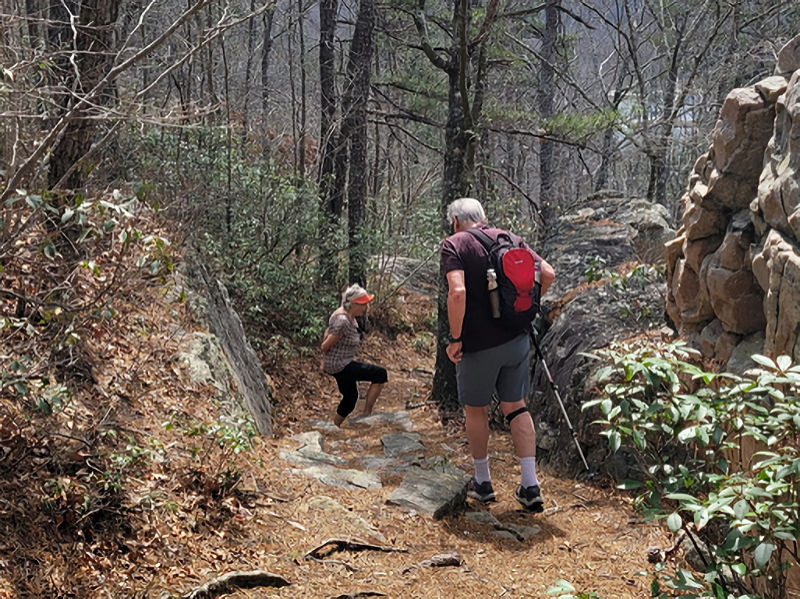
Mind the step! (Photo by Alison)
One caught rather an awkward event shortly afterward, and may have to be more sensible in future.
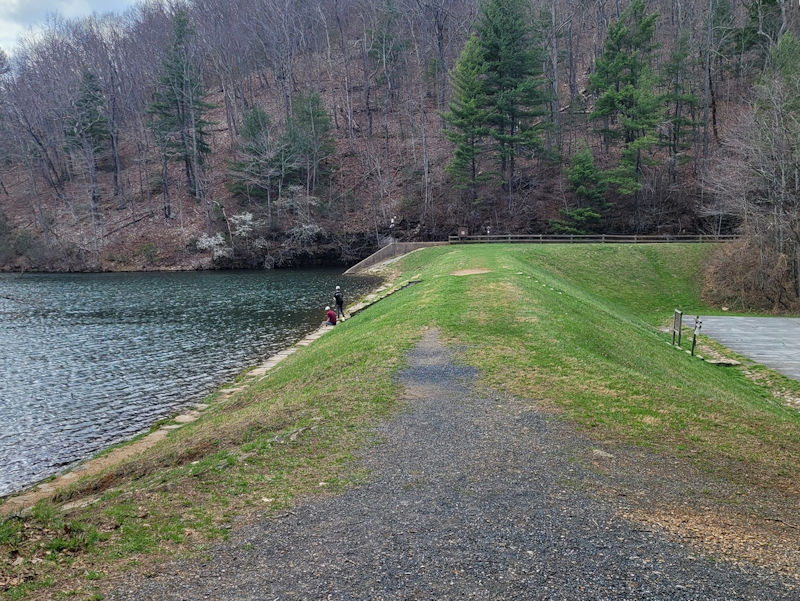
Very few 'anglers' out today (Photo by Alison)
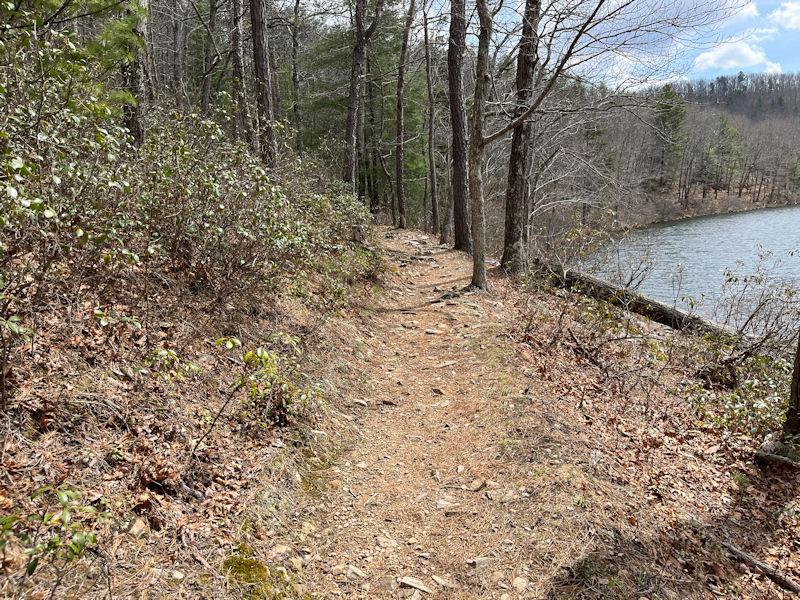
The east side of the lakeside trail
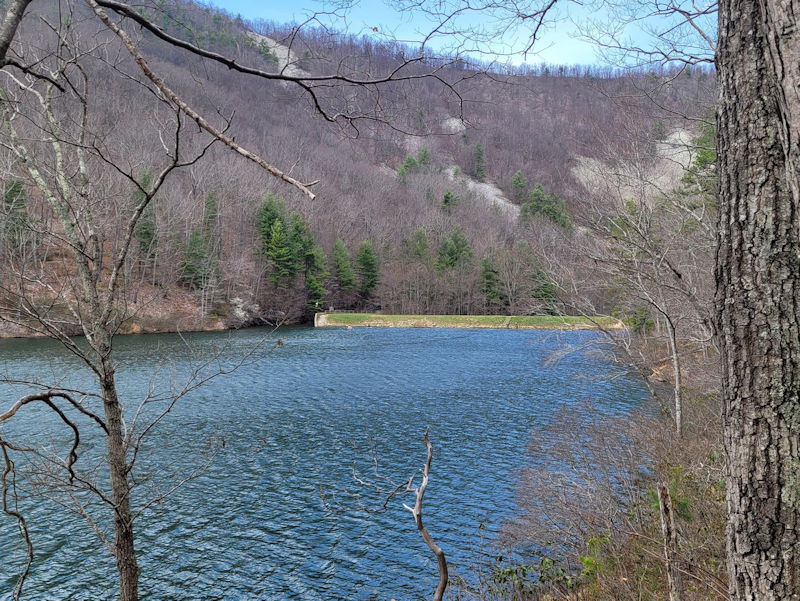
(Photo by Alison)
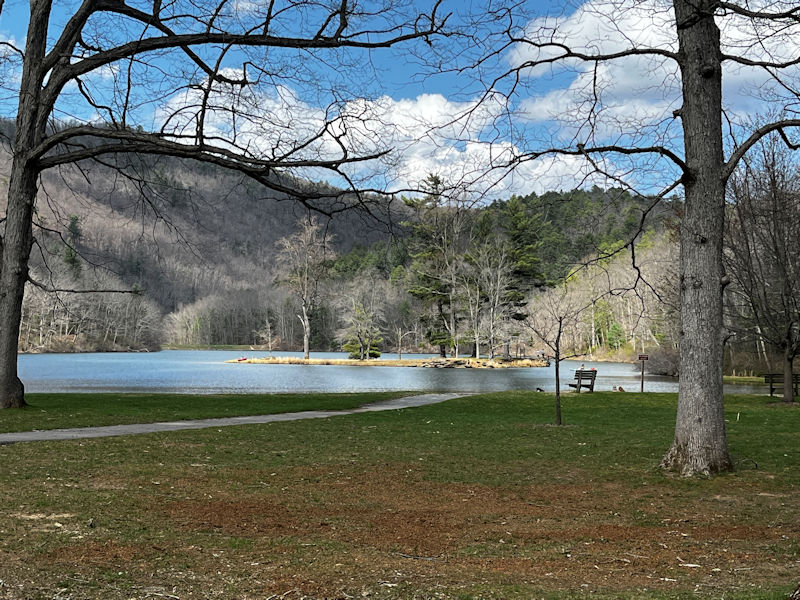
Goodbye, Lake Sherando. We very much hope we'll be back again, if not soon, then in the autumn.
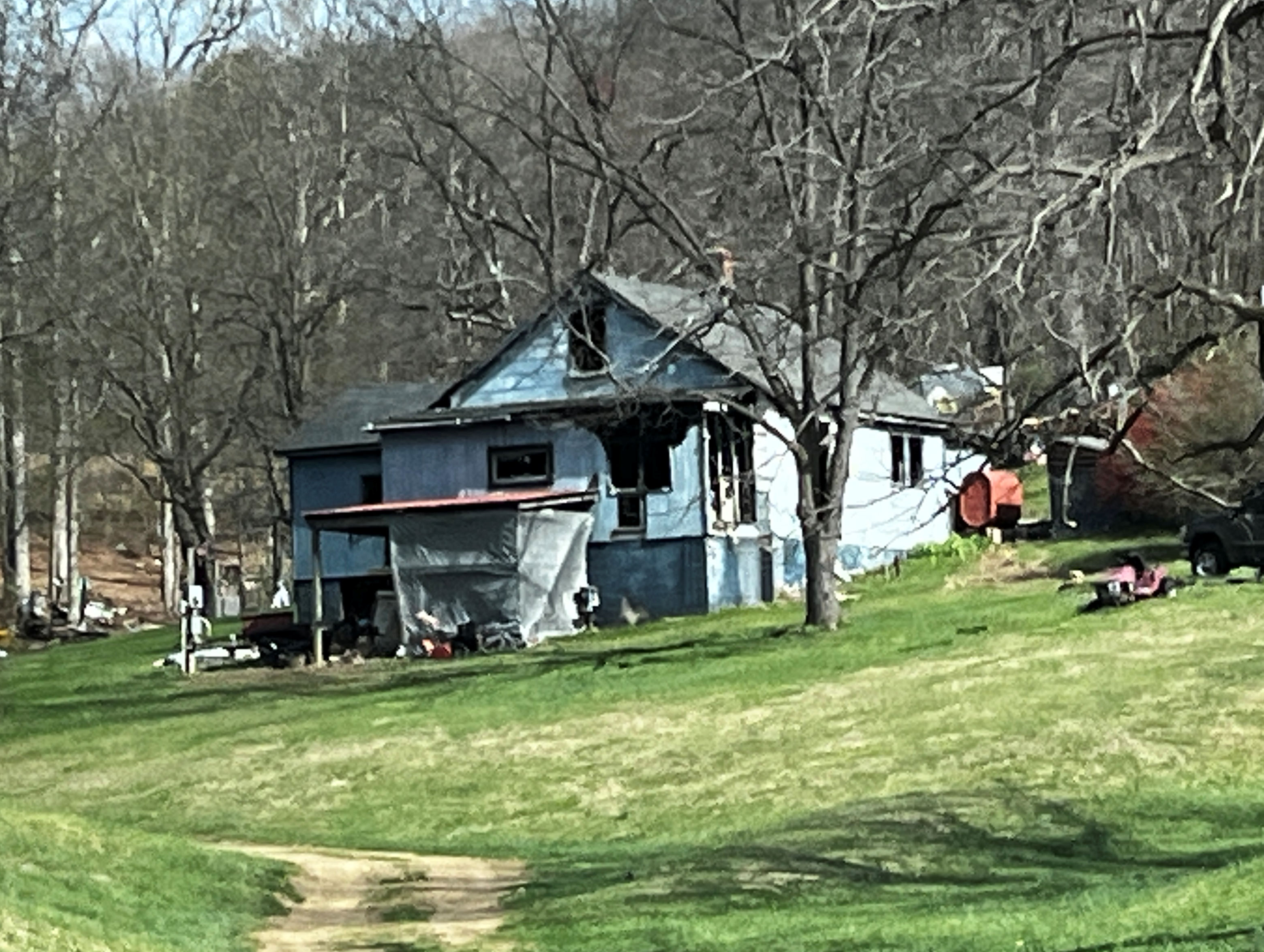
Sherando Lake is a fine place to visit, though the local economy is not flourishing, but . . .
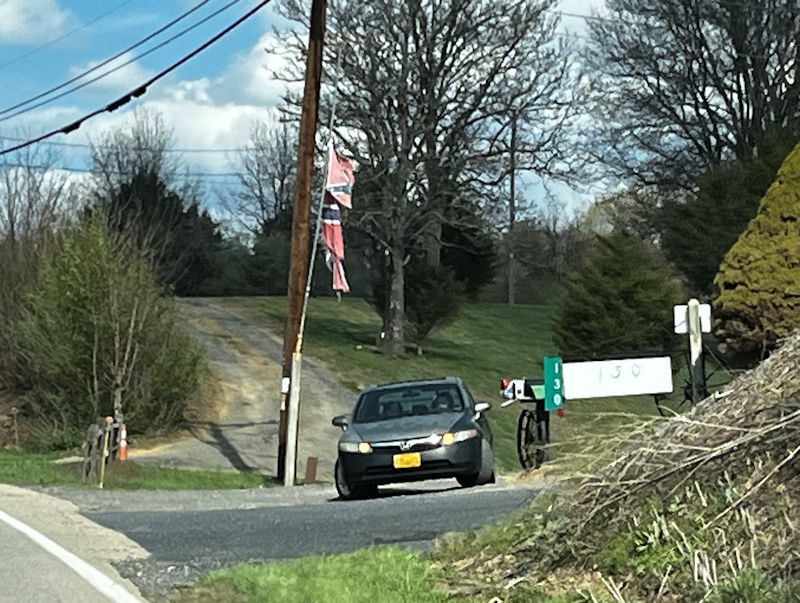
. . . there's always our favorite Confederate manqué to keep us amused.
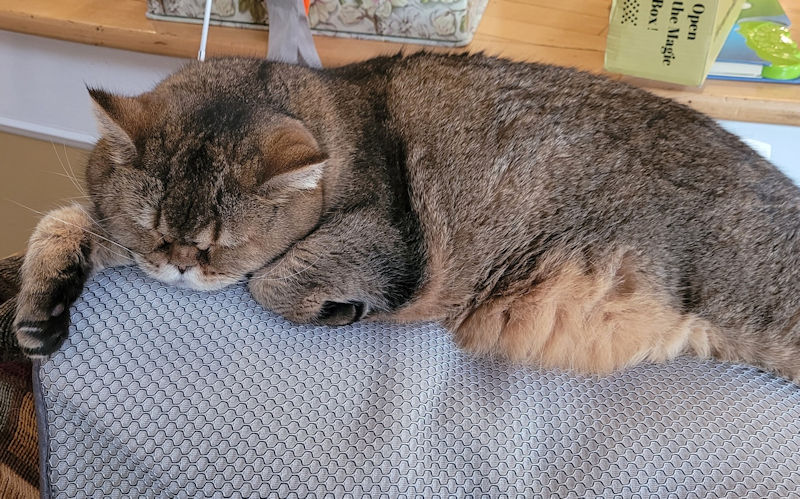
And Melvin as well, of course (Photo by Alison)
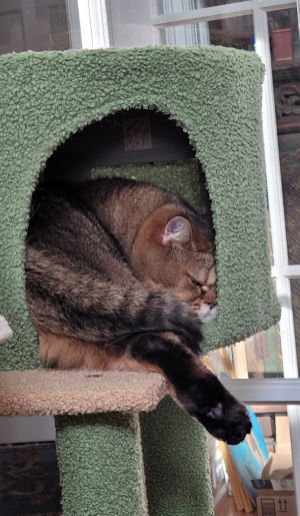
(Another photo by Alison)
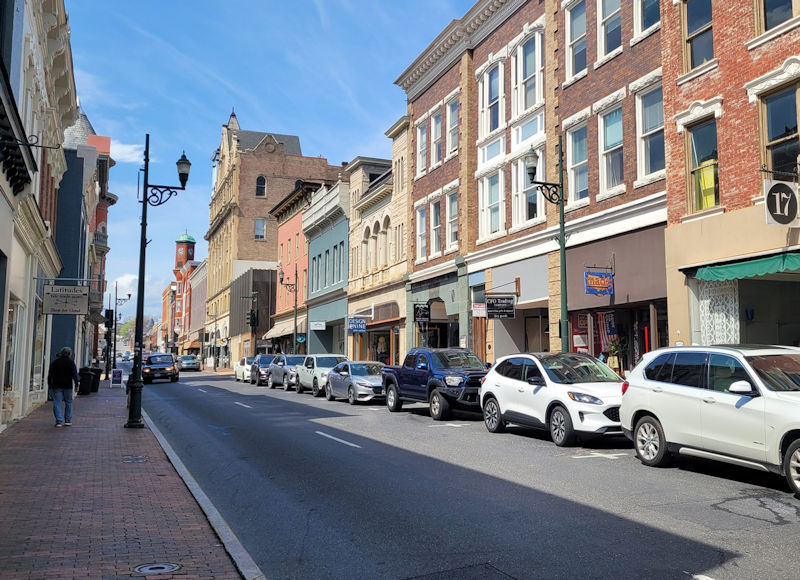
And another photo by Alison, of Staunton's Beverley Street. It's Alison who introduced us to Staunton way back in 2013, before our moving to the USA had come up as a conversation item yet.
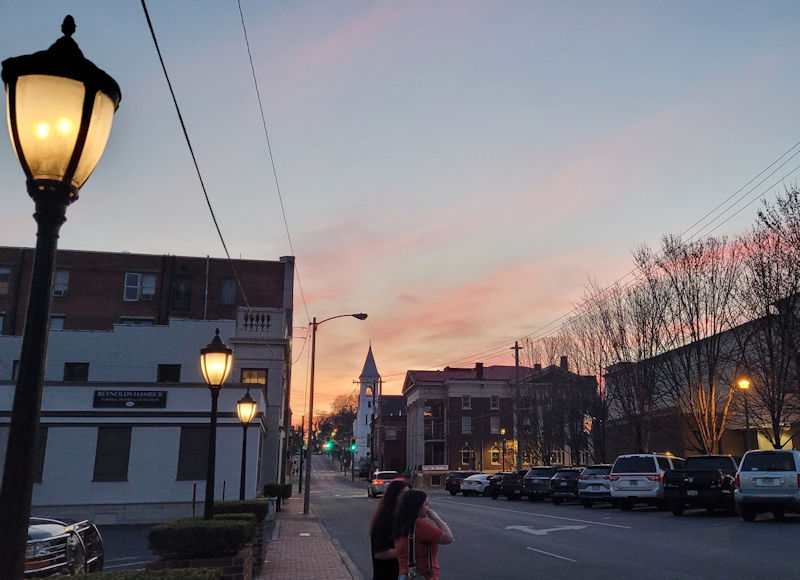
Another photo by Alison
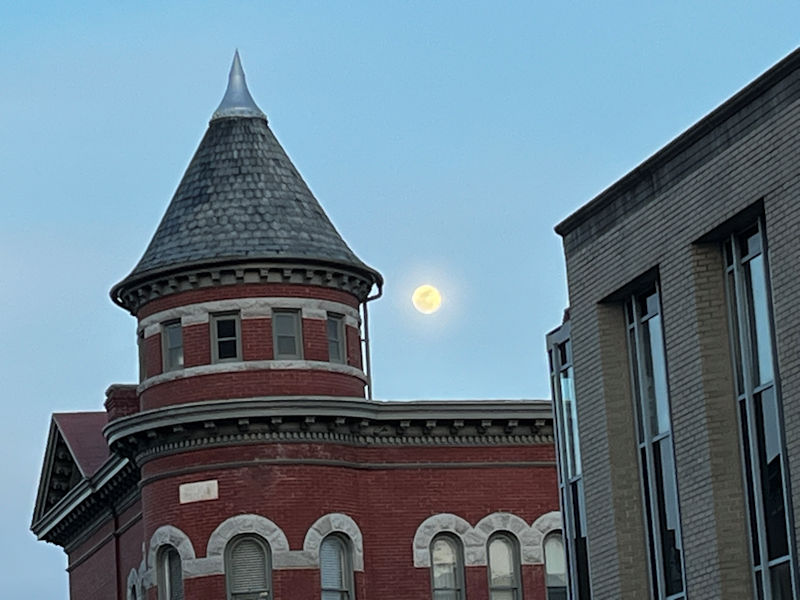
And another photo by Dwight
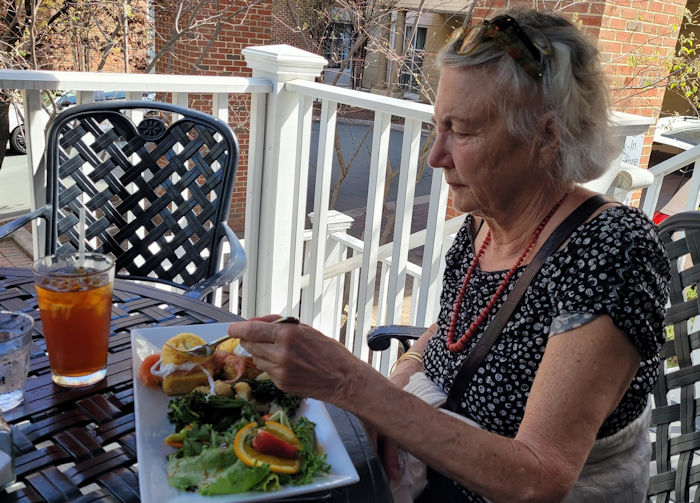
Lunch at the Farm Bell Kitchen in Charlottesville, whilst waiting for the train: Smoked salmon benedict
for Kristin (Photo by Alison)
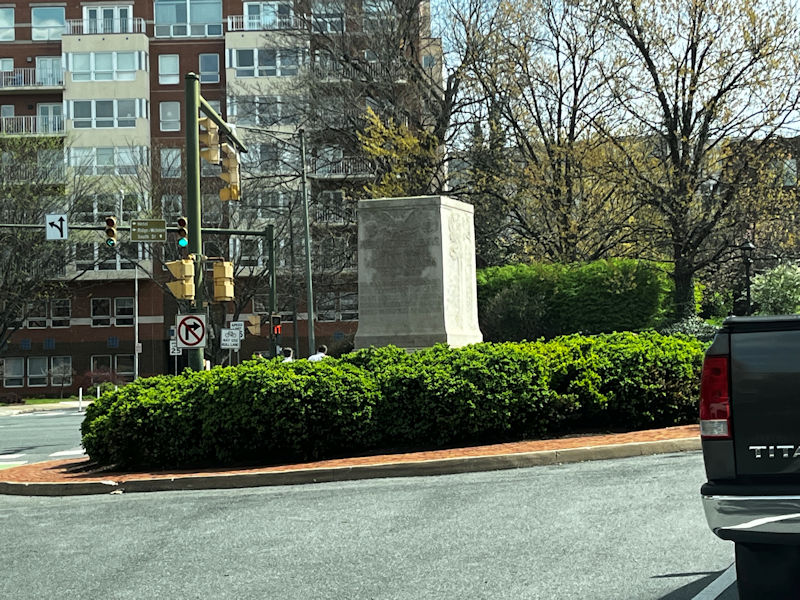
Now we've just put Alison on the train to DC (and it really is a train this time), and there's the famous Sacagawea's Plinth, as we might call it.
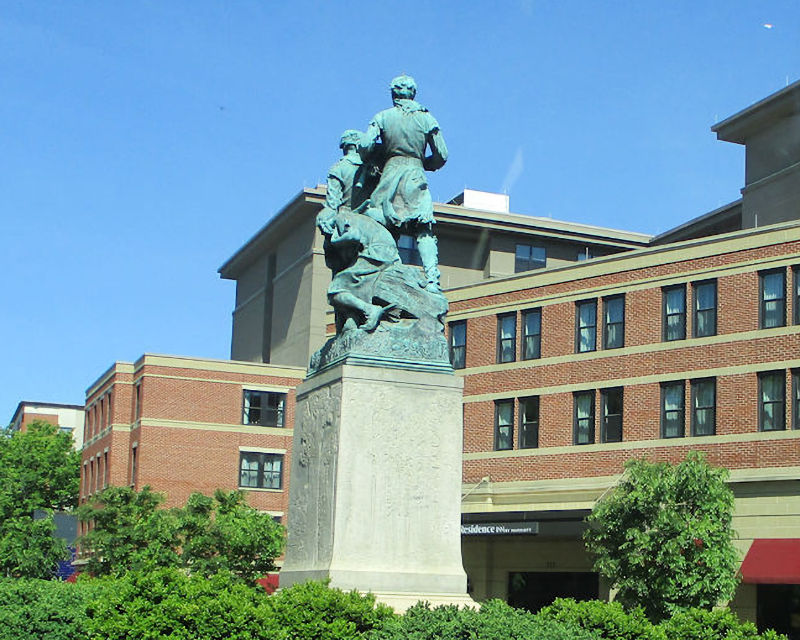
And there it is at the time of our visit in April 2021.
Caption: It's a statue to Lewis's and Clark's great expedition that does not forget to include Sacagawea, the Shoshone teenager who provided helpful guidance and, as an intepreter, probably saved their lives more than a few times, and is here depicted cowering obediently behind their manly forms.
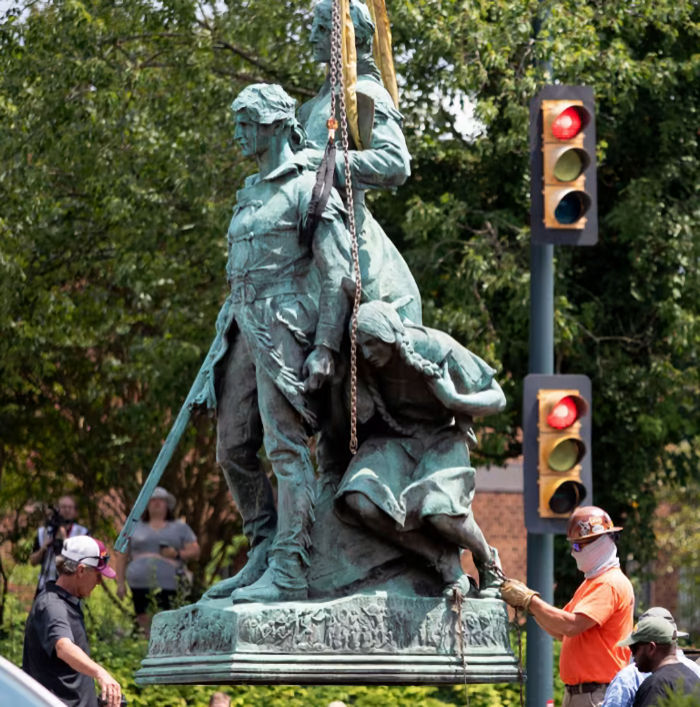
And here she is in July 2021 (no more bowing and scraping required) (source)
An excellent book on the Lewis and Clark Expedition, including Sacagawea's part, is Stephen Ambrose, Undaunted courage: Meriwether Lewis, Thomas Jefferson, and the opening of the American West (1996).
Next up: A few seasonal walks (at a casual pace)





 Dwight Peck's personal website

 Feedback
and suggestions are welcome if positive, resented if negative,
Feedback
and suggestions are welcome if positive, resented if negative,  .
All rights reserved, all wrongs avenged. Posted 17 April 2026.
.
All rights reserved, all wrongs avenged. Posted 17 April 2026.