You may not find this terribly rewarding unless you're included here, so this is a good time for casual and random browsers to turn back before they get too caught up in the sweep and majesty of the proceedings and can't let go.
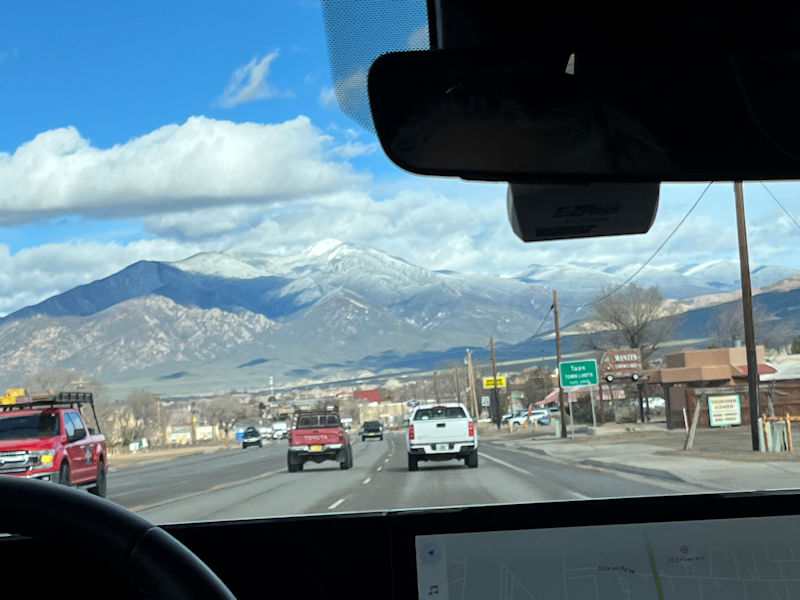
A hour and a half north of Santa Fe, we're here. Wow, the Sangre de Cristo Mountains.
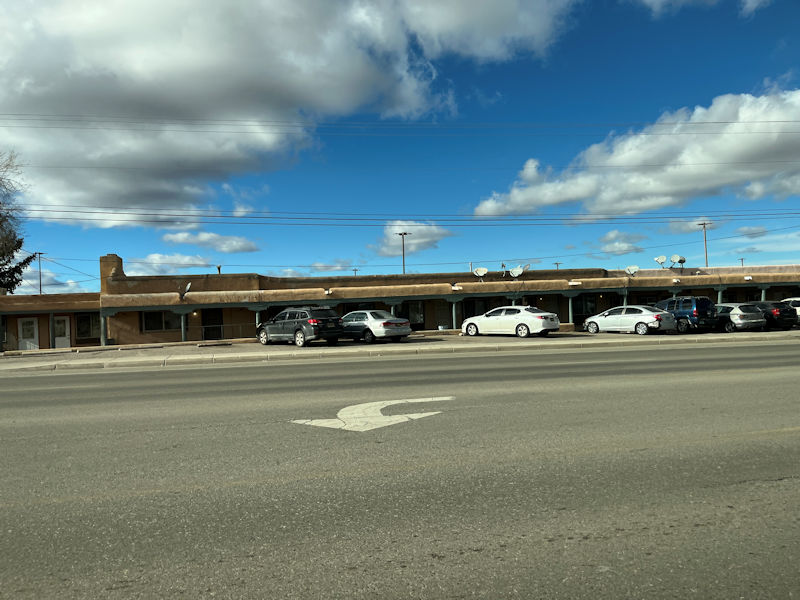
A little short on skyscrapers, but the adobe motif is intriguing, and consistent.
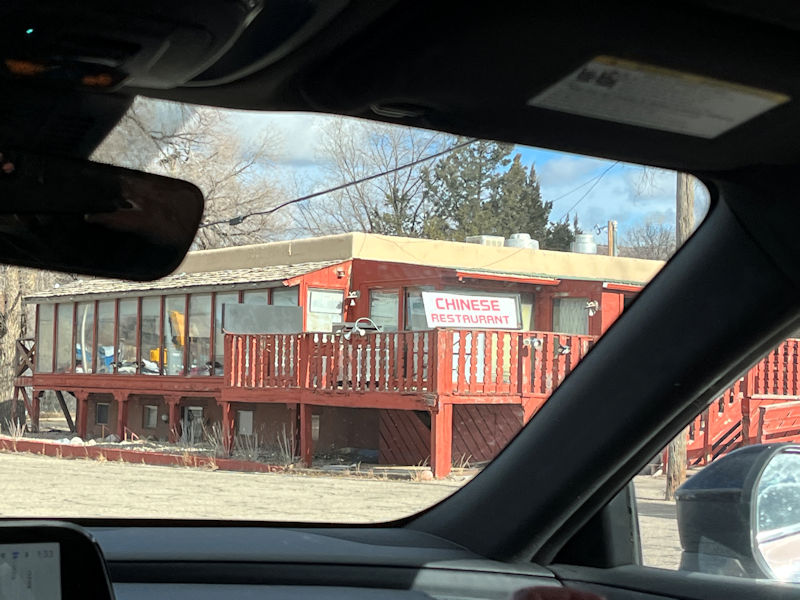
Aside from some 80 art galleries and a very long line of worthy residents -- beginning with Kit Carson (who traveled all over the west, for all kinds of reasons [some not so good], but settled in Taos in 1826 and was buried there in 1868), proceeding to luminaries like D H Lawrence, Julia Roberts, Dennis Hopper, Donald Rumsfeld boo, and a telephone bookful of artists and art patrons whom we might not have heard of -- Taos evidently has an international flavor to it as well.
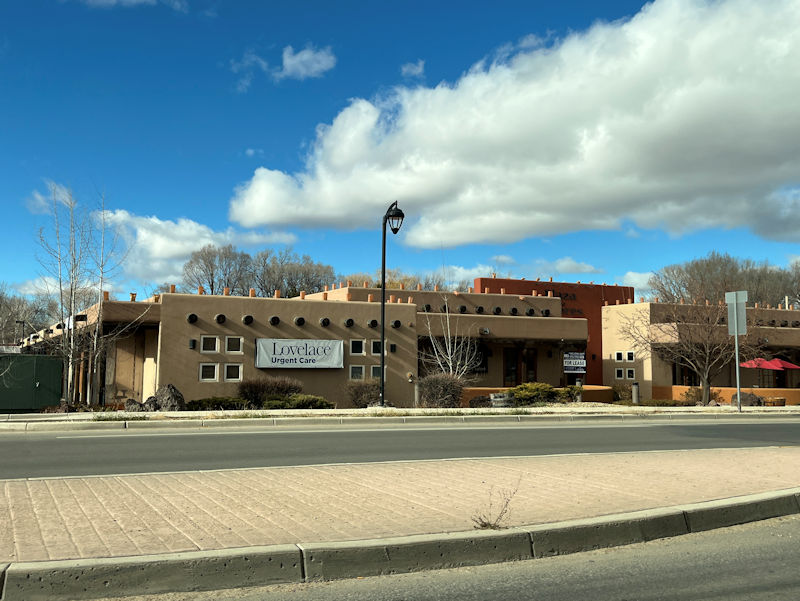
We're arriving at the southern end of town on the main street north, the Paseo Del Pueblo Sur, and admiring the attractive Lovelace Urgent Care [which, according to Google Maps, is 'permanently closed'].
Taos itself was first settled by Spanish colonists in 1615 as their Jesuit missionary friends came to minister to the indigenous residents of Taos Pueblo, a mile to the north. Their occupation was intermittent until 1795. Following the Mexican-American War of 1846-1848, it was occupied by the United States, leading the Hispanic and American Indian populations to indulge themselves in the 'Taos Revolt' in January 1847. Which didn't last long.
New Mexico was made an American territory in 1850, following the lopsided Treaty of Guadalupe Hidalgo in 1848, and a US state in 1912, by which time Taos was already known as a fine place for people of an artistic bent (beginning in 1898/99, with the Taos Society of Artists founded in 1915).
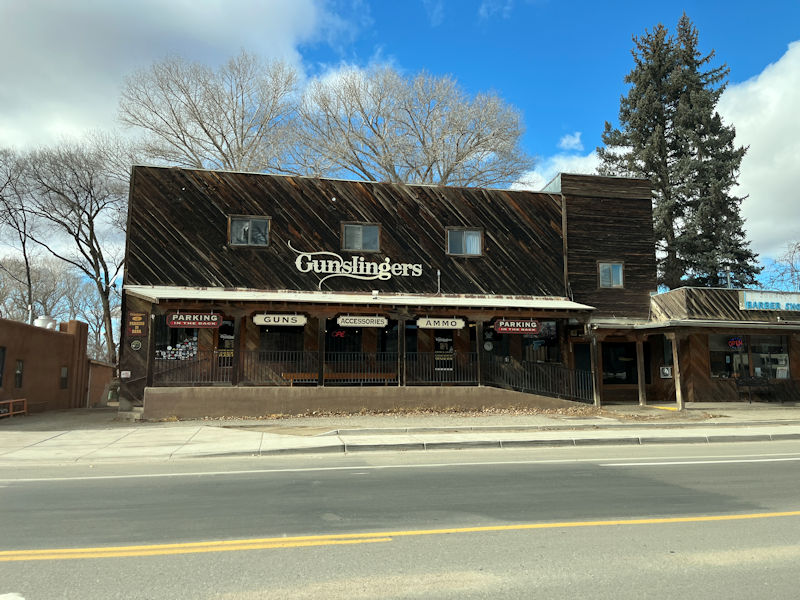
The gunslingers, of course, will always be with us.
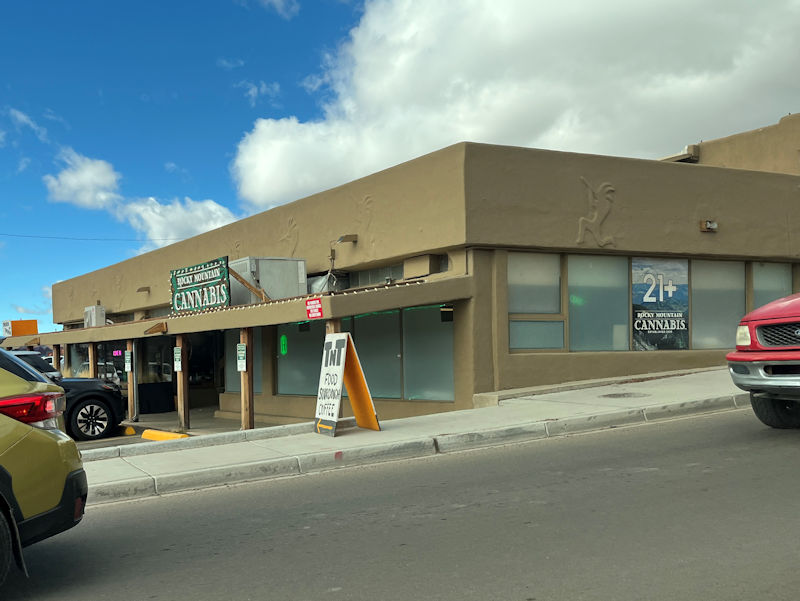
Rocky Mountain Cannabis, a worthy enterprise, is just a block south of the central Taos Plaza (though nobody mentioned that at the time -- we're just sailing through on our way to the Pueblo).
Is there any reason to mention here that Taos voters are usually 74% Democrat and 13% Republican?
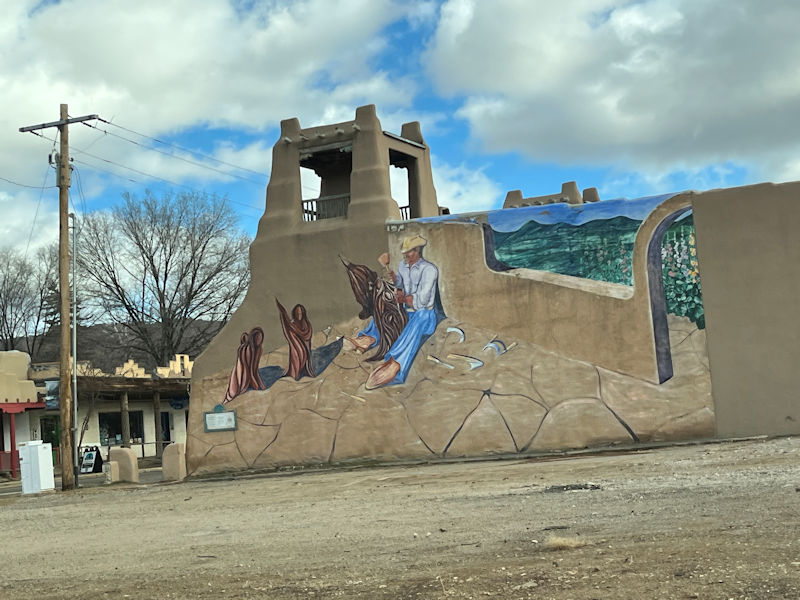
What is that guy doing?
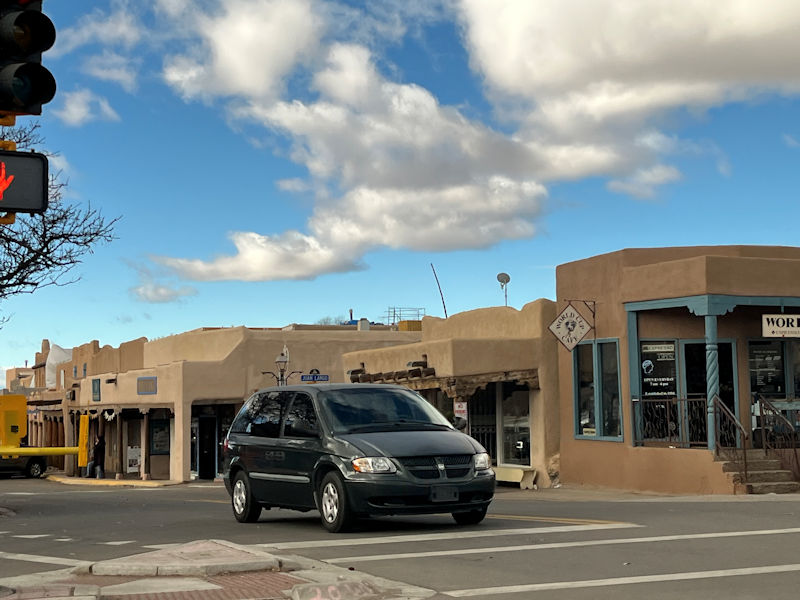
The architecture is growing on us. Exotic but classy.
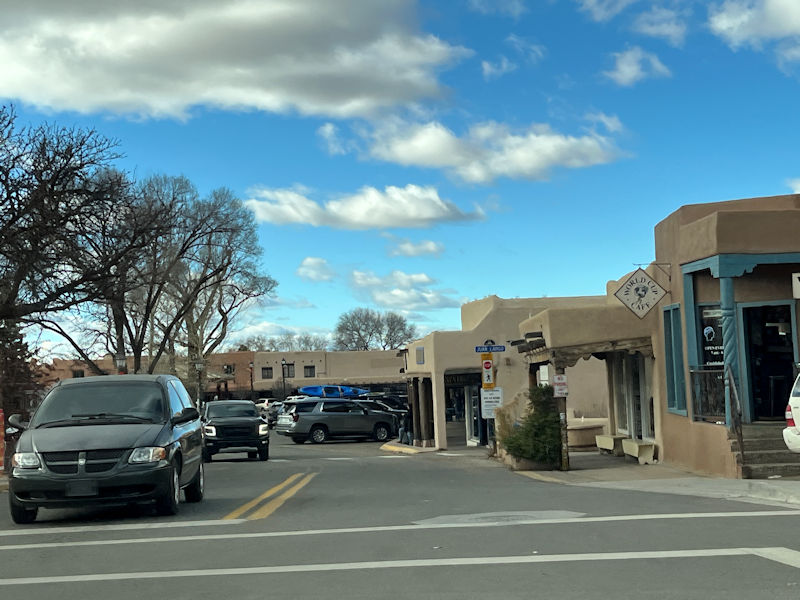
In fact, as we've subsequently learnt, we're staring here into the Taos Plaza (the famed gazebo is back there behind that car at the intersection; who knew?).
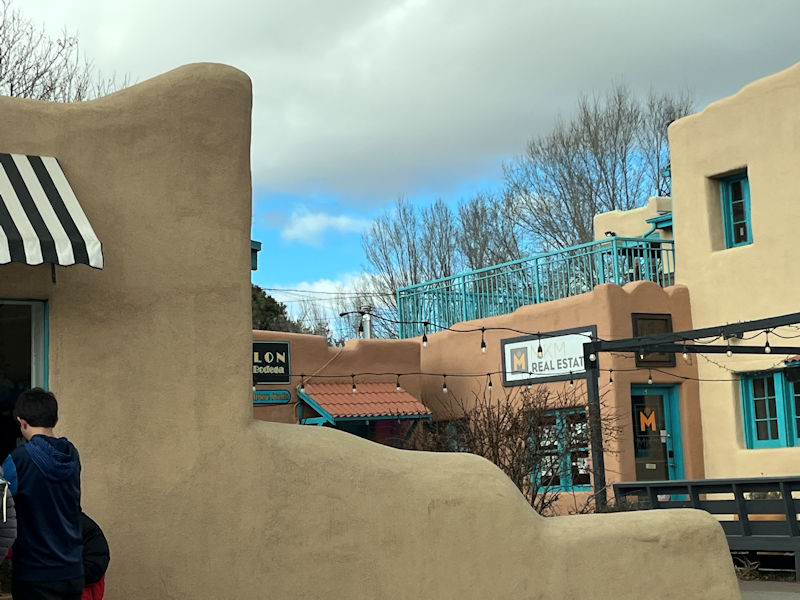
So from now on, we're on the Paseo Del Pueblo Norte, and our anticipation grows apace.
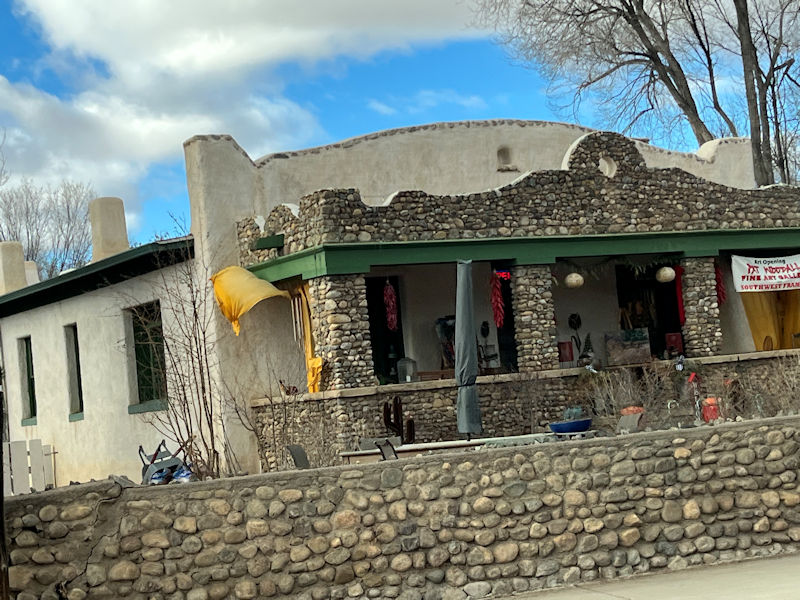
The town of Taos (having borrowed the Pueblo's centuries old name, meaning 'place of the red willow'), now with a population of about 6,500 in town, was only incorporated in 1934. Taos County boasts about a 35,367 headcount.
Racial backgrounds are a big headache, since 1/4 of the population identify with more than one category. Basically, it's made up of some 50% Hispanic, 45% Non-Hispanic White, and 5% American Indian (though the make-up of Taos Pueblo is roughly 95% American Indian),
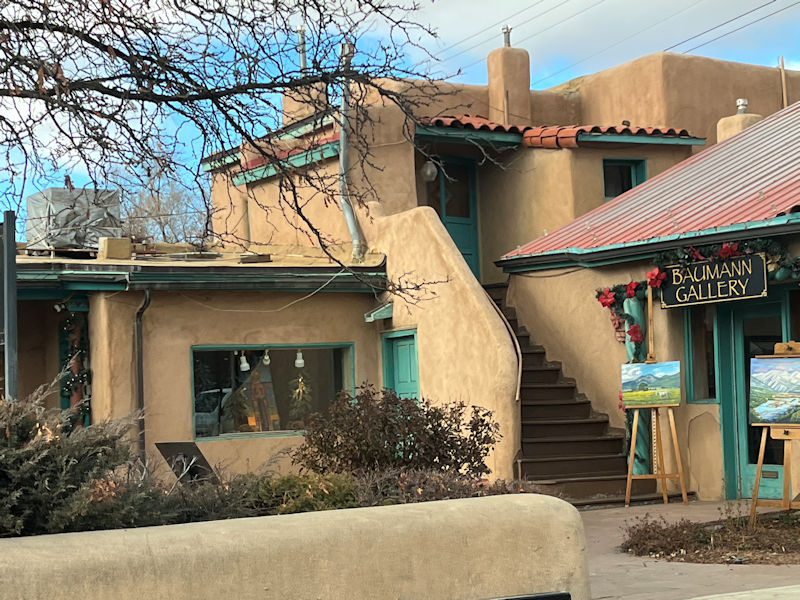
Baumann Gallery in the Paseo Del Pueblo Norte (competing, we're told, with 79 other galleries) (not to mention mini-museums for a host of deceased artists).
Book now!
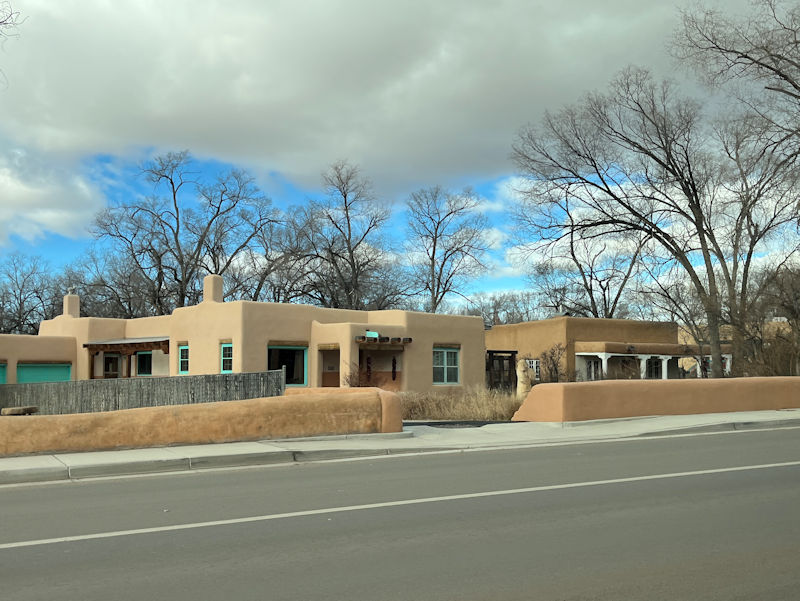
For citizens who are terrified of skyscrapers, this place is a paradise (assuming that there's Internet here).
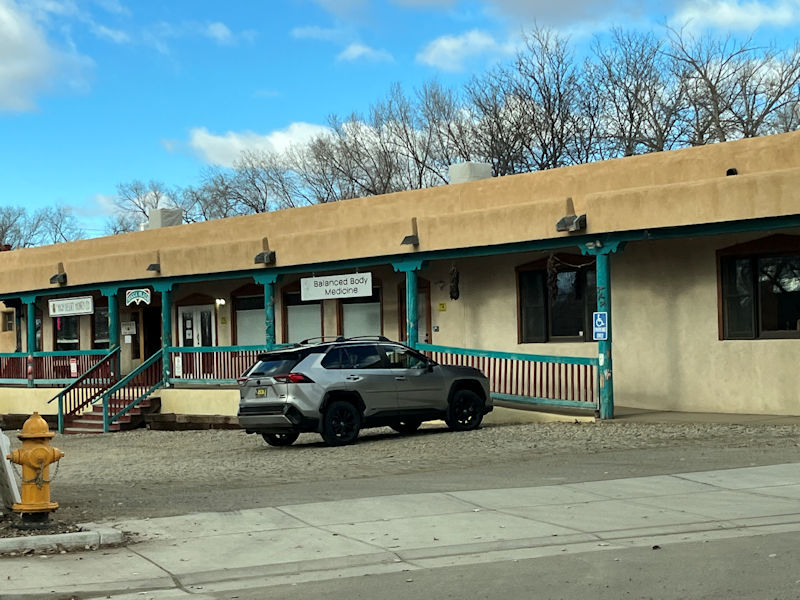
'Balanced Body Medicine': we'll have to look that up. Something new, perhaps.
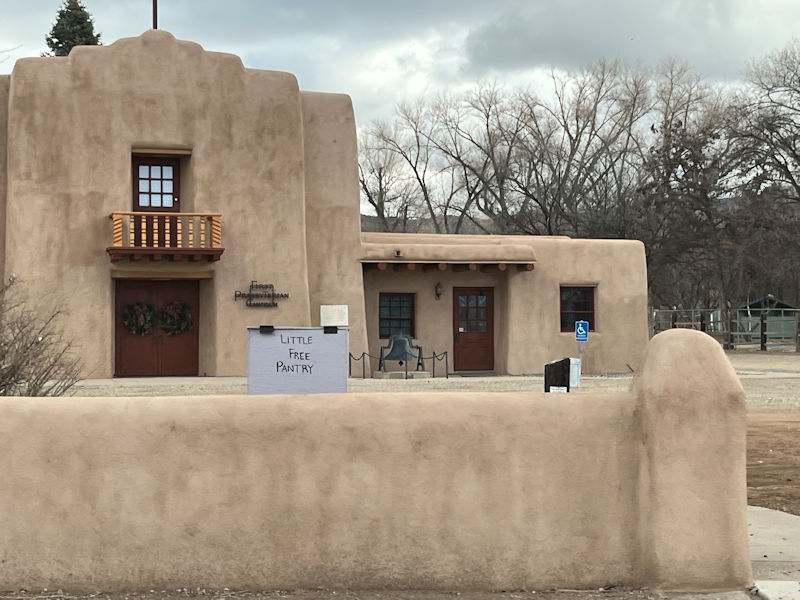
In front of the First Presbyterian Church, a welcome community service
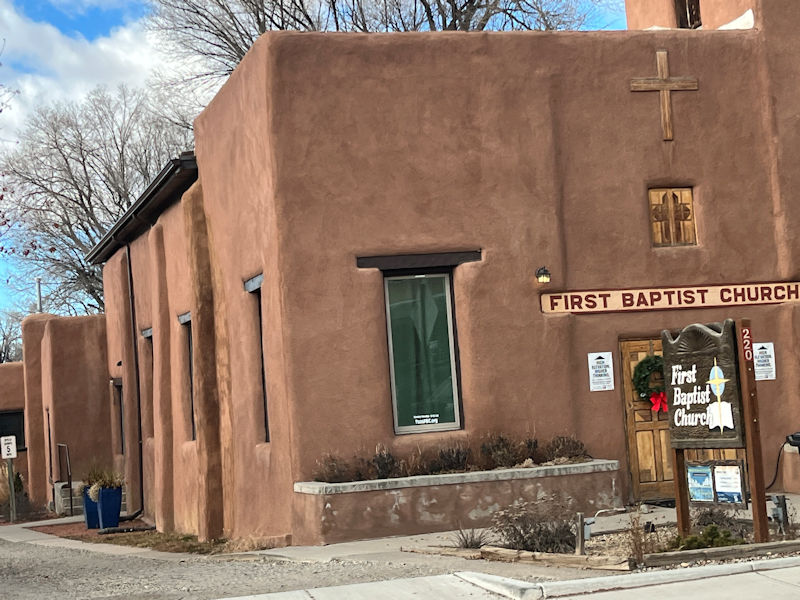
The First Baptist Church (didn't catch a 'little free pantry' here) (perhaps just an oversight)
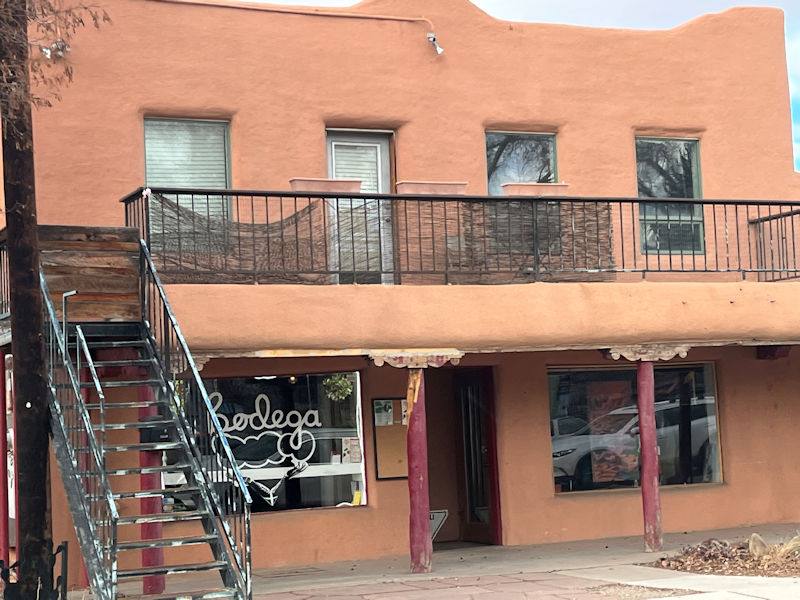
The unnamed bodega
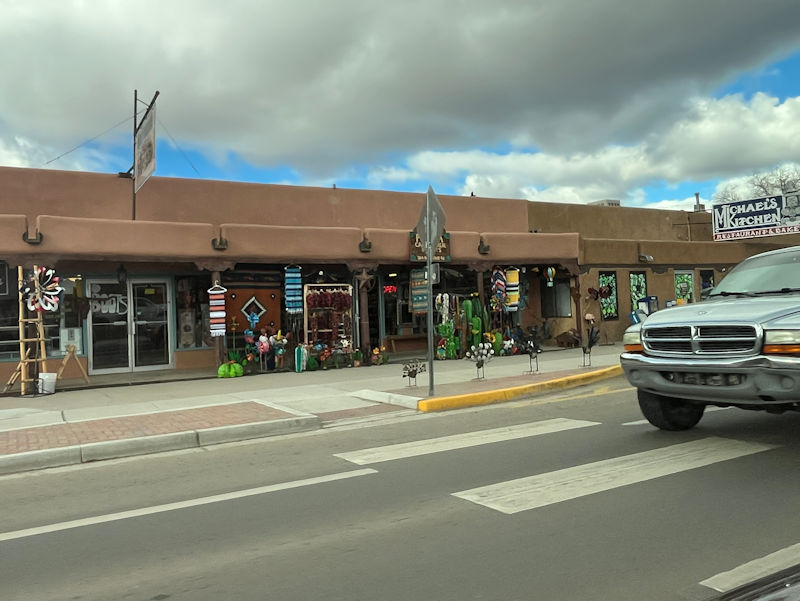
Michael's Kitchen (restaurant and bakery). Mmmm.
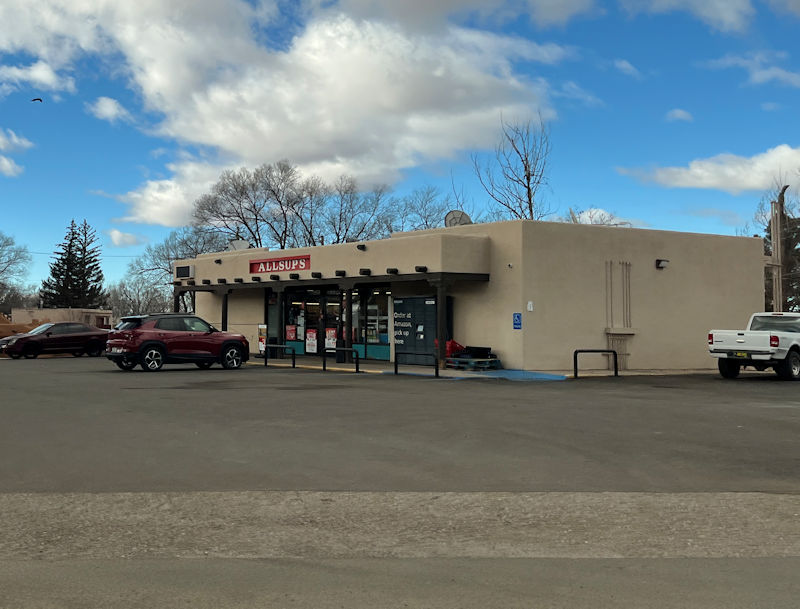
Allsups Convenience Store (one of 400 in New Mexico, Oklahoma, and West Texas). Sounds good, but we've no time for that now.
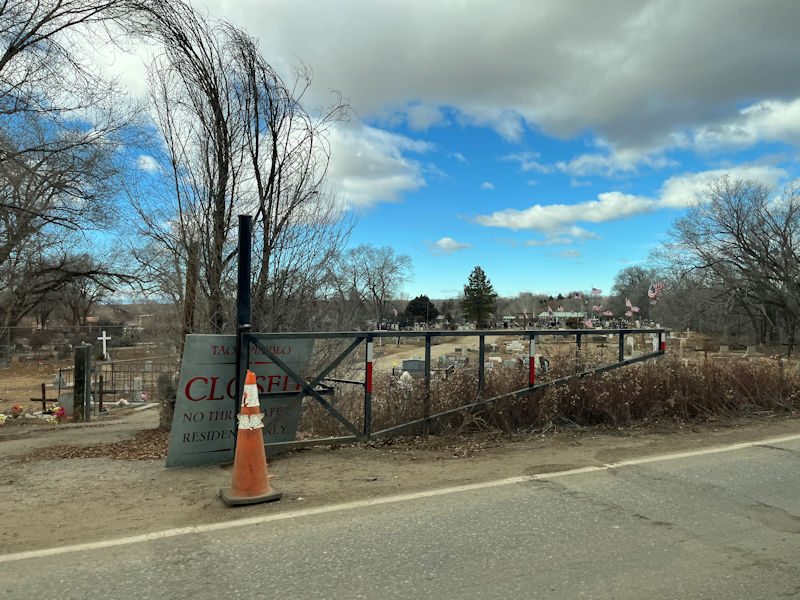
Out of town now, careening past cemeteries with celebratory flags, towards the Pueblo
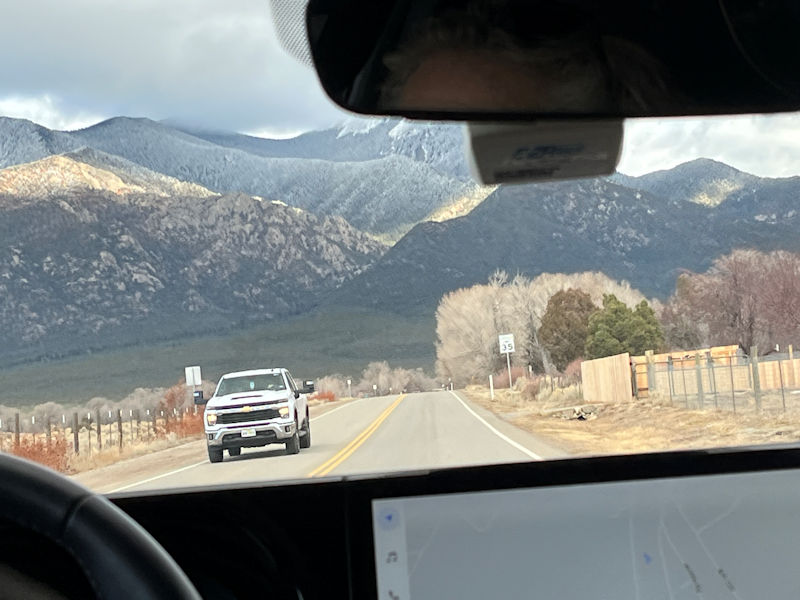
A mile of open ground, with a looming look at the Taos Mountains of the Sangre de Cristo Range (evidently flaunting a sprinkling of snow)
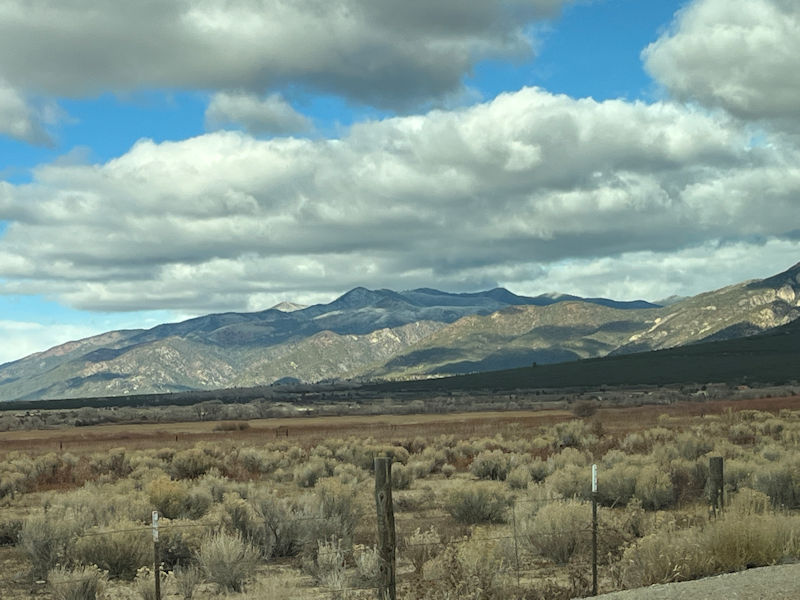
The Rio Grande River is gushing through the territory over there somewhere. (We'll go see it later.)
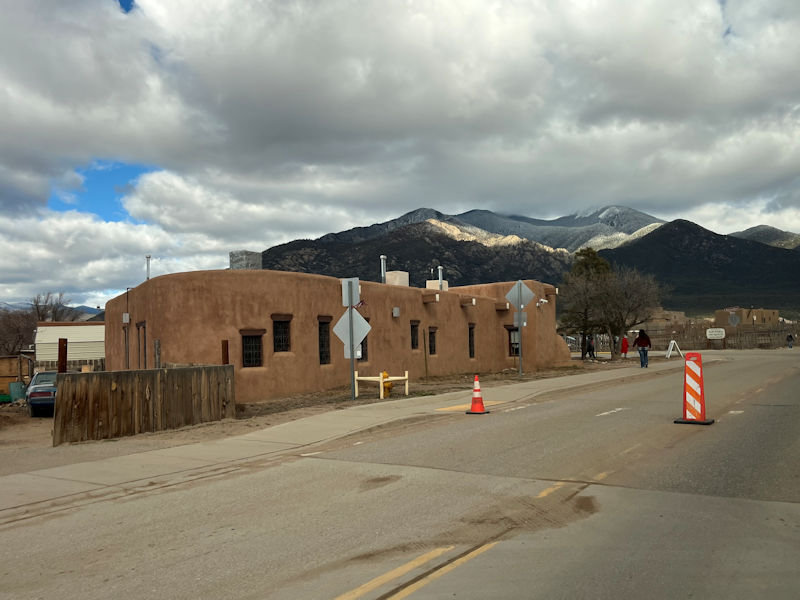
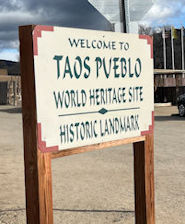
Here we are. The Taos Pueblo area was initiated sometime between 1000 and 1450, we've been informed, settled most likely in the late 13th or early 14th centuries, and is said to be 'one of the oldest continuously inhabited communities in the US'. It was designated as a National Historic Landmark in 1960, added to the Register of Historic Places in 1966, and best of all, inducted into the UNESCO World Heritage List in 1992.
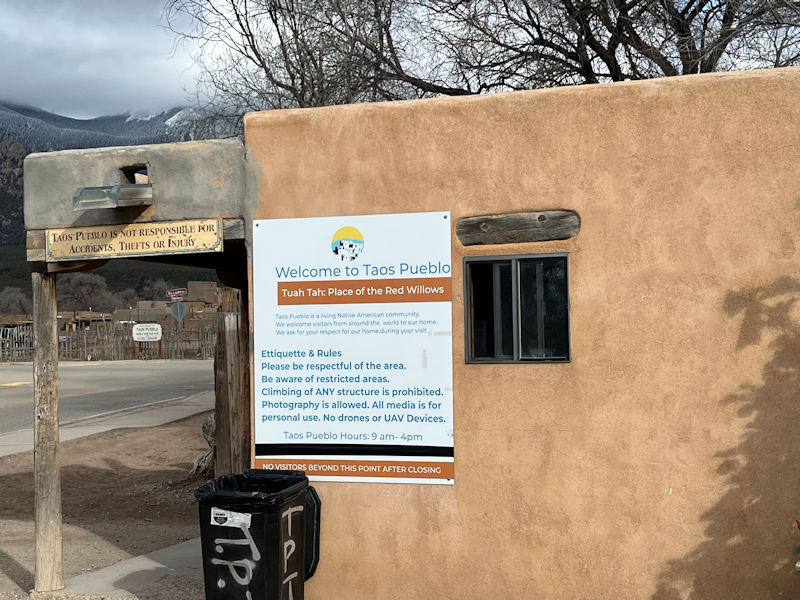
There is a slight entrance fee, of course -- the Pueblo is a living operation but still requires inputs from tourism (and some recent large infrastructure grants for improvement and upkeep, apparently). A 'donation' of $22 for us seniors is more than worth it (especially since George paid up for us).
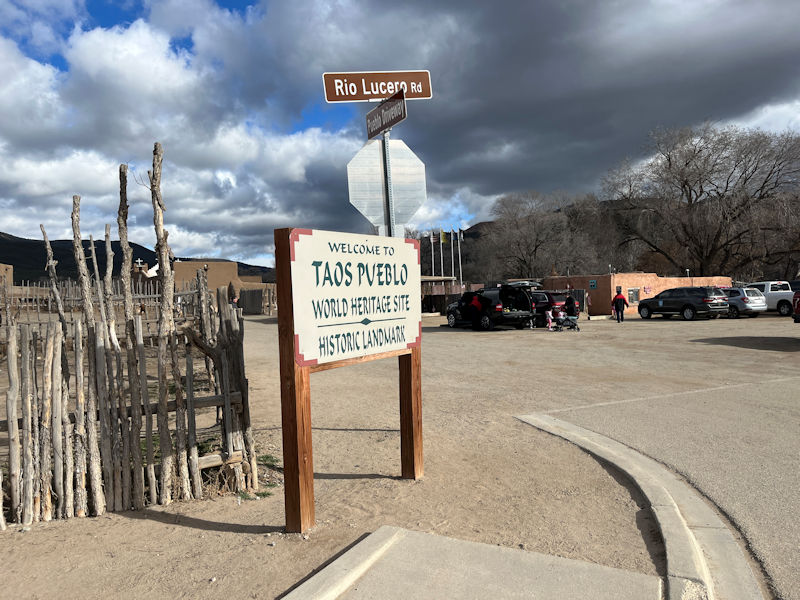
-- Welcome indeed, glad we're here. Just a quick dash to the restrooms, and then we're super-ready.
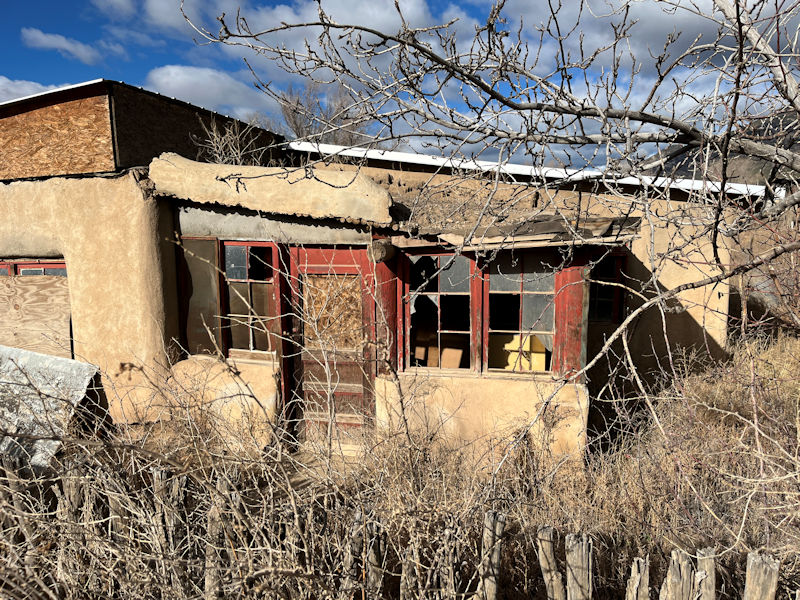
That's probably on the 'improvement' agenda.
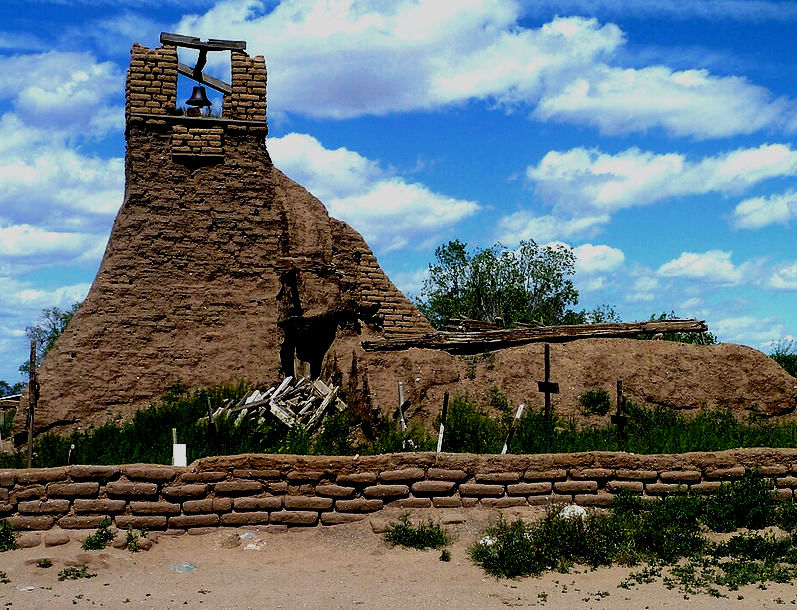
Here, just before we march into the downtown, within the former walls, we're passing the original Franciscan San Geronimo church with its cemetery, first built in 1619 and walled about just outside the two parts of the Pueblo itself, but destroyed during the Pueblo Revolt of 1680, rebuilt by 1726 but destroyed by the US Army in 1847, and rebuilt nearby in 1850 inside the Pueblo itself.
During the January 1847 Revolt, Governor Bent was killed and US citizens threatened, and the US Army defeated the rebels at the nearby Battle of Cañada on January 24. The rebels retreated to the Pueblo here, and the commander, Col. Sterling Price, unleashed artillery fire on 3 February, especially on the church where some 150 citizens had gone for refuge. The 3-7 foot walls resisted the cannon fire, so the next day the roof was set on fire and the building stormed. The church, sporting cannon ball damage everywhere, was left to ruin, and a new San Geronimo church was built facing the centre of the Pueblo grounds in 1850.
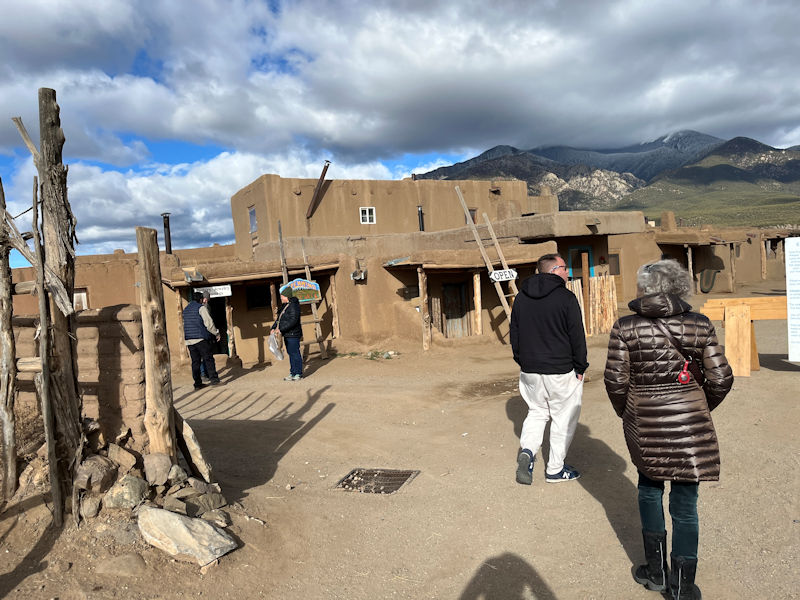
George and Kristin have been here before, but one of us has not. The proliferation of ladders all over is interesting. The original Pueblo buildings, rooms built upon rooms in a few cases five stories high, had few windows and no doors; access was up the ladders and down through holes in the roofs, presumably for defensive purposes.
The World Heritage description notes that 'Some European-style framed doors and windows were introduced in the 20th century, but these remain limited in scale. The community maintains controls to protect its traditions, including the prohibition within the walled area of electrical power lines and piped water supply.'
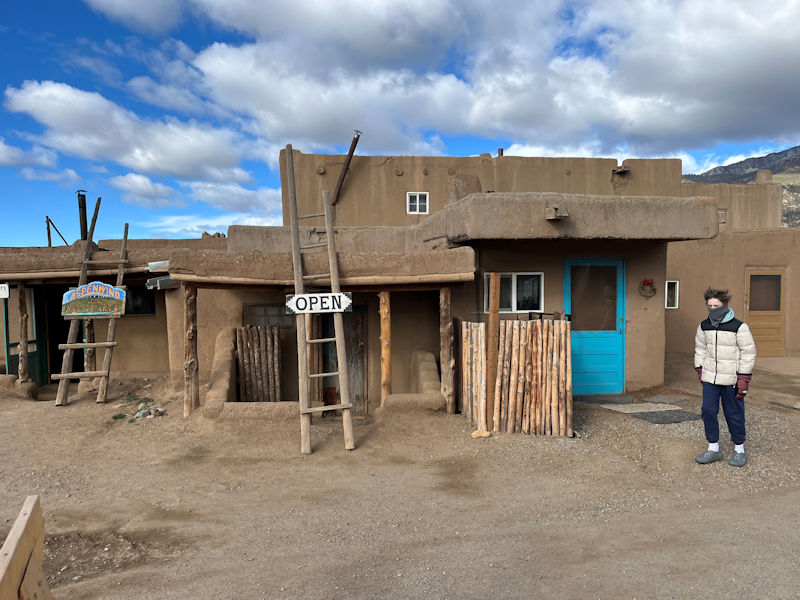
One needs to wonder what happened to folks too old to scramble up scrumpy old ladders and drop down into one's kitchen. We have a reason for wondering.
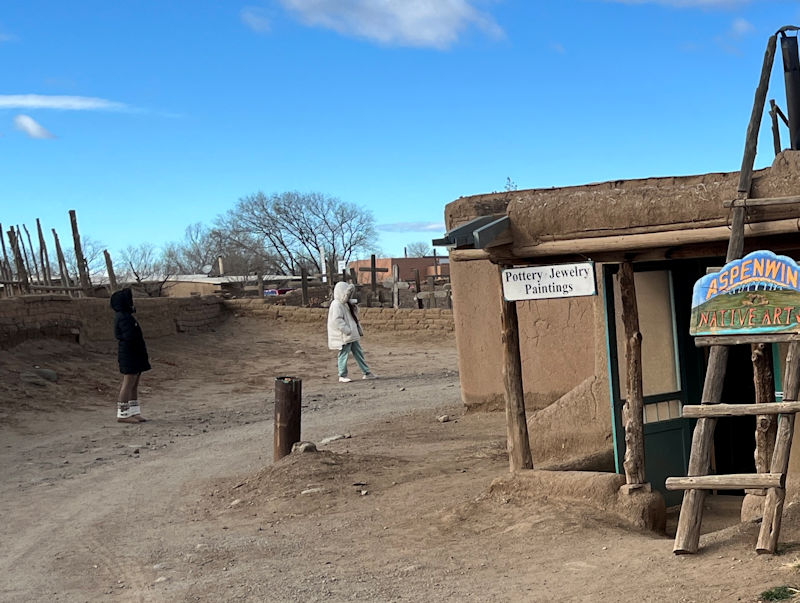
The remains of the old church's cemetery can be seen outside what remains of the Pueblo walls.
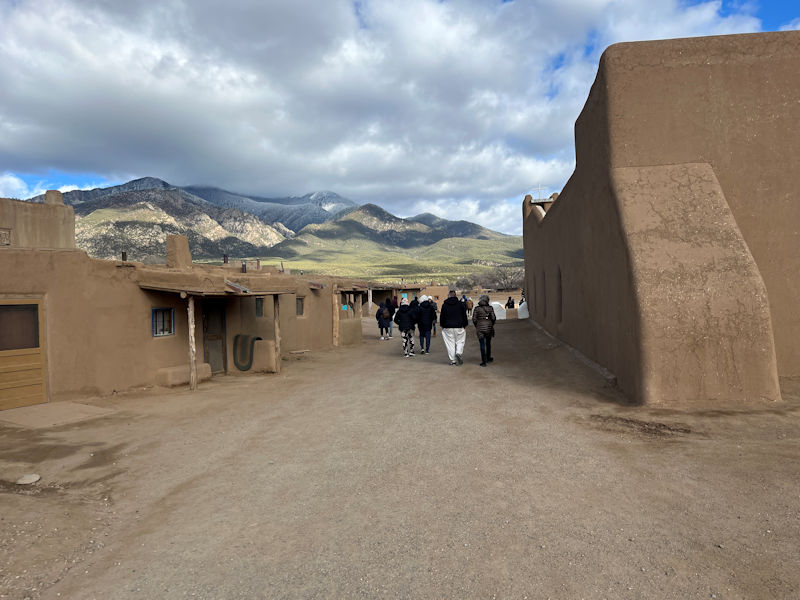
The photographer always seems to be playing catch-up with this group.
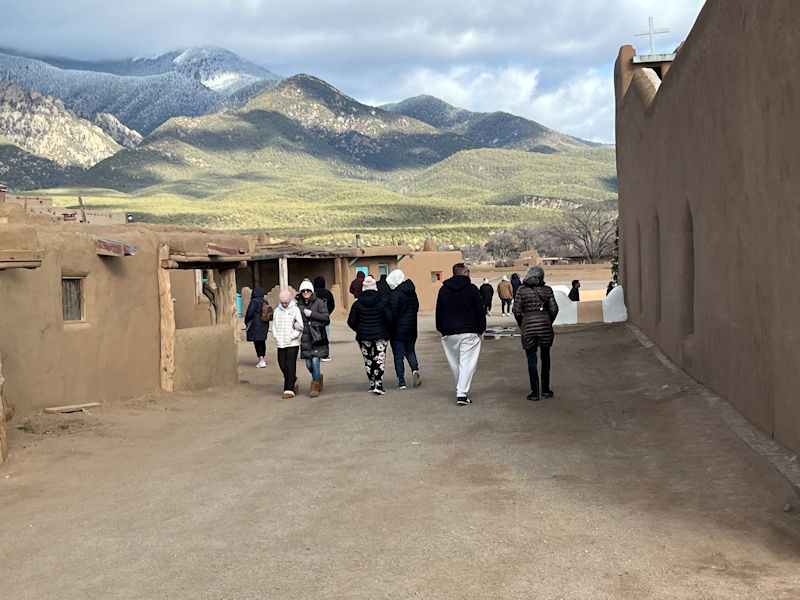
We're catching up now. Probably missing some potentially great photo shots.
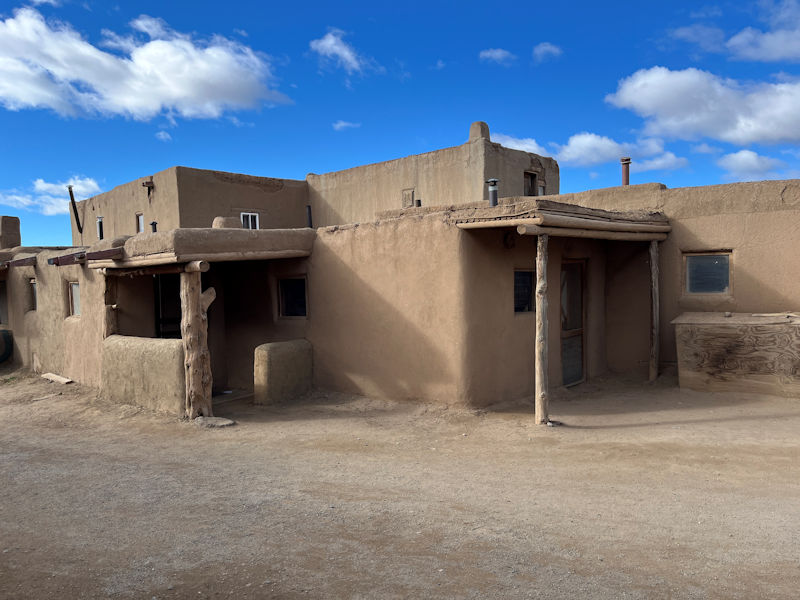
To pause in scene descriptions just for a moment, it's fun to learn that Teddy Roosevelt commandeered the whole area to be part of his (Kit) Carson National Forest, and it was only returned to the Taos Pueblo in 1996. Including Blue Lake, up in the mountains, the source of the mythic spiritual origins of the Pueblo's people and of its main water supply even now, coming down in the Rio Pueblo de Taos through the middle of the community.
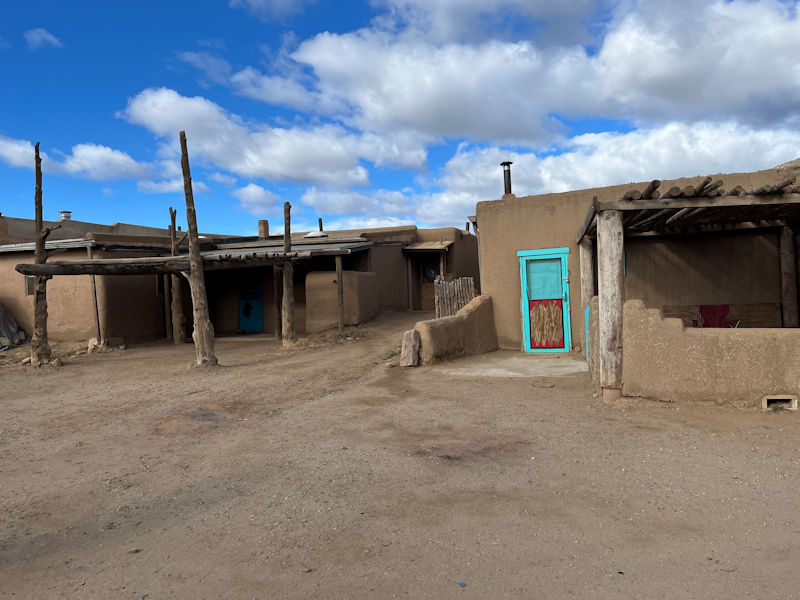
There's a European-style framed door right there.
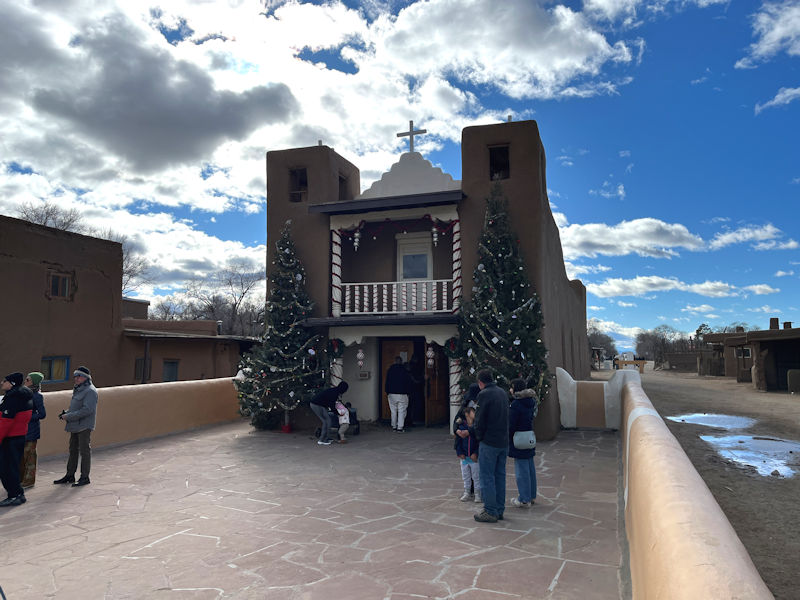
The new Franciscan San Geronimo church from 1850. Geronimo (St Jerome) is the patron saint of Taos.
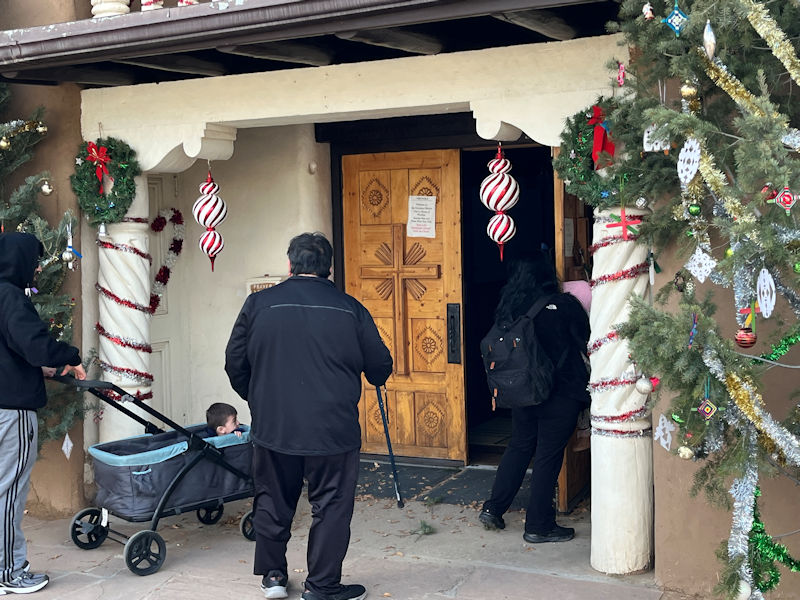
Festive on the outside, but inside . . .
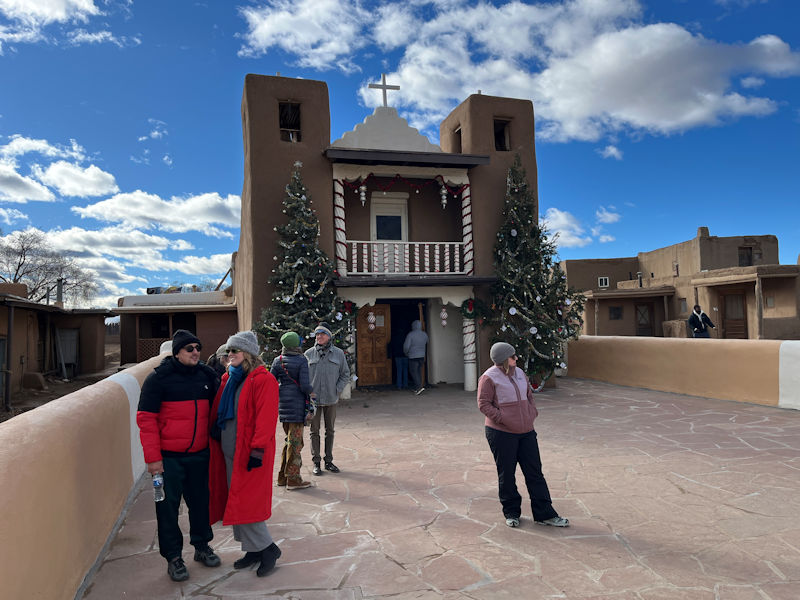
. . . NO PHOTOS. Well, fair enough; these folks do like to hang onto their traditions, we're told. The majority of residents are said to be genuine Roman Catholics but with a deeply ingrained space for the original indigenous ways.
One of our subsequent sources defines their religious preferences as 1) traditional kiva, 2) the Peyote movement, 3) Roman Catholic, and 4) the odd Baptist. There are several kivas in the community, though we didn't notice any.
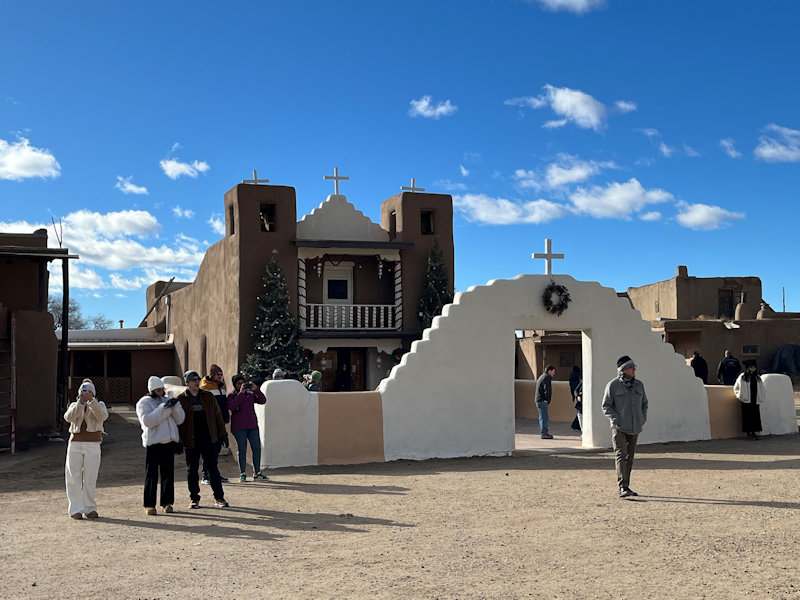
It's good to see the Christmas gear still up -- it would be a bit disappointing without it. Except for the strange balcony.
The community's own photographs of the interior reveal an interesting arrangement of sparsely decorated walls along the whitewashed nave with a colorful collection of statues and frescoes behind the altar.
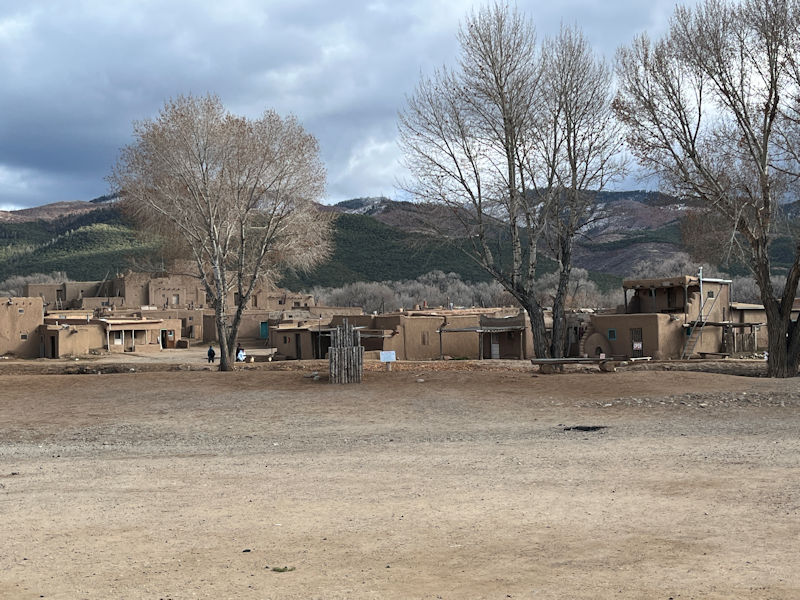
Leaving the church and facing a wide playground, we're viewing the 'south community', not to be confused with . . .
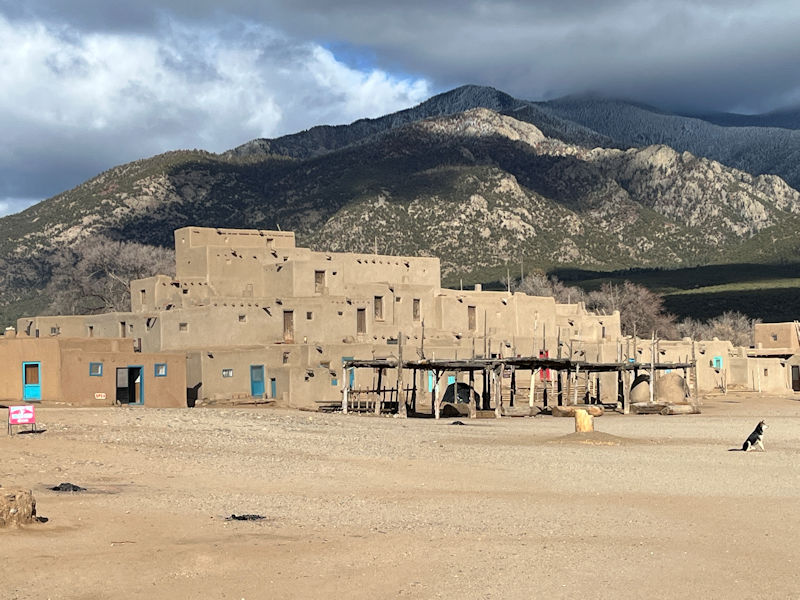
. . . the northern community (with its impressive five story building). And all facing up to Taos Mountain, more or less. It's reported that from early days the Taos Pueblo was a well-known trading point for natives along the Rio Grande and for the Plains Tribes from the northeast.
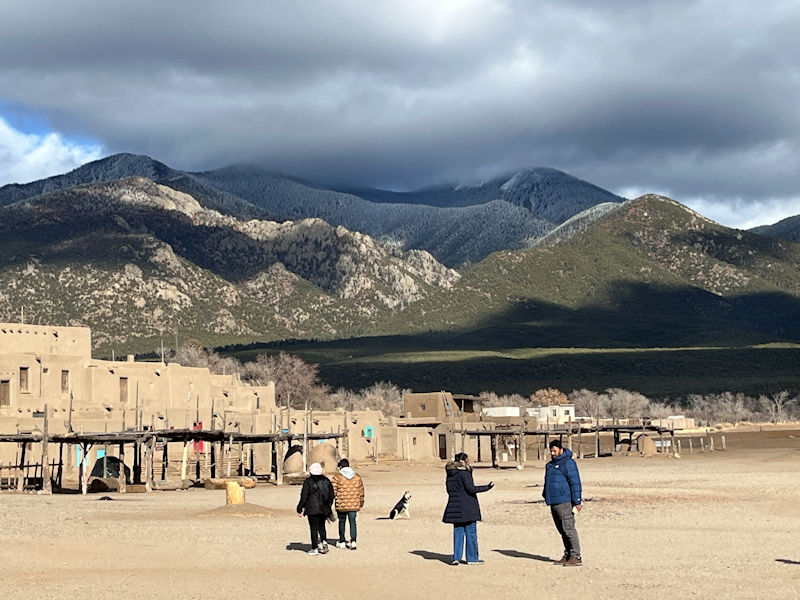
There was a local revolt here in 1640, due to antagonisms towards the 'meddling missionaries', always pushing their conversion agendas, and the essentially forced labor and required tributes from the population by dominating settlers. The locals didn't return until 1661.
The 'Pueblo Revolt' by 46 pueblos throughout the region in 1680, led by Popé (or Po'pay) of Taos, rebelling against the brutality of the Spanish Franciscans and landowners, killed 400 Spaniards and forced the remaining 2,000 Spanish authorities and colonists to flee south into Mexico proper. The Spanish returned 12 years later, in 1692, promising a less authoritarian and theocratic administration, but the Taos Valley here in the north was not reconquered by the Spanish military until 1696.
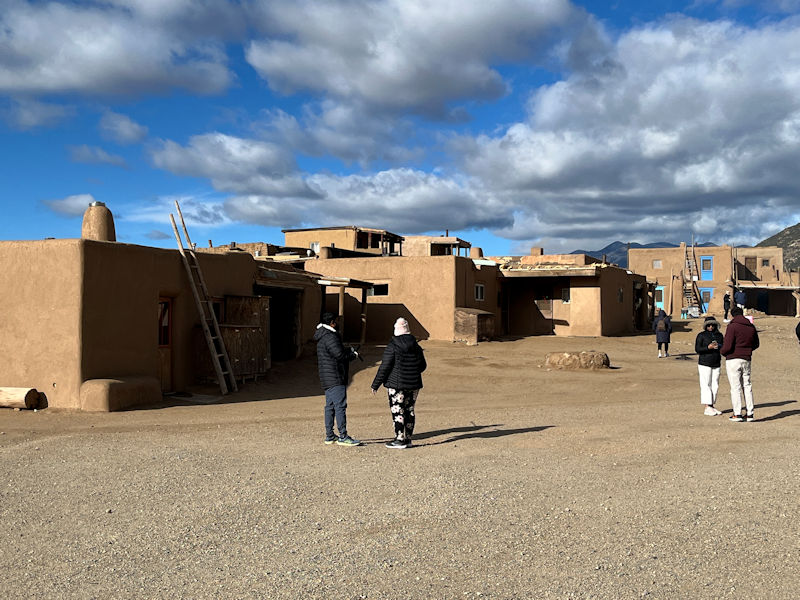
We'll saunter back to the north side a little later, but first . . .
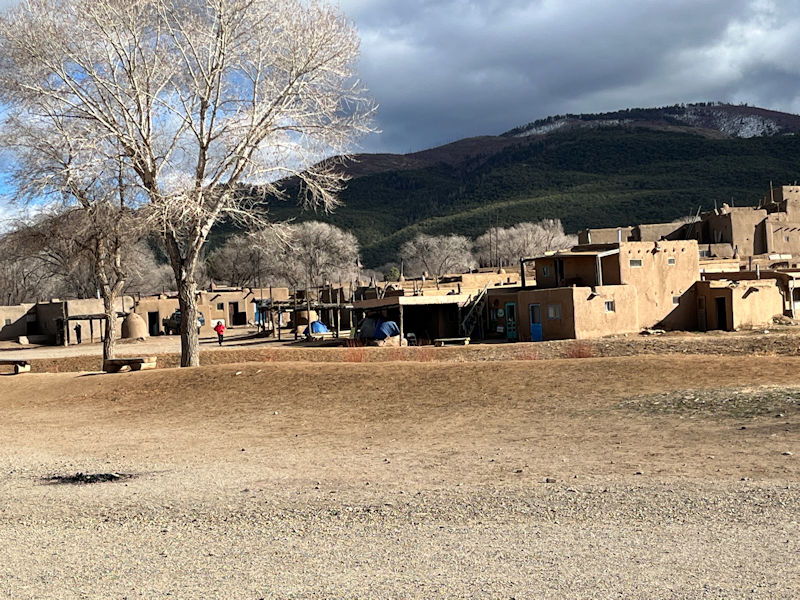
. . . we'll go check out the southern side. Oh, look, they've got a five story thing on this side, too. Apparently there has always been a rivalry between the north and south side of the river . . .
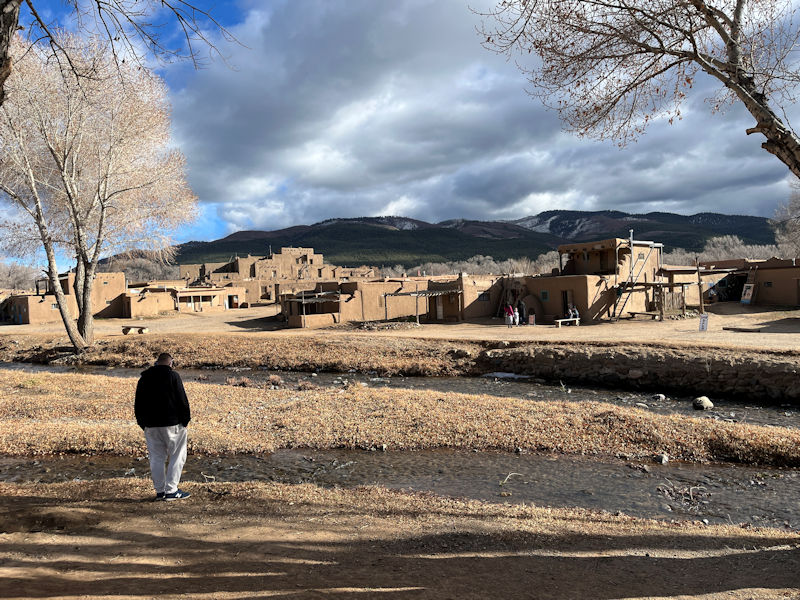
. . . or 'creek' actually. There's surely no animosity involved in that rivalry, not these days anyway, but who knows where it came from. We're told that they have a running course here somewhere (which we missed) for settling differences with fun speed races in their festivals.
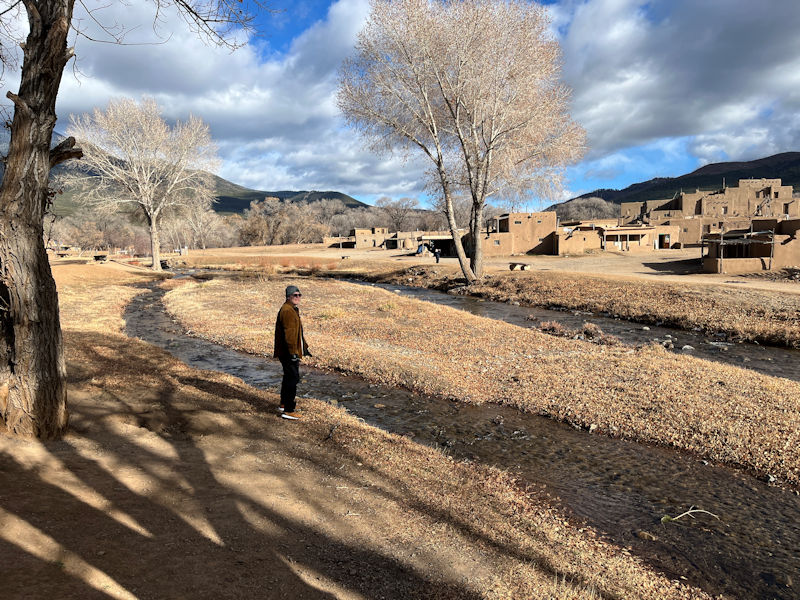
The Rio Pueblo de Taos (also called the Rio Pueblo or Red Willow Creek) is a 33-mile creek running down from Blue Lake in the Sangre de Cristo mountains and is considered by the locals through the ages to be sacred to their community (at least until it dumps into the Rio Grande somewhat later). It flows directly through the Pueblo compound as the major water source for everyone but separates the two rival communities by about 100 meters. [Maybe there's a story there.]
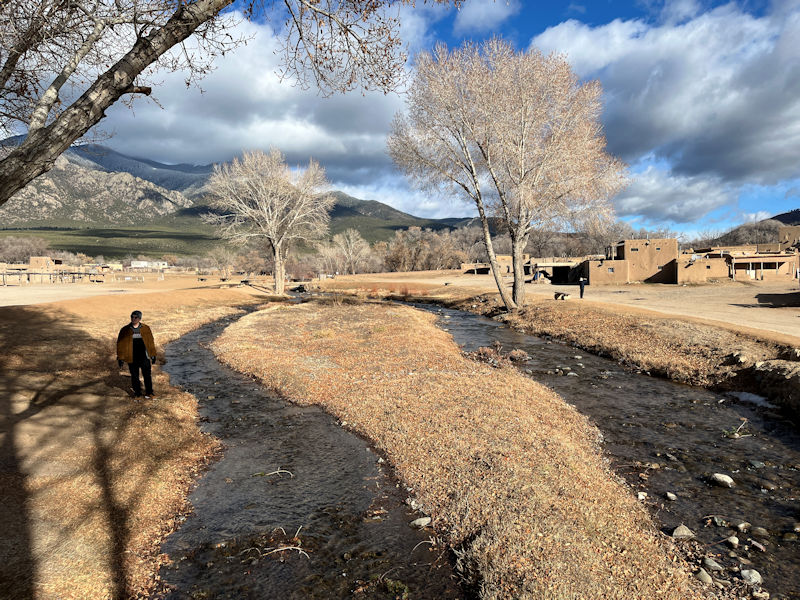
It's consistently said to be a fabulous place for trout fishing.
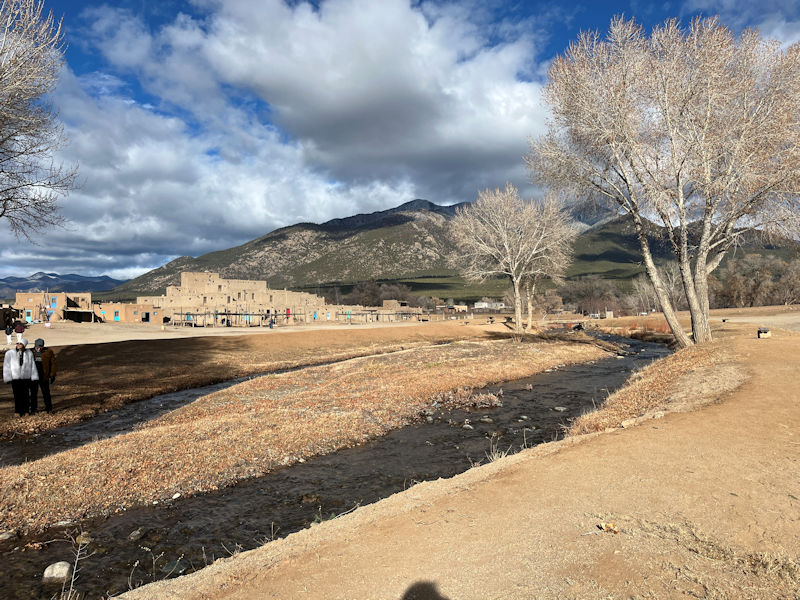
There's the northern outfit, way over there. Only two bridges between them, apparently.
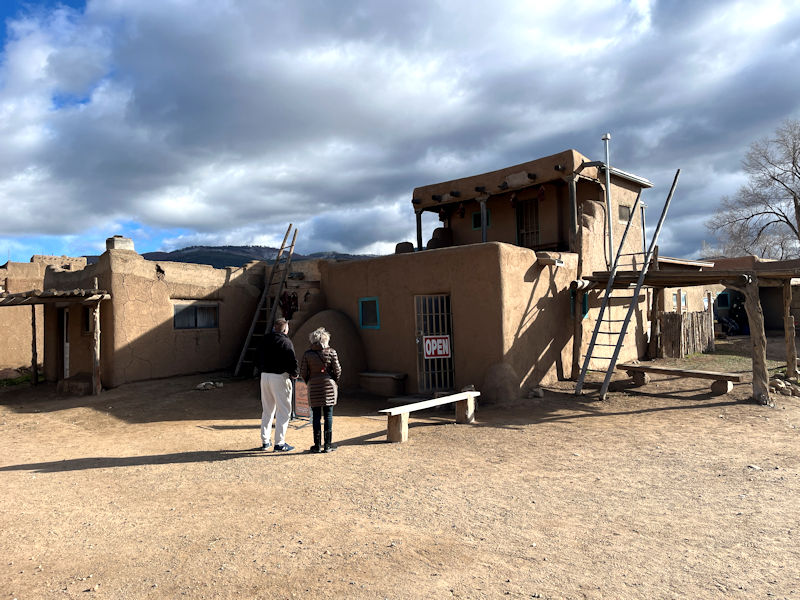
We're told that some 1,900 'Puebloans' live here locally roundabout in the summer months, and perform the maintenance and welcome the tourists, but live within the north and south compounds only in the cooler weather. Supposedly only about 150 live within the community year-round.
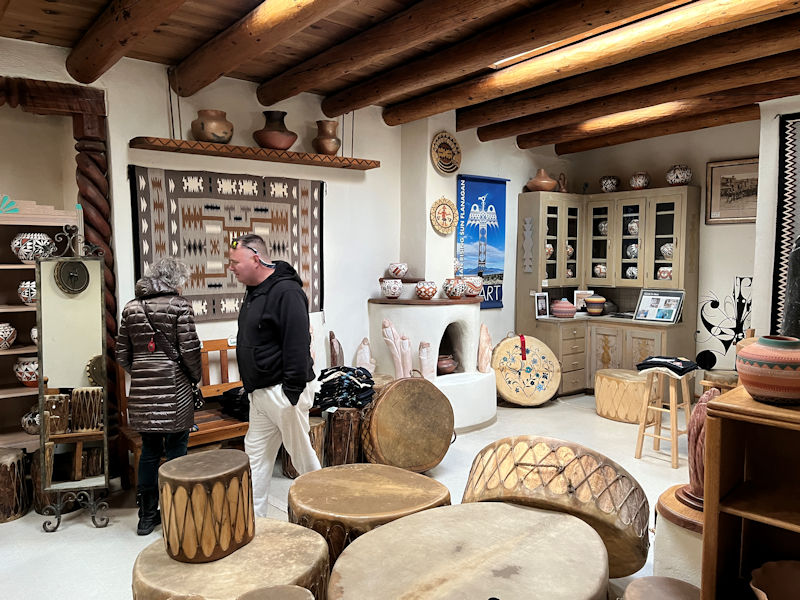
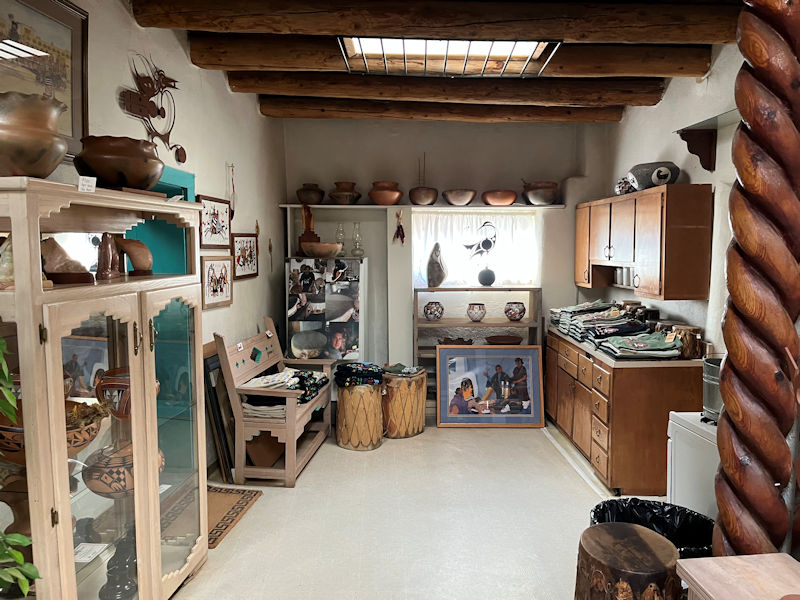
Well, this is all very nice. There must be a lively trade in local arts and crafts here in the Pueblo and perhaps in others nearby. Hard to guess what one would do with those huge drums.
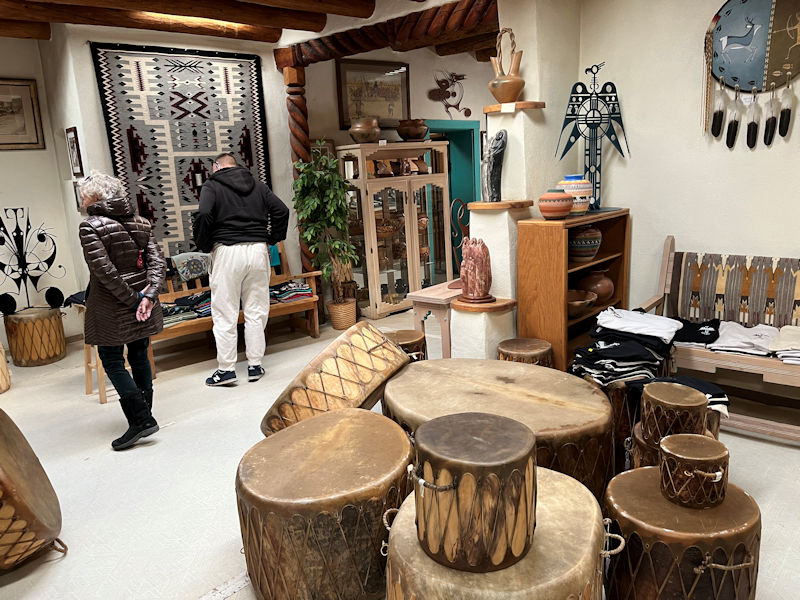
Kristin and George are both avid and knowledgeable seekers after objets d'art, and since George is presently living down this way, he may well have a special interest now.
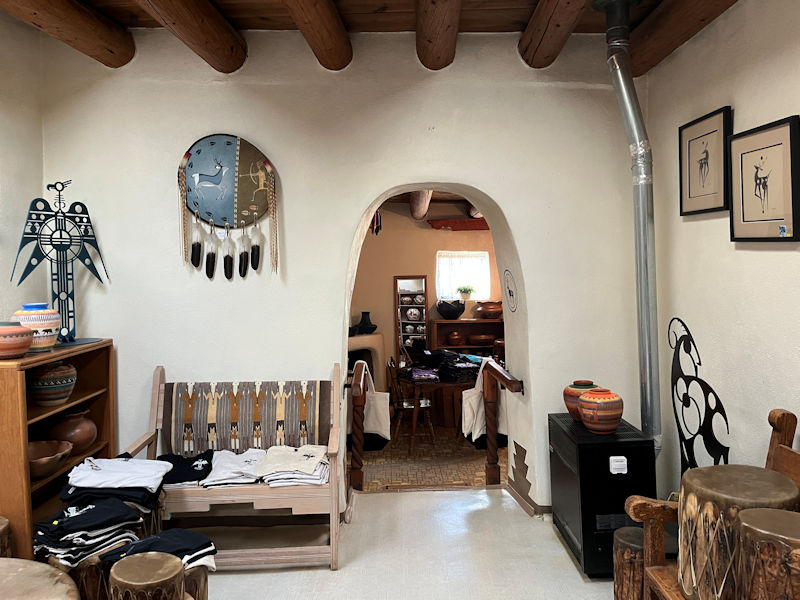
All invitingly set out for us, and . . .
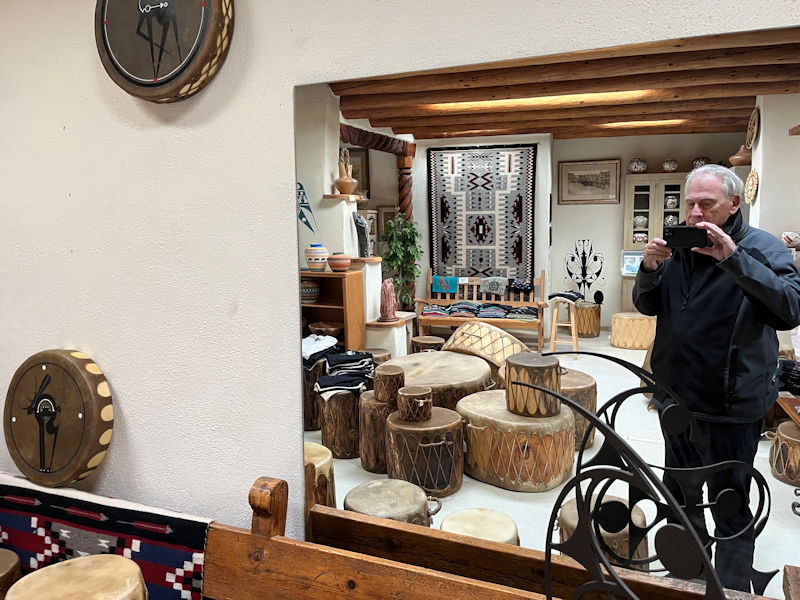
. . . worth a photograph or two.
We must now remind ourselves that we are only halfway through our brief sojourn here, and prepare to move along to the next webpage.
Next up: More of Taos Pueblo's cultural and historical joys





 Dwight Peck's personal website


 Feedback
and suggestions are welcome if positive, resented if negative,
Feedback
and suggestions are welcome if positive, resented if negative,  .
All rights reserved, all wrongs avenged. Posted 11 March 2026.
.
All rights reserved, all wrongs avenged. Posted 11 March 2026.